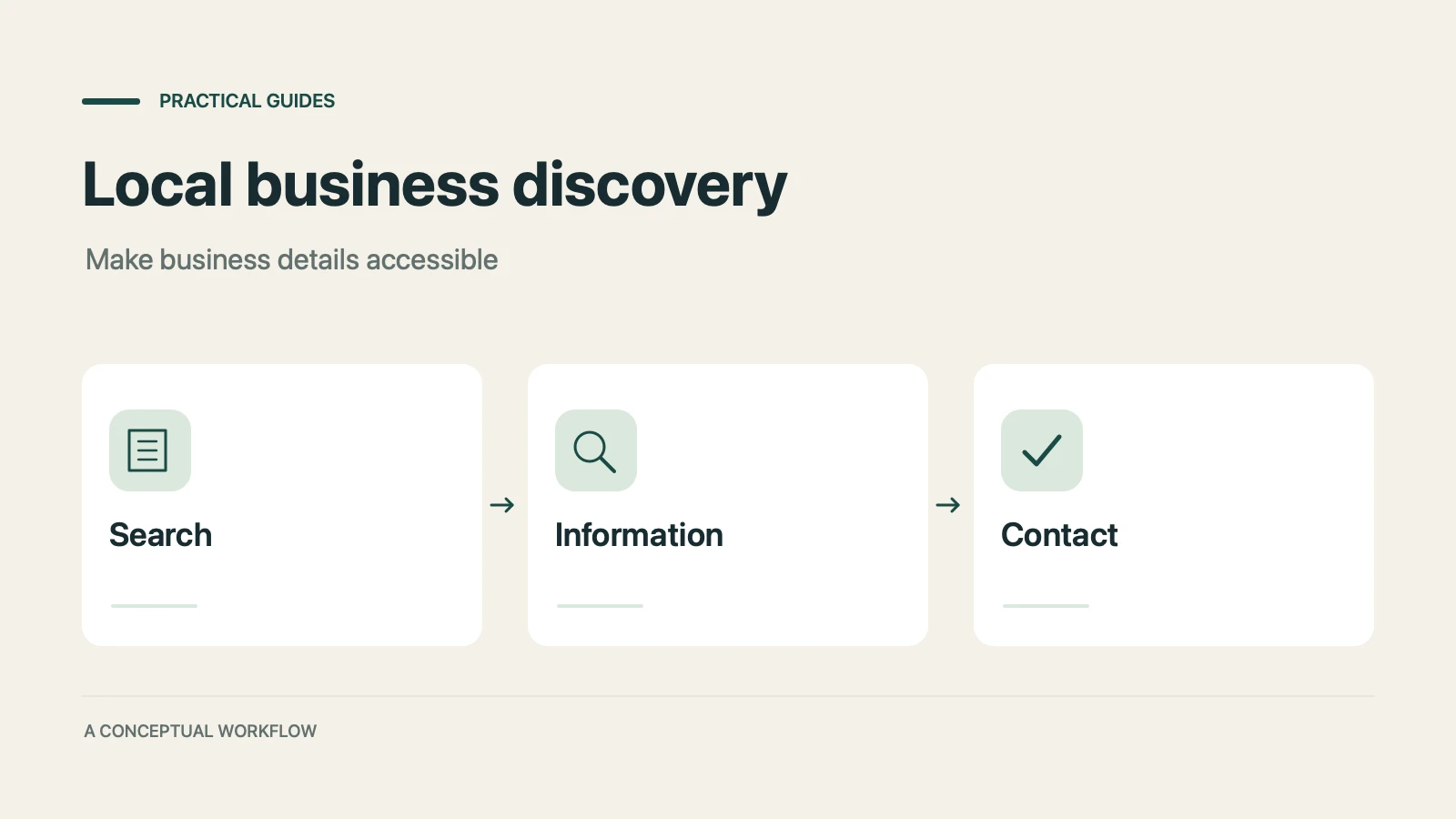
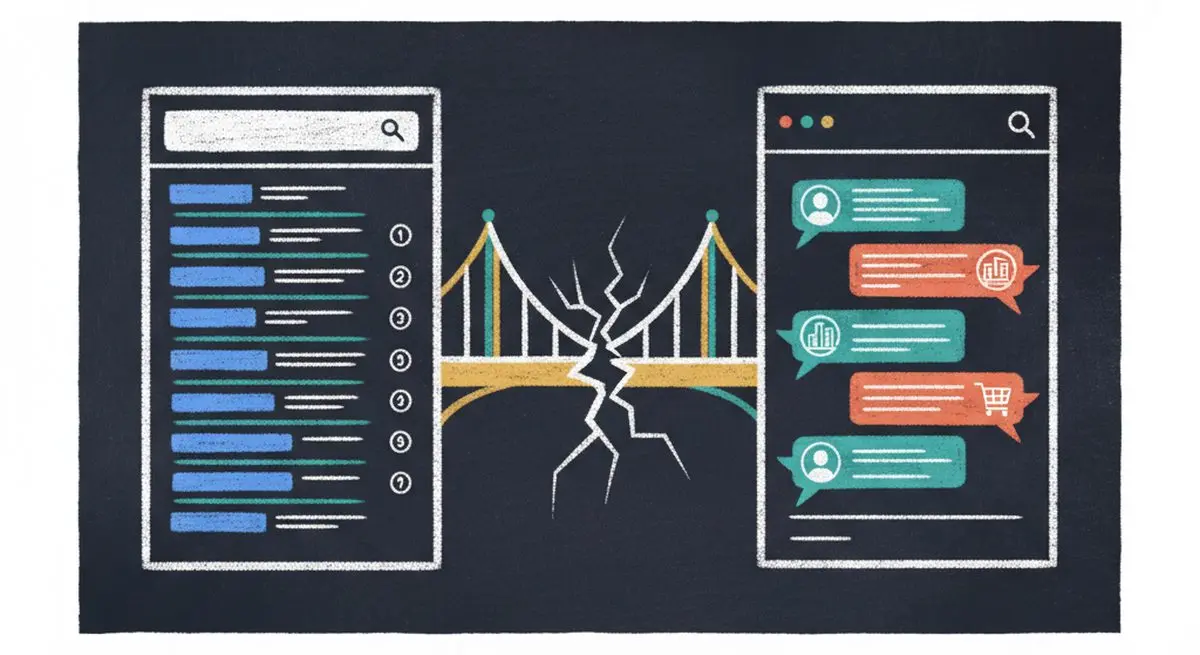
More customers now ask an AI assistant to find a provider, compare options, and send the inquiry for them. An assistant can only recommend a business it can read, and only act for a customer when the business gives it something to act on. A business is agent-ready when an AI agent can find it, understand what it offers and who it serves, and complete the next step, such as an inquiry or a booking request, on a customer's behalf.
This guide covers the three layers of agent readiness, how to measure where you stand, and where to go deeper on each step. Being agent-ready makes you easier to recommend and to book. It does not guarantee either: an assistant still chooses, and a booking still needs a scheduling system that can confirm it.
Why AI agents change how customers find you
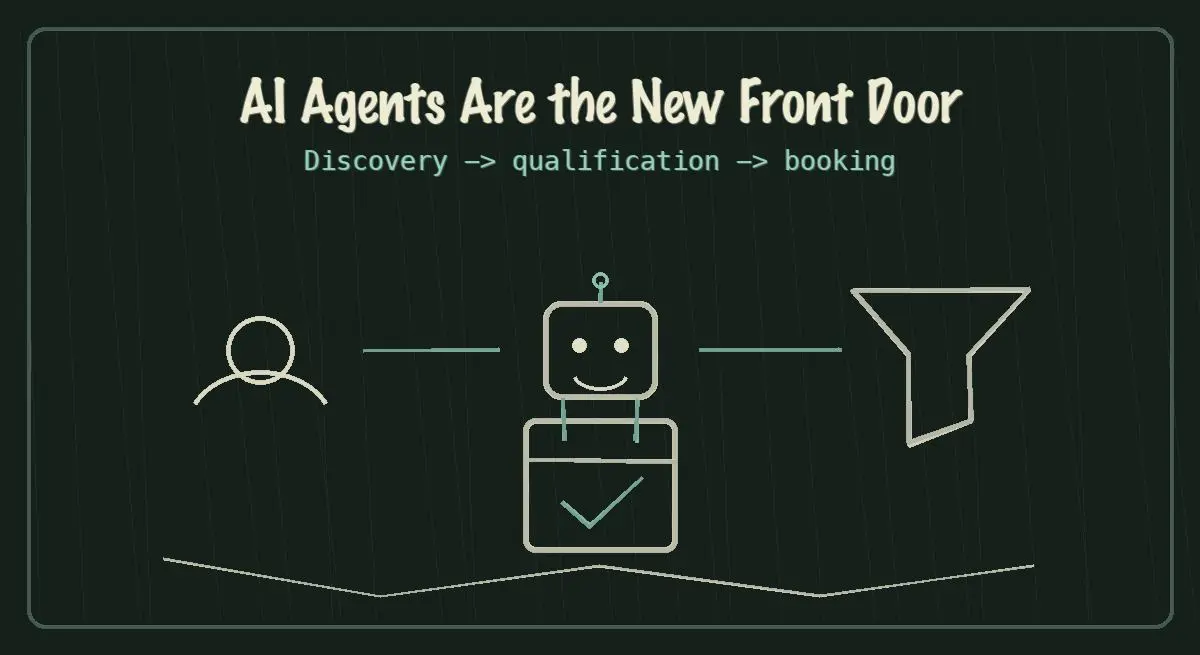
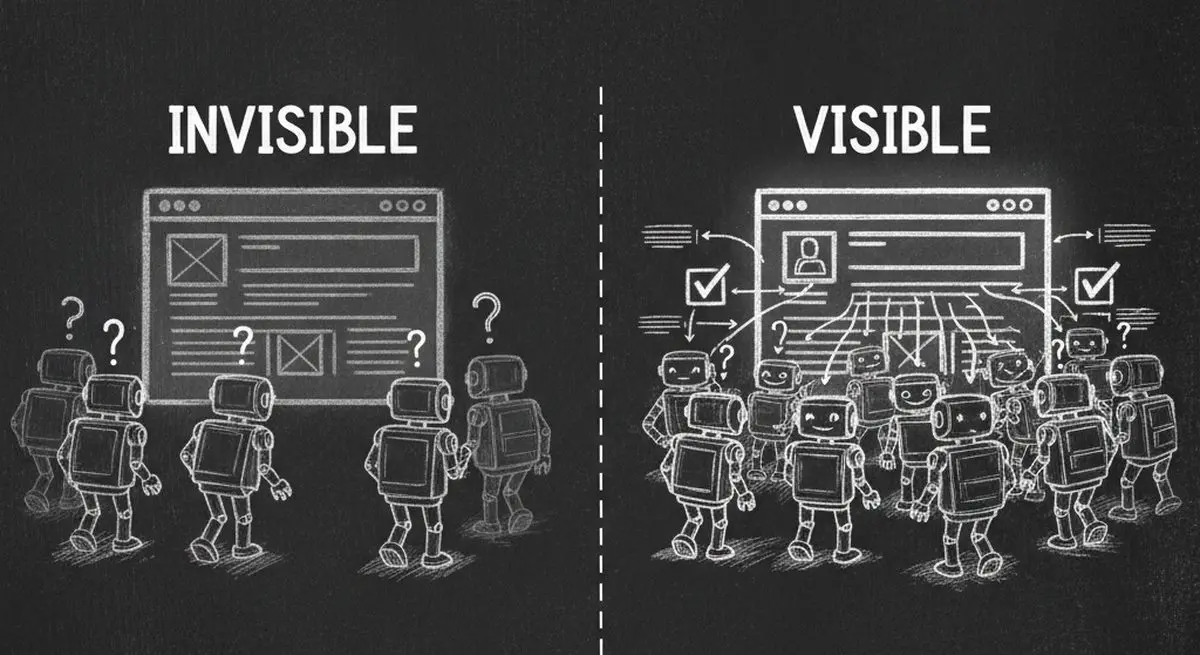
Search returns a list of pages and leaves the choice to the person. An assistant returns a shortlist, explains why each option fits, and can carry the request forward. That moves three jobs from your visitor to software: reading your site, judging whether you fit, and filling in the form. Each one fails quietly when your site wasn't built for it. A blocked crawler, a service described only in an image, or a contact form that can't be completed without a mouse all look fine to a person and stop an agent.
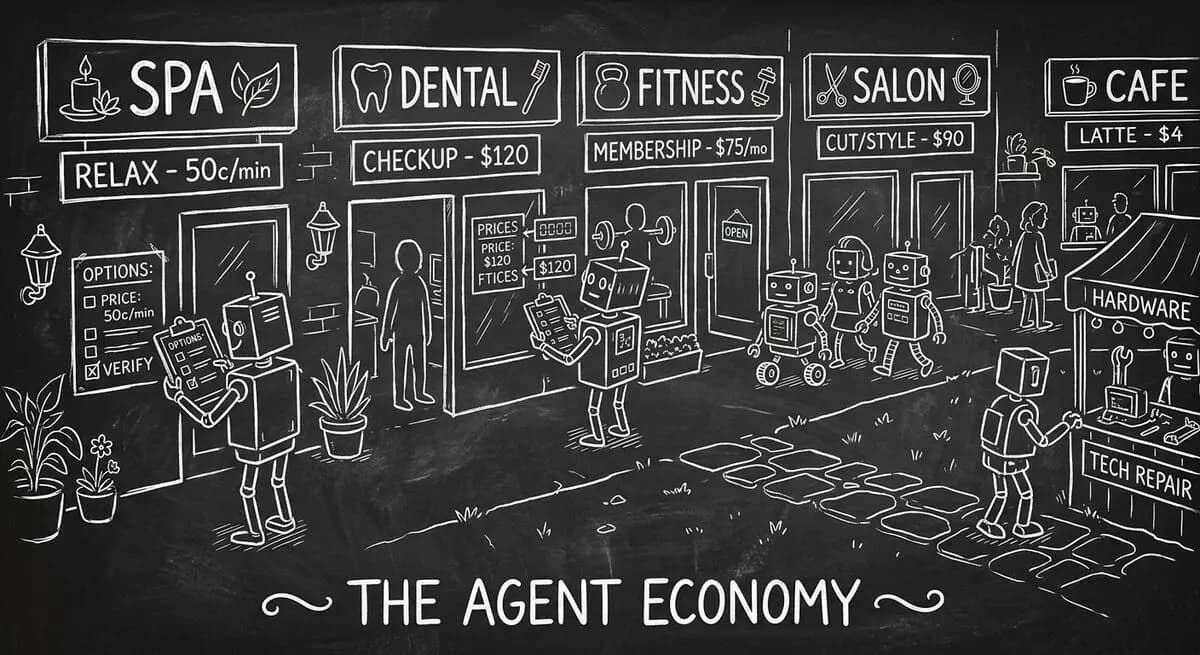
The difference from search is covered in AEO vs SEO, and what it means for local providers in the agent economy guide.
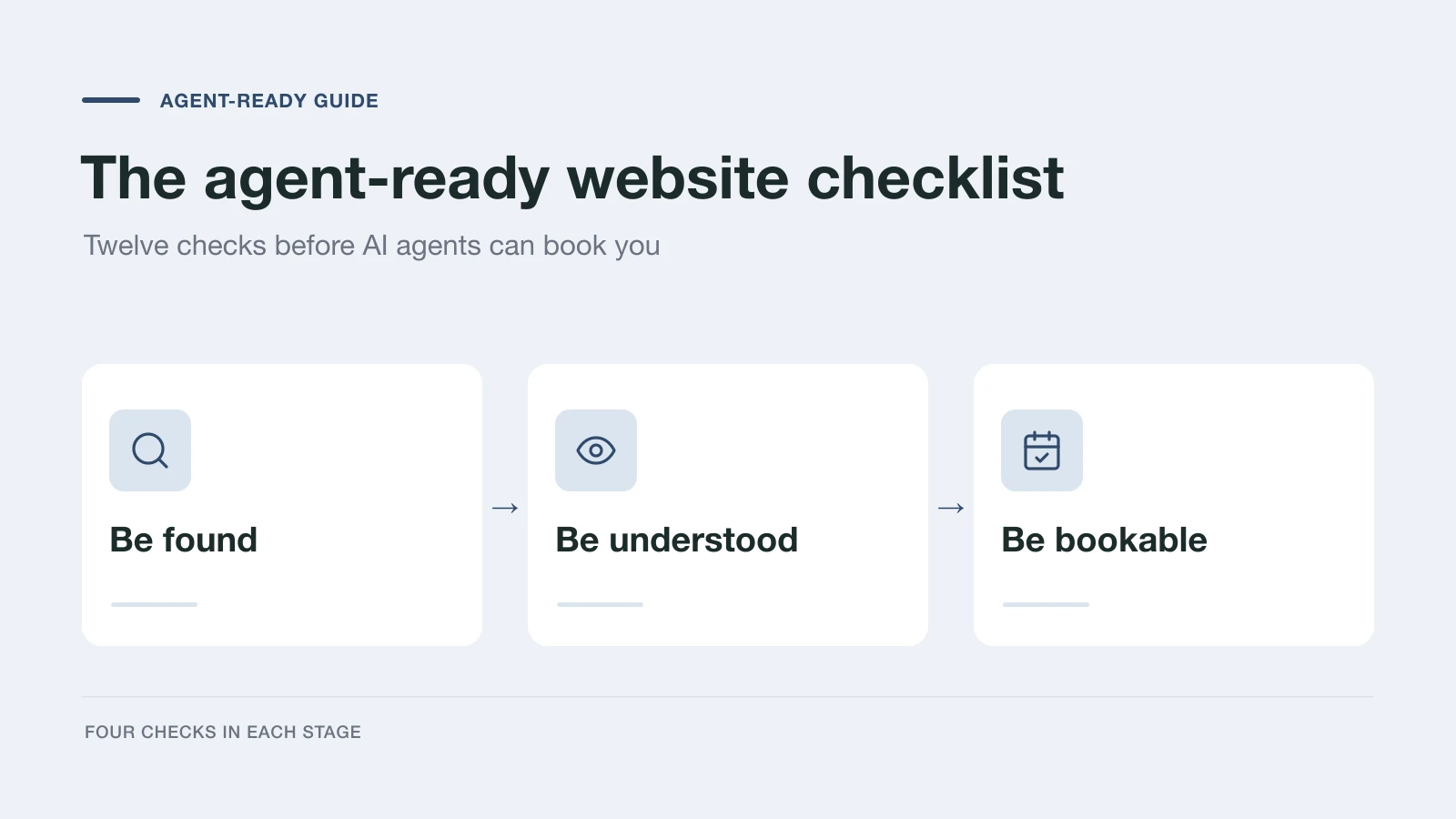
Layer 1: Be found
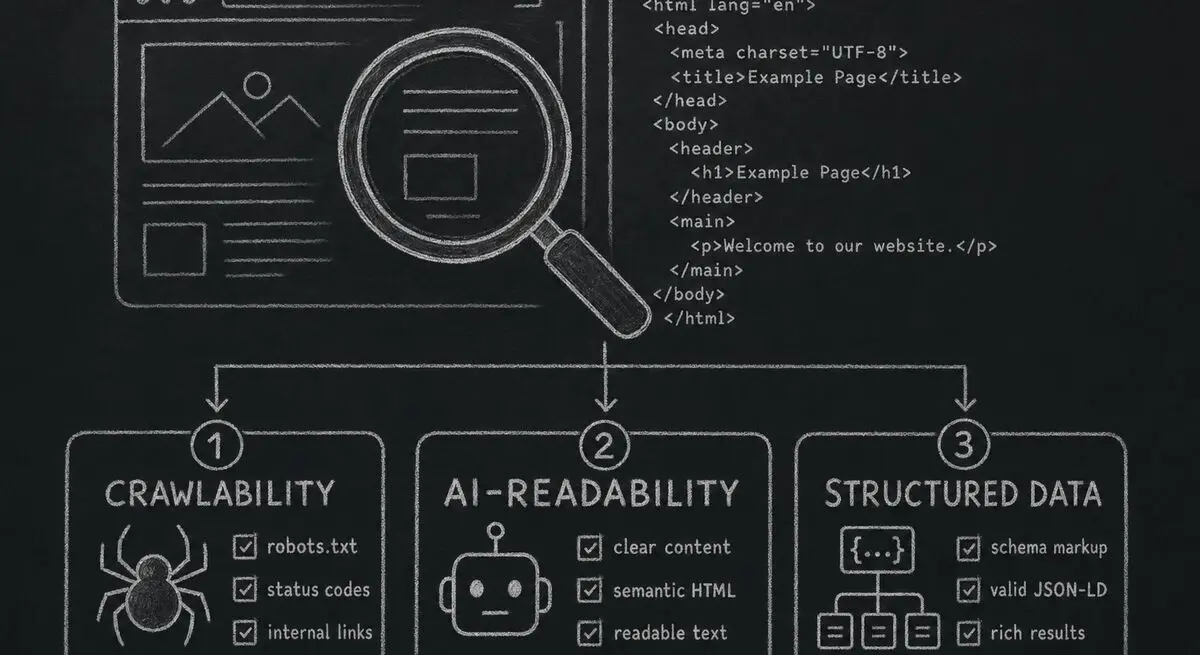
An agent can't recommend a page it can't fetch. Start here:
- Let AI crawlers in. Check that
robots.txtdoesn't block GPTBot, OAI-SearchBot, ClaudeBot, and the other crawlers assistants rely on. Is your website blocking AI crawlers? - Serve content without JavaScript or CAPTCHA walls. Key facts should be in the HTML a crawler receives. Is your website visible to AI agents?
- Add an llms.txt file. A short, plain-text summary of your business and its key pages. What is llms.txt?
Layer 2: Be understood
Once an agent can read your site, it has to match a customer's request to what you offer:
- Keep your business facts consistent. Name, location, service area, hours, and contact details should match across your site, listings, and structured data.
- Describe each service plainly. Who it is for, who it is not for, price range, duration, and what the first appointment looks like.
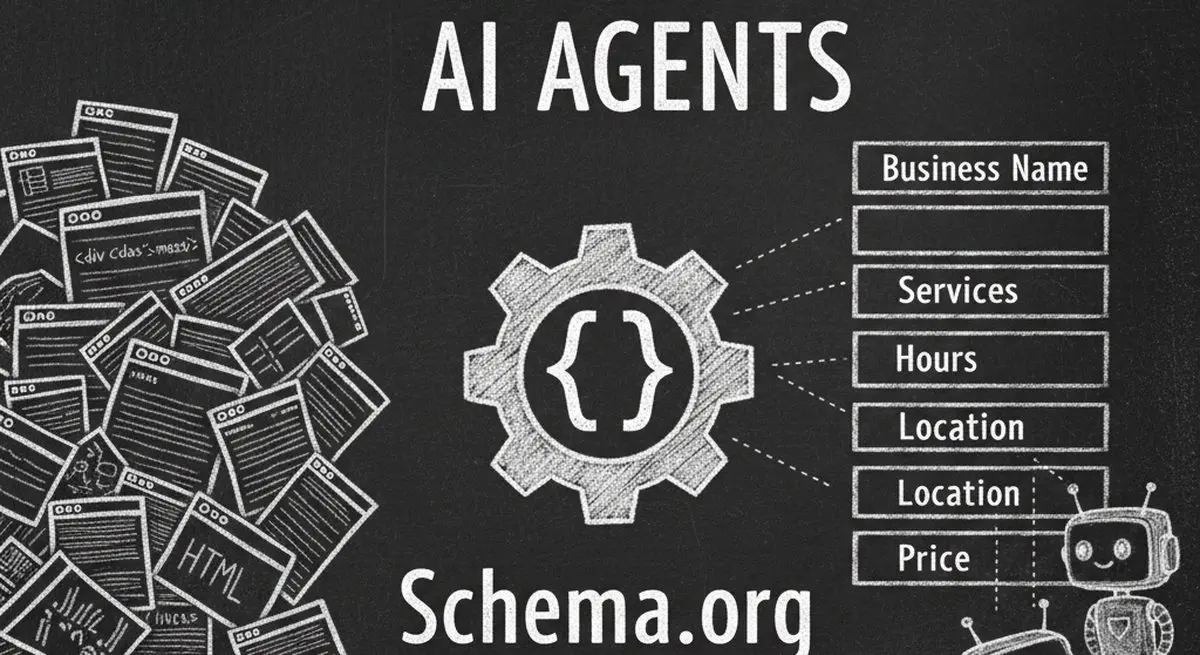
- Mark it up with Schema.org. Structured data states those facts in a format agents parse reliably. Schema.org for AI agents
Layer 3: Be bookable
The last layer is the one most sites miss: a next step an agent can complete.
- Give agents a form they can fill. A form an assistant can read and submit directly works better than one it has to click through like a person. Can an AI assistant fill out your intake form? and, from the customer's side, Can AI fill out forms for you?
- Qualify the request, not just collect it. An Agent Funnel asks the questions that decide fit, so an agent's request reaches you ready to act on. AI agent funnels for front desks
- Connect the booking step. A submitted Reply is an inquiry. A confirmed booking needs a scheduling tool on the next step. How service businesses become bookable by AI agents
- Meet the assistants your customers use. Get booked through ChatGPT and Claude covers what each assistant needs. Dashform's ChatGPT app and CLI let you build and publish these funnels from the AI tools you already use.
Measure it with an AX Audit
The AX Audit is a free scan that checks a public website against these layers: AI crawler access, llms.txt, structured data, MCP signals, and more. It returns an AX Score out of 100 and a prioritized list of fixes, without changing your site. How the AX Audit works explains each check, the methodology post explains the scoring, and the leaderboard shows how other businesses in your category score.
For a single pass through every step, use the agent-ready website checklist.
Glossary
Agent-ready
A business is agent-ready when an AI agent can find it, understand its services, and complete a next step such as an inquiry or booking request on a customer's behalf.
AI agent
Software that acts for a person, not only answers them: it can search, compare, fill in forms, and call tools. ChatGPT, Claude, and Gemini act as agents when they use tools.
AX (agent experience)
How well a website works for AI agents, the way UX describes how well it works for people.
AX Audit
Dashform's free scan of a public website's agent readiness. It reads the site and reports findings without changing it.
AX Score
The 0–100 score an AX Audit gives a website, built from its readiness layers.
llms.txt
A plain-text file at the root of a website that summarizes the business and links its key pages for AI models.
MCP (Model Context Protocol)
An open protocol that lets AI assistants connect to outside tools and data. An MCP server gives an assistant actions it can call, such as listing a business's services or submitting a Reply.
Agent Funnel
A Dashform funnel that people complete on the page and AI agents complete through structured actions, so both reach the same qualified Reply.