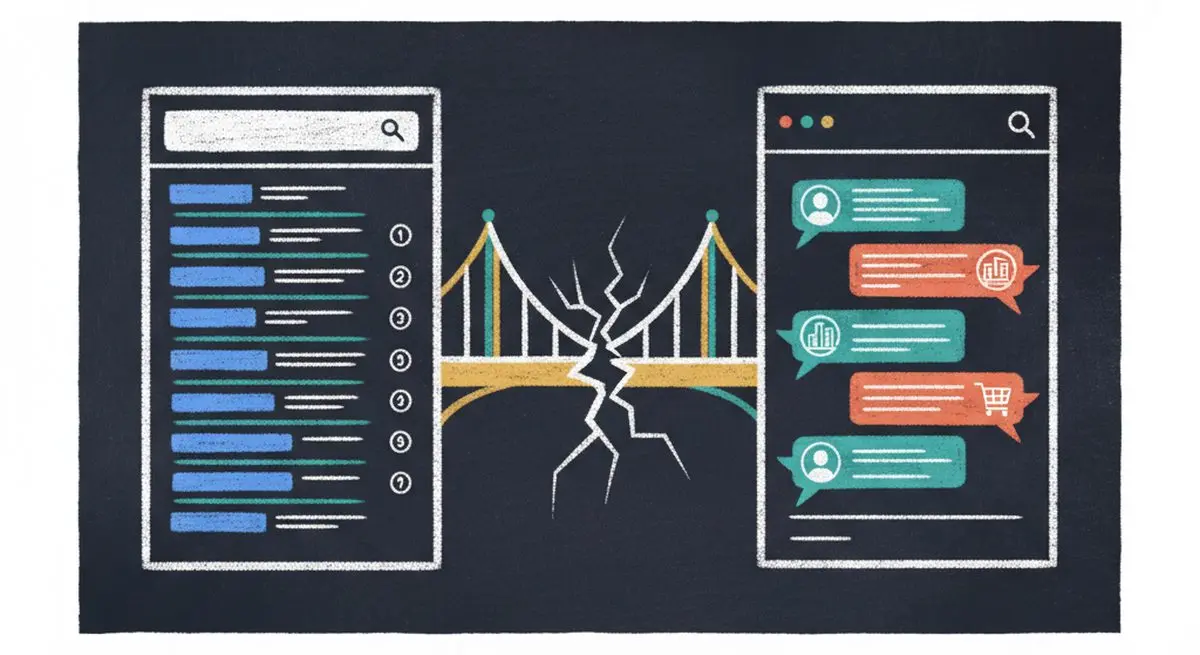
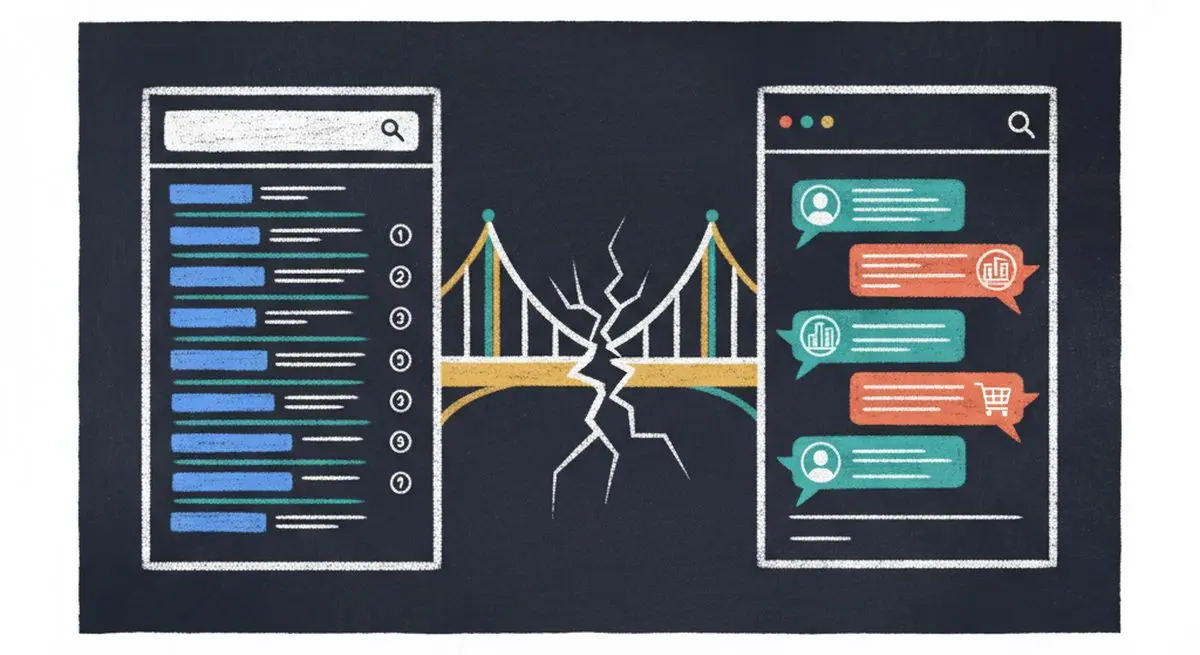
Ranking in search results and appearing in an AI-generated answer are different goals. A useful strategy distinguishes traffic, citations, and completed actions instead of treating them as the same metric.
AI search interfaces can synthesize information into an answer with source links. Whether that changes traffic to your site needs to be measured for your own queries and audience.
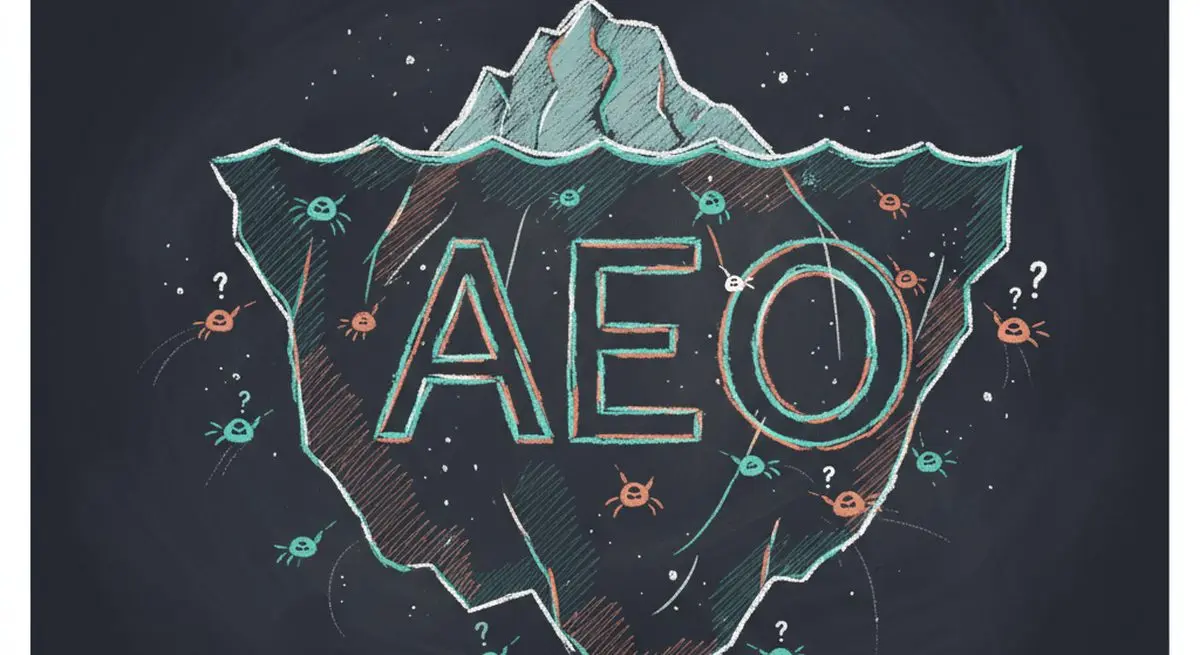
This is the shift from SEO (Search Engine Optimization) to AEO (Answer Engine Optimization) -- and it requires a fundamentally different strategy. Here's exactly what's changed and how to adapt.
What Is AEO (Answer Engine Optimization)?
AEO is the practice of optimizing your digital presence so that AI systems cite, recommend, and feature your business in their responses. Unlike SEO, which aims for search engine rankings, AEO aims for AI-generated answer inclusion.
| Dimension | SEO | AEO |
|---|---|---|
| Goal | Rank on page 1 of search results | Be cited in AI-generated answers |
| Audience | Search engine crawlers (Googlebot) | AI models (GPT, Claude, Gemini, Perplexity) |
| Key Metric | Position, CTR, organic traffic | Citation frequency, recommendation rate |
| Content Format | Web pages optimized for keywords | Structured, authoritative content AI can extract |
| Discovery support | robots.txt + sitemap.xml | Crawlable sources; optional agent documentation and endpoints |
| Data Format | Meta tags + HTML | Schema.org JSON-LD + structured APIs |
| Timeframe | Depends on site and queries | Depends on the assistant, sources, and queries |
| Evaluation | Track search performance | Sample citations and verify referral traffic |
Evaluate Search and AI Discovery Separately
These interfaces raise different questions for a website owner:
1. Answers Can Appear in Search Results
An answer displayed in search results may satisfy a query without a visit. Check your own impressions, clicks, and query mix before attributing a traffic change to AI summaries.
2. Assistants Offer Another Discovery Interface
A person might ask an assistant to find a local service. Test representative requests and verify whether the answer uses current sources and accurate business details.
3. AI Agents Act on Answers
This is the biggest shift: AI agents don't just answer questions -- they take action. An agent with compatible tools and permission may collect intake details or use a separately configured booking service. A citation alone does not provide those actions or guarantee a conversion.
Three Complementary Website Goals
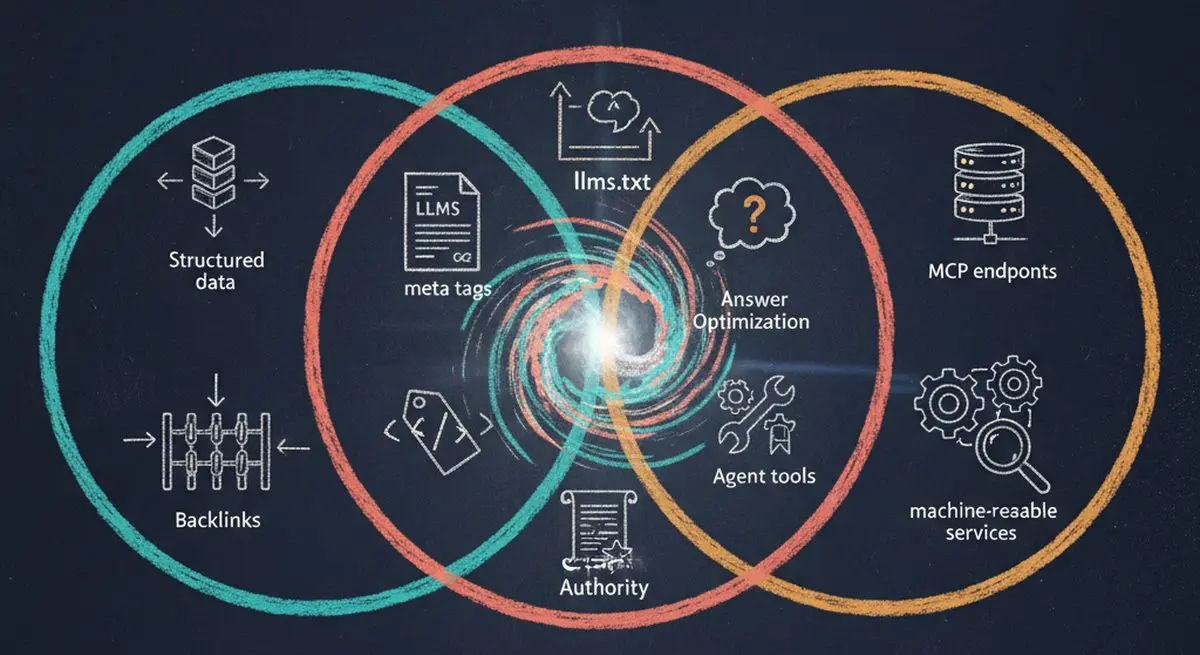
Modern digital visibility requires three complementary strategies:
Pillar 1: SEO -- Be Found by Search Engines
Still essential. Technical SEO, content quality, backlinks, and page speed all matter. Measure its contribution alongside other referral sources.
- Structured data (Schema.org JSON-LD)
- Fast, mobile-optimized pages
- Quality content with E-E-A-T signals
- Internal linking and site architecture
Pillar 2: AEO -- Be Cited by AI Answers
New discipline. Optimize for AI models to cite and recommend your business in their responses.
- llms.txt file describing your business for LLMs
- FAQ content structured for direct extraction
- Authoritative, citation-worthy content
- Consistent NAP (Name, Address, Phone) across all platforms
- Social proof signals (reviews, mentions, directory listings)
Pillar 3: AXO -- Be Usable by AI Agents
The newest frontier. Make your business programmable so AI agents can interact with you.
- .well-known/mcp.json endpoint
- MCP tools for discovery, qualification, and booking
- Machine-readable service catalog
- Lead qualification against configured criteria
- Marketplace listing for agent browsing
Use these categories to distinguish search visibility, answer citations, and supported agent actions. None guarantees traffic or revenue.
How to Score in AI Answers: The AEO Playbook

1. Create an llms.txt File
Host a llms.txt file at your domain root (yourdomain.com/llms.txt). This optional documentation proposal describes your business and links to useful pages. It does not control crawler permissions like robots.txt, and assistants are not guaranteed to read it.
2. Structure Content for AI Extraction
AI models pull answers from well-structured content. Optimize by:
- Using clear question-and-answer formats
- Placing key facts in the first paragraph of each section
- Using data tables for comparisons (AI models love structured data)
- Including accurate prices and sourced statistics where they answer the question
- Stating the limits of each claim and keeping facts current
3. Build Citation Authority
AI models cite sources they trust. Build authority by:
- Getting listed in industry directories (Yelp, G2, Trustpilot, etc.)
- Earning mentions from authoritative publications
- Maintaining consistent business information across all platforms
- Publishing original data and research
4. Optimize Schema.org Structured Data
Add comprehensive JSON-LD markup to every page. Structured data offers an explicit description of page content; no universal reading order applies across AI systems. Include business type, services, pricing, location, hours, and reviews.
5. Enable Agent Interaction (AXO)
Set up a Dashform Agent Funnel to make your business programmable for AI agents. Dashform provides agent access to supported published forms. Configure your business profile and test a compatible client; adding files or markup to your own domain is separate work.
Measuring AEO: New Metrics for a New Era
| Metric | What It Measures | How to Track |
|---|---|---|
| AX Score | Overall AI agent readiness | Free AX Audit at getaiform.com/axaudit |
| AI Citation Rate | How often AI mentions your business | Monitor ChatGPT, Claude, Perplexity responses for your brand |
| Agent-Sourced Leads | Leads submitted by AI agents | Dashform dashboard (source: "agent") |
| llms.txt Coverage | Whether LLMs can read your business info | Check yourdomain.com/llms.txt exists and is accurate |
| Structured Data Completeness | Schema.org markup quality | Google Rich Results Test + AX Audit |
| MCP Discoverability | Whether agents can interact with you | .well-known/mcp.json + AX Audit |
Start by getting your AX Score. Your first score is your baseline, and each Finding it lists is a concrete step toward being visible to AI agents.
Test Before Expanding
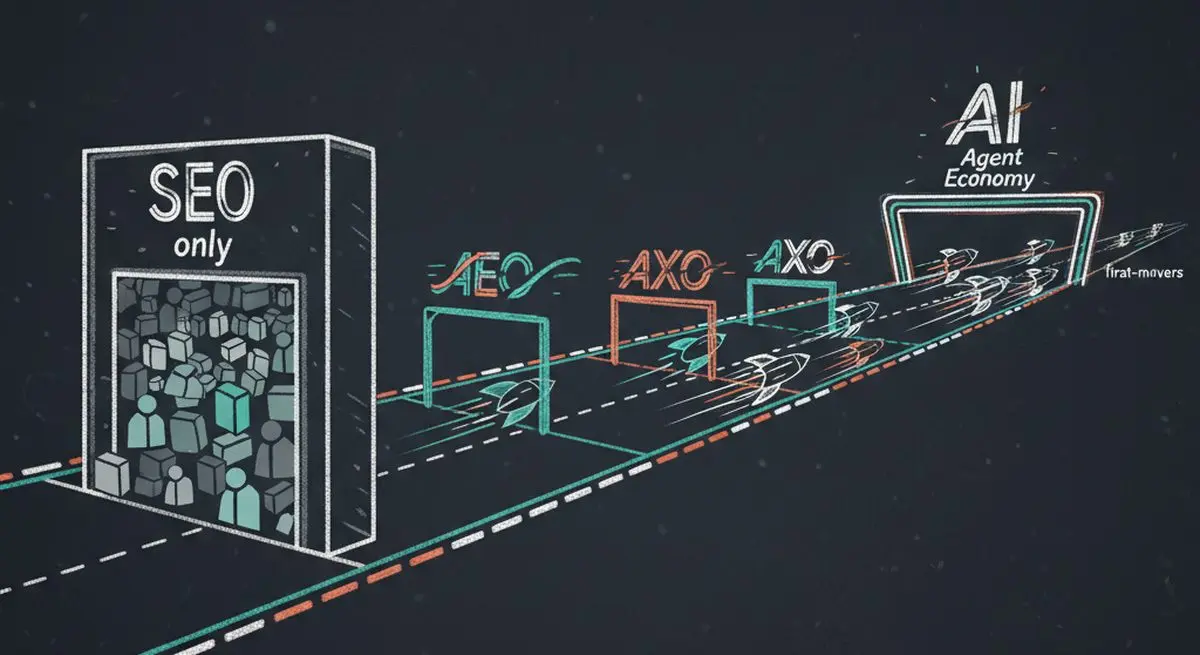
Begin with a baseline for the questions customers ask and the actions you want to support. Record what changed and repeat the same checks after publication.
| Strategy | What to test | Evidence to retain |
|---|---|---|
| SEO | Search visibility for target queries | Search analytics over a defined period |
| AEO | Citations for representative prompts | Prompt, date, model, and cited URL |
| AXO (Agent Funnel) | A supported intake action | Completed reply and delivery result |
Treat improvements as experiments. A technical readiness change and a commercial result need separate evidence.
Frequently Asked Questions
Should I stop doing SEO?
No. SEO is still essential -- it just isn't sufficient alone. Think of it as the foundation. AEO and AXO are the growth layers you build on top.
How do I know if ChatGPT recommends my business?
Ask. Literally. Open ChatGPT and ask it to recommend businesses in your category and location. Do the same with Claude and Perplexity. You'll quickly see if you appear -- and what your competitors look like in AI recommendations.
What's the fastest way to improve my AEO?
Review your crawl settings, publish accurate structured data, and test a supported agent workflow. An llms.txt file is an optional documentation proposal, not a guarantee of AI citations. A Dashform Agent Funnel provides a hosted form; changes to your own website require separate work.
Is AEO only for local businesses?
No. AEO applies to any business AI models can recommend: SaaS, e-commerce, consulting, education, B2B services. Local businesses benefit most from the location-based discovery angle, but the principles apply universally.
Start Your AEO Strategy Today
Use an AX Audit to identify technical readiness Findings, then test a Dashform Agent Funnel if agent-accessible intake fits your business. The audit does not measure rankings or actual AI citations.