

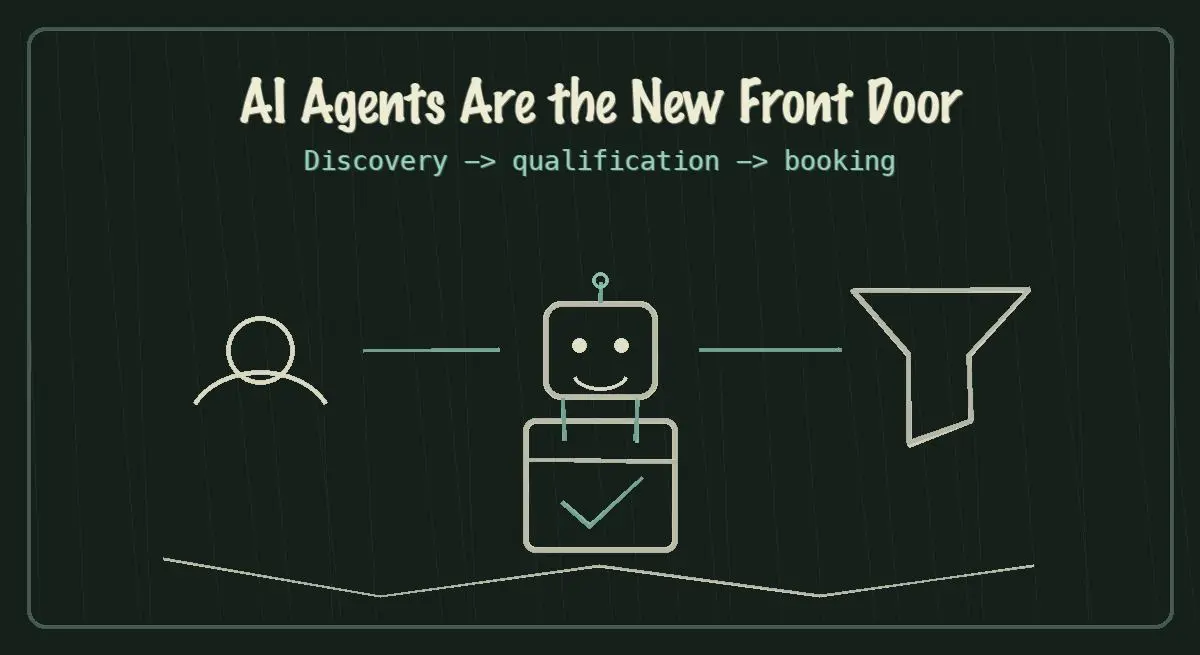
AI agents are becoming the new front door for service businesses. The practical answer is simple: if you want ChatGPT, Gemini, Perplexity, or a future personal agent to recommend and book you, your website has to expose clear business facts, qualification logic, and a next-step action that software can understand. In 2026, being visible is no longer only about ranking a page. It is about making your service offer machine-readable enough for an agent to trust.
For a local service provider, the useful test is concrete: can a supported assistant read accurate service information, submit an inquiry, and obtain confirmation from the system responsible for appointments?
What Changed in Service Discovery
| Old local discovery | 2026 agentic discovery | What the business must provide |
|---|---|---|
| Customer searches Google | Customer asks an AI agent for a shortlist | Clear entity data, service categories, proof, and location signals |
| Customer compares tabs manually | Agent compares fit, reviews, availability, and constraints | Structured service details, FAQs, policies, and reviews |
| Customer fills out a static form | Agent submits qualified intent or books the next step | Interactive qualification flow and booking-ready endpoint |
| Website copy persuades humans only | Website data has to persuade humans and machines | Schema, llms.txt, MCP-ready context, and consistent facts |
AI Agents Are Moving From Answers to Action
An assistant’s ability to answer questions is separate from permission and tools to act. For any proposed booking workflow, identify the service endpoint, authentication requirements, availability source, and confirmation event.
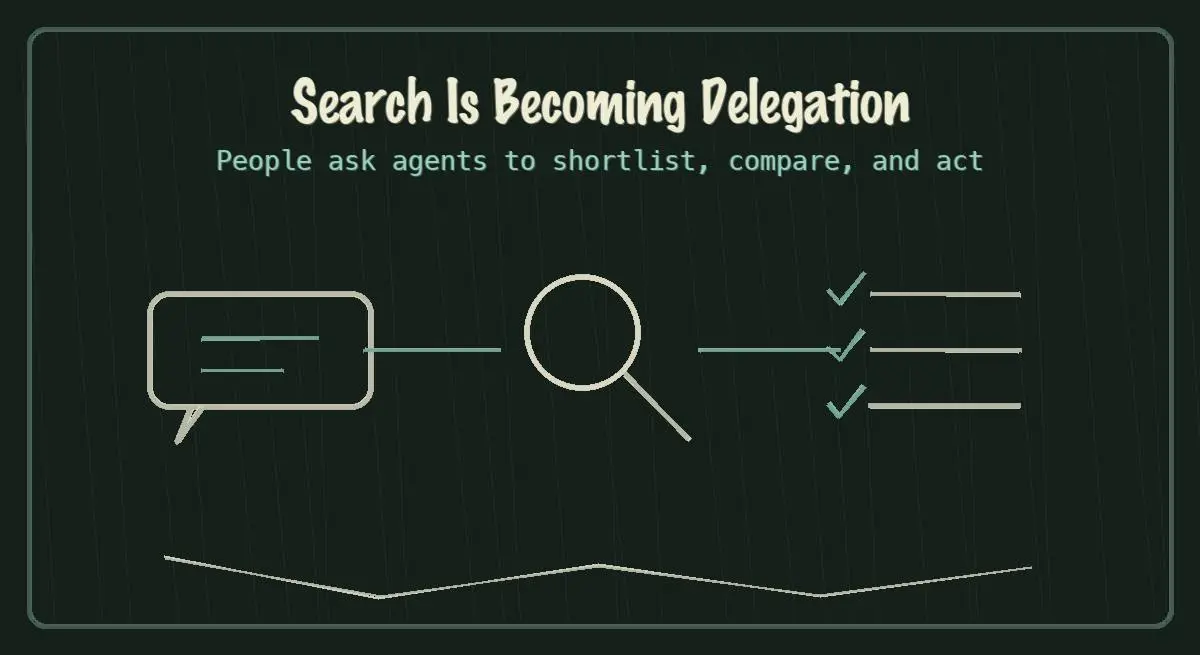
Service businesses should not dismiss that as an ecommerce story. The same behavior applies when someone asks, 'Find me a med spa that does microneedling near me and can book this week,' or 'Which dental clinic is best for a nervous first-time patient?' The user is not looking for ten blue links. They want a trusted assistant to shortlist the right provider, ask the missing questions, and move them toward a booking.
Why Local Service Businesses Are Next
Local services are information-heavy and confidence-sensitive. Customers need to understand who you serve, what you offer, whether you fit their situation, what it costs, what happens next, and whether other people trust you. That is exactly the kind of multi-step decision an AI assistant is good at summarizing. Check whether your own customers use assistants and which information they need before requesting an appointment.
Keep service pages, review profiles, and booking policies consistent. An assistant may consult different sources, and conflicting information needs resolution before a request can be confirmed.
That creates a risk and an opportunity. If your business information is thin, inconsistent, or trapped behind a static contact form, agents may skip you. If your site gives agents structured answers and a clear qualification path, you can become easier to recommend than a competitor with prettier branding but weaker machine-readable context.
What It Means to Be Bookable by AI Agents
A business is bookable by AI agents when an assistant can answer four questions with confidence: what do you offer, who is a fit, what should happen next, and how can the action be completed? A human can infer these details from a homepage. An AI agent needs the same information in predictable formats, repeated consistently across your site, listings, structured data, and intake flow.
This is where Agent Funnel becomes useful. Instead of treating your website form as a dead-end box, an Agent Funnel turns intake into a structured conversation. The agent can understand the service category, submit the user's intent, pre-qualify the lead, and move the person toward the right next step. It is not only a form replacement. It is an intake layer for the agent economy.
The Five Signals an AI Agent Needs Before It Recommends You
First, the agent needs entity confidence. Your business name, location, service area, hours, categories, and review footprint should match across your site, Google Business Profile, review platforms, and structured data. If those facts conflict, the agent has less reason to trust the recommendation.
Second, it needs service clarity. A salon, med spa, clinic, studio, or agency should describe each core service in plain terms: who it is for, who it is not for, common constraints, expected outcome, price range if available, and what the first appointment looks like. This helps the agent map a messy user request to the right offer.
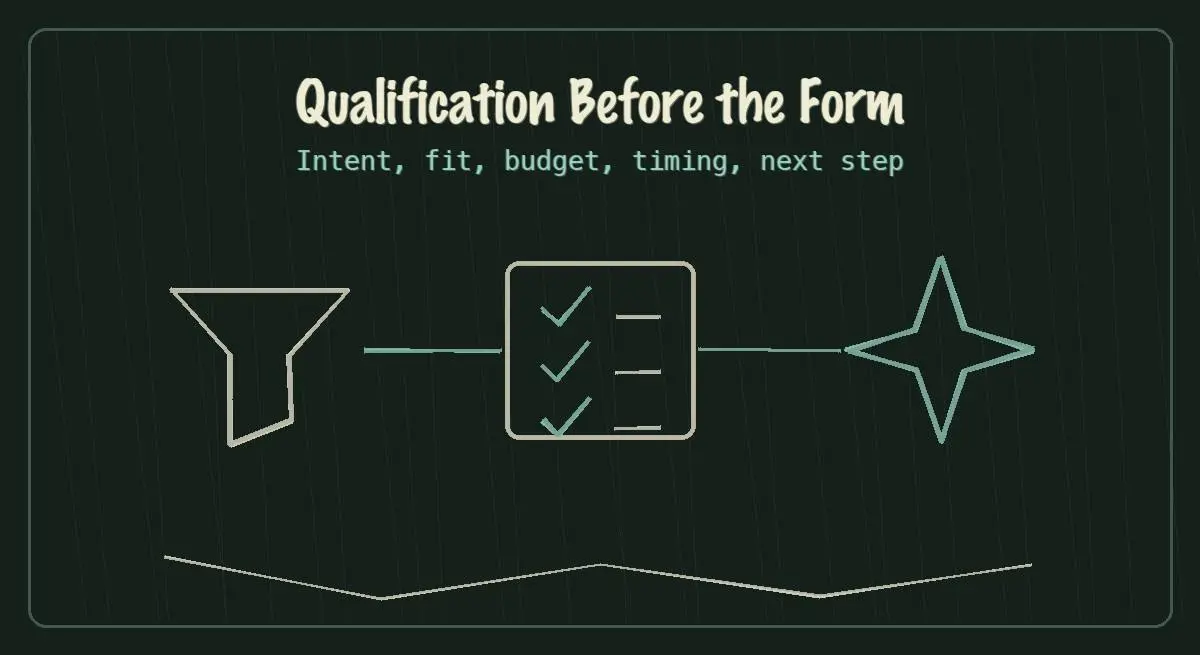
Third, it needs qualification logic. The best-fit lead is rarely just 'someone who filled out a form.' A useful quiz funnel asks about goals, budget, timing, eligibility, preferences, and urgency. That same logic gives AI agents a safer way to pre-screen prospects before handing them to your team.
Fourth, it needs actionability. If the next step is 'call us sometime,' the agent has little to do. If the next step is a structured audit, booking request, consultation match, or availability-aware intake flow, the agent can help the user complete the task.
Fifth, it needs proof. Reviews, case studies, before-and-after examples, credentials, policies, and FAQs all help an agent justify why your business belongs in the shortlist. This is not keyword stuffing. It is evidence design.
Where Dashform Fits in the Agent Journey
Dashform helps businesses replace static forms with interactive qualification funnels. For a human visitor, that means a cleaner experience than a long contact form. For an AI-assisted visitor, it means the intake path is already structured around intent, fit, and next action.
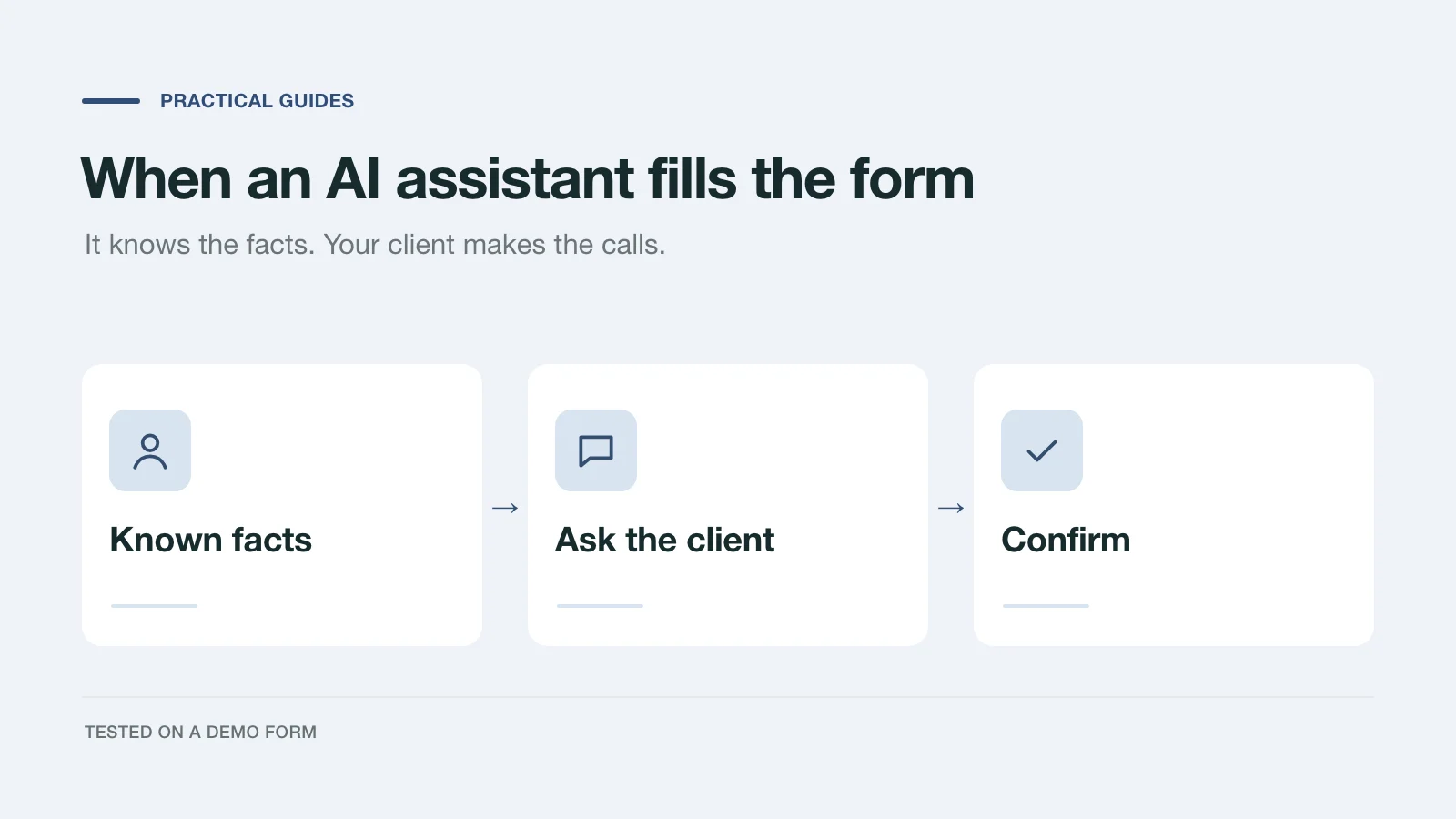
In a proposed workflow, the assistant fills the published form and your team reviews the completed Reply. Enable Lead Scoring with configured criteria if you want Hot, Warm, or Cold verdicts. Live availability and confirmed booking require a separately configured scheduling tool.
If you are not sure how visible your current site is to agents, start with AX Audit. It checks signals such as AI crawler access, llms.txt, Schema.org structured data, MCP availability, agent profile completeness, and marketplace readiness. The goal is not to chase every new protocol. The goal is to find the missing pieces that stop agents from understanding or acting on your business.
A Suggested Rollout Plan
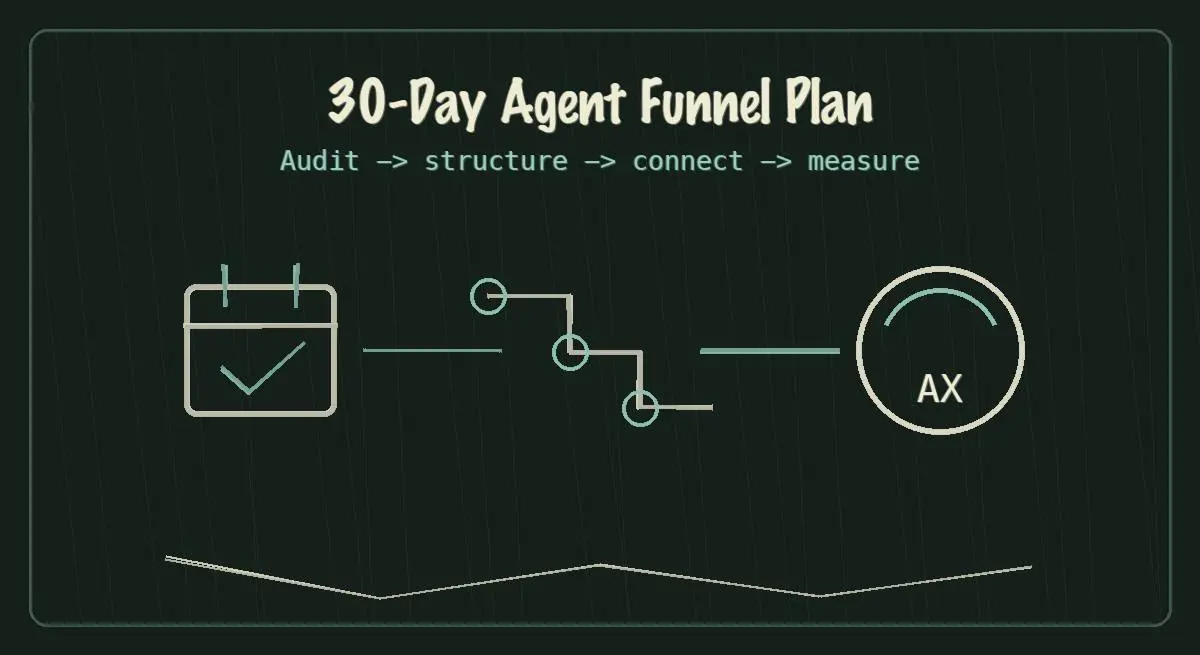
First: audit your current visibility. Run an AI readiness audit, check whether your most important pages can be crawled, and document the facts that must stay consistent everywhere: business name, locations, services, hours, service area, pricing notes, and booking rules.
Next: rewrite your service pages for agent comprehension. Add concise answers to the questions a real buyer would ask: who is this for, what problem does it solve, what makes someone a bad fit, what proof exists, and what happens after the first inquiry? Cross-link to useful supporting pages, including your funnel templates if you are building multiple intake paths.
Then: replace the static form with a structured intake flow. Ask the minimum questions needed to qualify intent, but make them specific enough for a human or AI assistant to complete accurately. For example, a med spa might ask about treatment goals, timeline, prior procedures, contraindications, and preferred appointment windows.
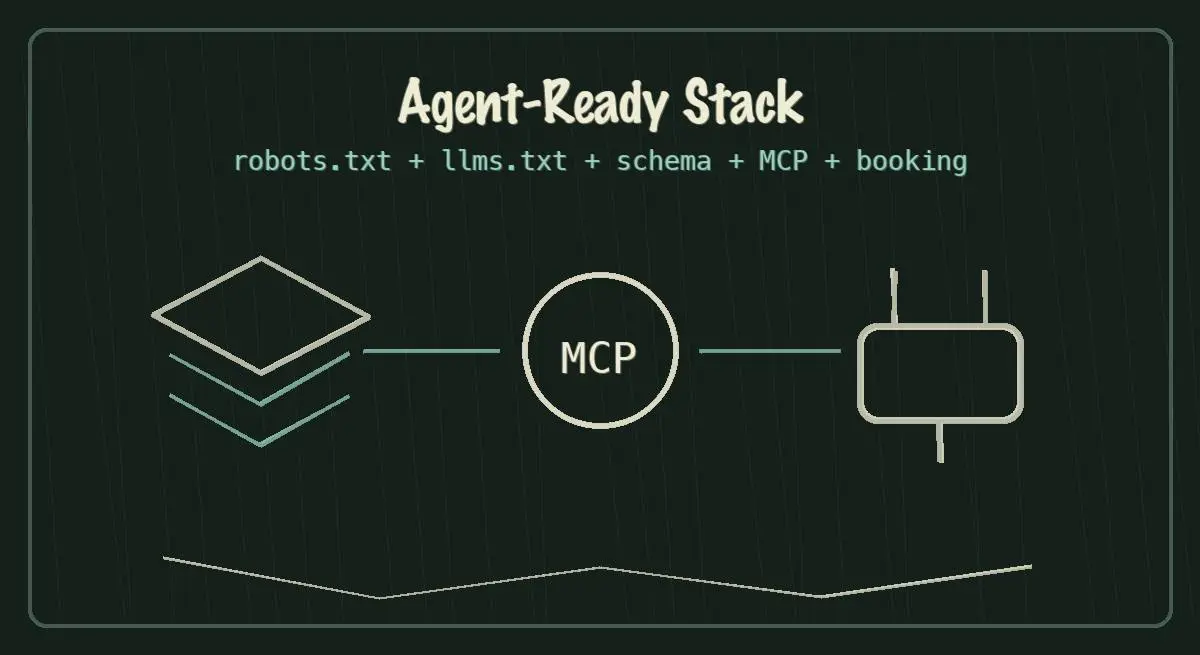
Finally: connect the agent-facing layer. Add the technical signals that help agents discover and use the funnel: Schema.org markup, llms.txt context, clear robots.txt permissions, and, when available, an MCP-accessible intake endpoint. This is the step that moves your funnel from human-friendly to agent-friendly.
What Agencies Should Pay Attention To
For agencies, agent readiness is becoming a practical service line. Clients already understand SEO, conversion rate optimization, and lead quality. Agent Funnel strategy combines all three. You can audit whether a client is visible to AI systems, rebuild their intake around qualification, and measure whether AI-assisted visitors convert into better opportunities.
This also gives agencies a defensible answer to the 'AI will replace marketing' fear. AI does not remove the need for positioning, proof, offers, and conversion design. It raises the standard. The business with clearer data, stronger qualification, and cleaner action paths is easier for both people and agents to choose.
Common Mistakes That Keep Agents From Recommending You
The first mistake is treating the homepage as the whole business profile. A human might understand that a clinic offers consultations, follow-ups, financing, and multiple treatment paths after clicking around for five minutes. An agent needs those facts closer to the surface. If the homepage only says 'personalized care' and the service pages hide the details, the agent has very little to compare.
The second mistake is publishing content that answers broad informational questions but never exposes the buying path. A blog post can win attention, but the agent still needs to know whether the business serves this location, handles this problem, accepts this budget, and has a useful next step. This is why agent-ready content should connect naturally to qualification flows, not just top-of-funnel education. For a deeper foundation, see Dashform's guide on how AI agents find and book services.
The third mistake is asking too many questions too late. Long forms create friction for humans and ambiguity for AI agents. A better approach is progressive qualification: ask the few questions that determine fit first, then collect details only when they change the recommendation or next step. This keeps the flow useful whether the visitor is typing directly or delegating through an assistant.
The fourth mistake is ignoring post-booking trust. Agents will not only ask whether a business can accept an inquiry. They will look for cancellation rules, preparation instructions, refund policies, response expectations, privacy notes, and support channels. These operational details may feel boring, but they reduce uncertainty. In an agent-mediated journey, less uncertainty means a higher chance that your business gets recommended.
One useful test is to read your website as if you were a stranger's assistant with no prior context. If you cannot confidently explain the service, qualify the buyer, and choose the correct next action from the page alone, an AI agent will struggle too.
Frequently Asked Questions
Do AI agents actually book local services today?
A supported assistant can book only when it has an implemented scheduling tool, the required permission, and a confirmed available slot. A Dashform Reply by itself is an inquiry, not a booking.
Is this the same as SEO?
No. SEO helps pages rank in search engines. Agent readiness helps AI systems understand whether your business is a good fit and whether they can safely move the customer to the next step. You still need SEO, but it is no longer the whole discovery system.
What is the fastest first step?
Run an AX Audit and identify your largest gaps. Most businesses should then fix inconsistent business facts, add service-specific structured content, and replace the generic contact form with a qualification funnel.
Do I need MCP right away?
Not always on day one. You can start with crawlable content, structured data, llms.txt, and a better intake flow. MCP matters when you want agents to interact with your business programmatically, which is where Agent Funnel becomes important.
Will this only matter for ecommerce?
The proposed workflow also applies to service inquiries, estimates, and consultation requests. Whether it can confirm appointments depends on the configured scheduling system.
How should a local business measure success?
Track AI-referred traffic where possible, completion rate on your intake flow, lead quality, booked appointments, and the questions users ask before converting. Also monitor whether AI assistants describe your business accurately when prompted.
Conclusion
The trend is clear: customers are moving from search to delegation. They still want great businesses, but they increasingly expect AI assistants to help them choose. Service providers that make their offers structured, trustworthy, and bookable will have an advantage over businesses that only present a static form. Start with an AI readiness score, build a smarter intake path, and make your next customer easy for an agent to understand.