An AI agent can act on a person's instructions using the tools it has been given. For a local business, the useful question is whether that agent can access accurate information and complete an authorized inquiry.
MCP (Model Context Protocol) is one interface a compatible client can use to access tools. It does not by itself provide payment authorization, live scheduling, or universal business discovery.
For local service businesses -- spas, dental clinics, fitness studios, salons, real estate agents, home service providers -- this shift creates both an urgent threat and an enormous opportunity. This guide breaks down exactly what the agent economy means for your business and the concrete steps to position yourself ahead of competitors.
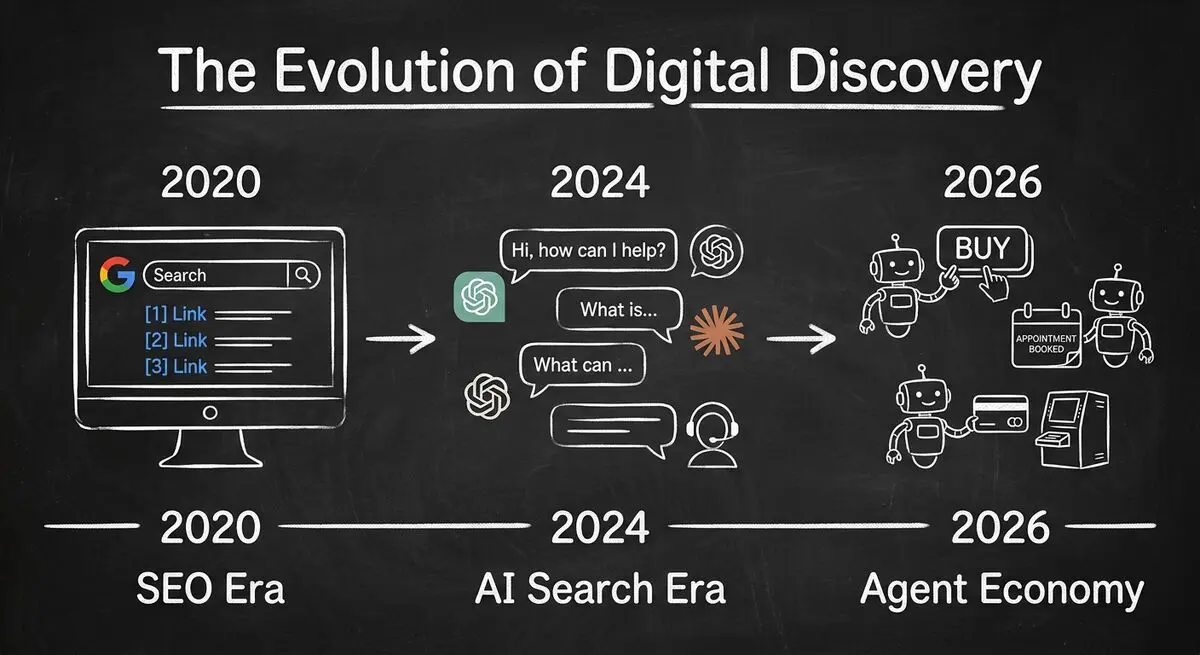
The Shift from SEO to Agent Economy
| Dimension | Search visibility | AI-assisted research | Agent interaction |
|---|---|---|---|
| Primary Audience | Search engine crawlers | AI models (ChatGPT, Claude) | Autonomous AI agents |
| Goal | Rank on page 1 | Appear in AI answers | Be bookable by agents |
| Key Files | robots.txt, sitemap.xml | llms.txt, structured data | MCP server, agent profile |
| Conversion Path | Visitor follows a result | Visitor evaluates an answer | Authorized agent uses available tools |
| Success Metric | Google ranking position | AI citation frequency | Agent-sourced leads |
| Setup Work | Content and website maintenance | Verify accessible information | Configure, authorize, and test actions |
What Is the Agent Economy
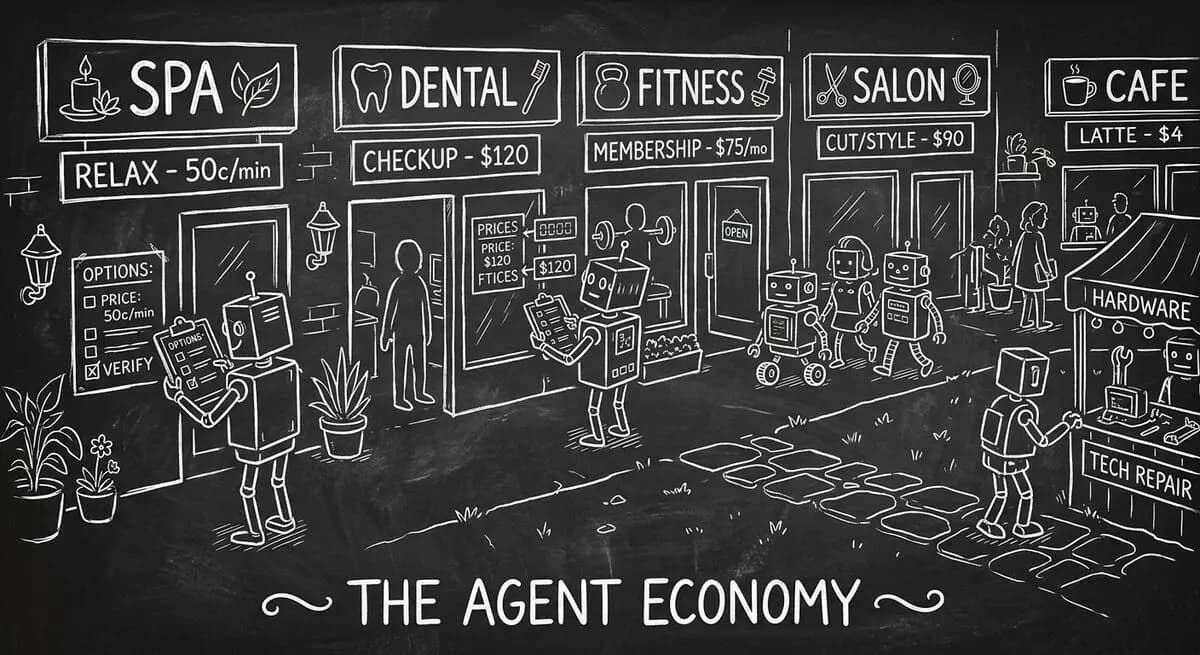
The agent economy is the emerging ecosystem where AI agents autonomously discover, evaluate, and transact with businesses on behalf of consumers. Instead of a person searching Google, reading reviews, comparing options, and filling out a booking form, an authorized agent may attempt parts of that workflow through available tools.
Keep discovery, inquiry, and transaction capabilities separate in your plan. Each needs different information, permissions, and verification.
For example, a person might ask an assistant to find a dentist or request a massage appointment. Whether it succeeds depends on its search and action tools, business availability, and the user's authorization. A request is not a confirmed booking.
The Three Pillars of the Agent Economy
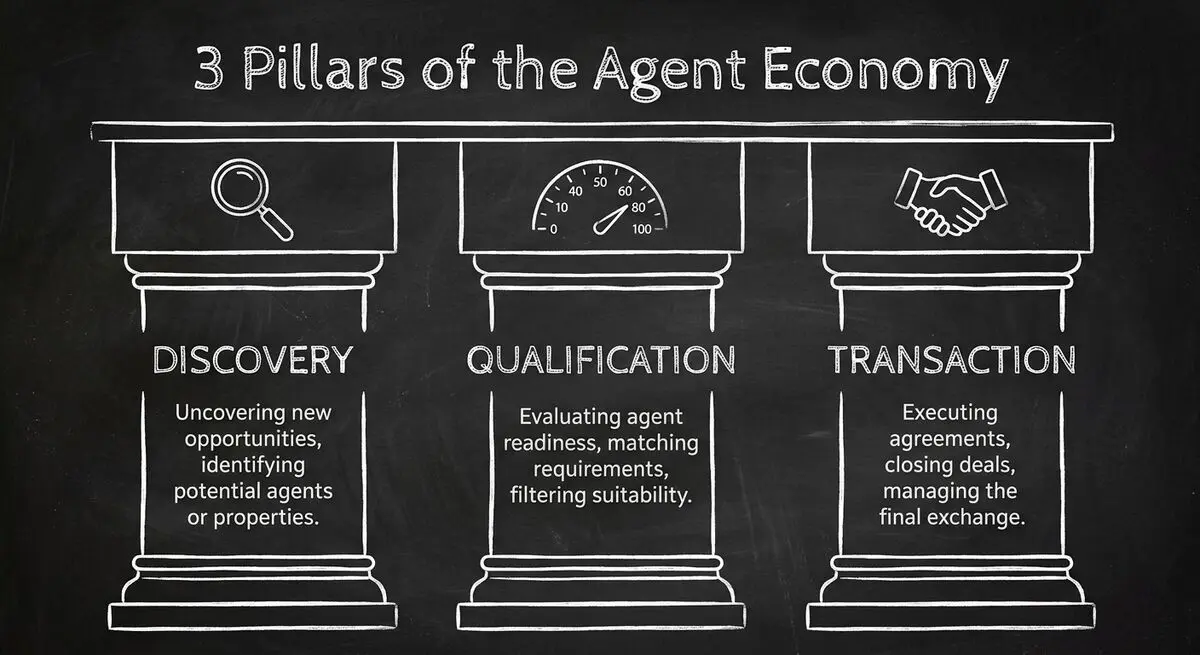
The agent economy rests on three capabilities that AI agents need from businesses:
1. Discovery
AI agents must be able to find your business. This goes far beyond SEO. Agents query structured registries, read machine-readable files, and connect to programmatic endpoints. Key mechanisms include your robots.txt configuration, an llms.txt file, Schema.org structured data, and .well-known/mcp.json endpoints.
2. Qualification
Agents need to evaluate whether their user is a good match for your business before committing. This means structured service catalogs with pricing, availability data, and a qualification form with criteria your team can review. Dashform Lead Scoring returns hot, warm, or cold verdicts after completion, not numeric fit scores.
3. Transaction
The agent must be able to take action programmatically. No form filling, no button clicking, no CAPTCHA solving. A clean API call that creates a qualified lead or confirmed appointment in your system.
Why This Matters More Than SEO
Google is no longer the only place customers discover local businesses. AI assistants like ChatGPT are now one of the ways they find local services.
Agent access lets a compatible client attempt supported actions. It does not guarantee recommendation, user selection, or a shorter sales cycle.
The Early Adopter Advantage
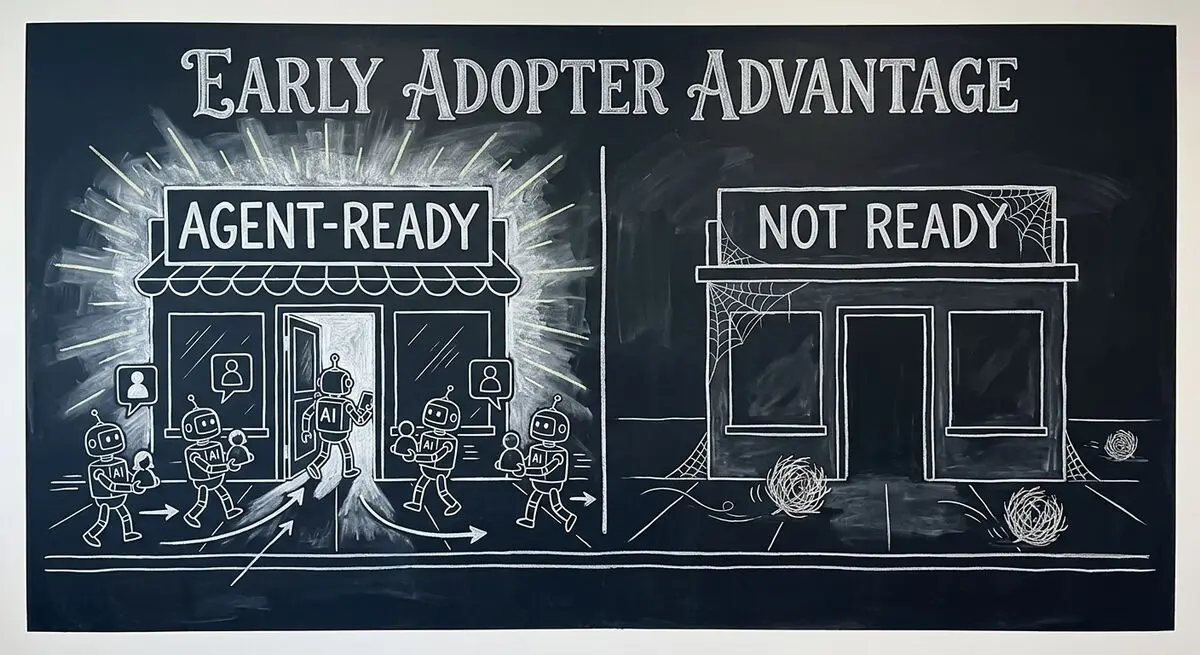
Review the conditions an AX Audit checks, including crawler access, structured data, and available interaction interfaces.
Use the findings to prioritize testable improvements. Neither the audit nor this guide establishes competitor adoption or a first-mover advantage.
Illustrative Workflows by Industry
These are proposed scenarios, not customer outcomes. Confirmed scheduling and payments require separately configured systems and user authorization.
Wellness and Spa
An agent-ready spa has its full service menu with pricing in structured data. When an AI agent searches for "couples massage in Manhattan within my budget," the spa appears with services, pricing, and location. The agent qualifies the lead, then books directly.
Dental and Medical
An agent-ready dental practice lists accepted insurance plans, specializations, and new patient availability. When a health concierge agent searches for a dentist by insurance and location, it matches and submits a consultation request.
Fitness and Personal Training
An agent-ready fitness studio exposes class schedules, membership tiers, and trial session options. When an AI agent searches for yoga classes under a certain budget, it finds matching studios and books a trial.
Real Estate
An agent-ready real estate agent has specializations, service areas, and languages in structured data. When a relocation AI assistant searches for an agent by specialty and location, it matches expertise and submits an inquiry.
Home Services
An agent-ready home service provider lists service types, areas, licensing, and availability. When a home management agent needs a licensed electrician, it qualifies the job type and schedules an estimate visit.
How to Enter the Agent Economy Today
Step 1: Check Your AI Agent Readiness Score
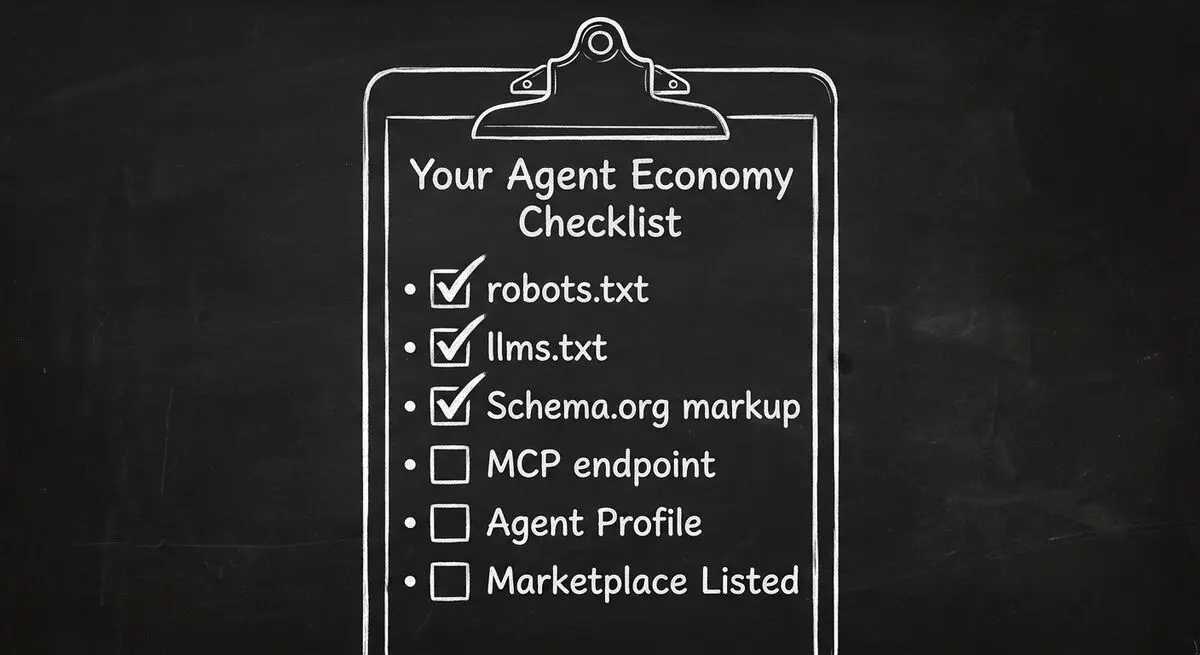
Run a free AX Audit on your website. It produces an AX Score and supporting Findings. Read the current report's checks and limitations; the score is not a measure of bookings or recommendation frequency.
Step 2: Unblock AI Crawlers
Review crawler-specific policies before changing robots.txt. Training, search, and user-triggered retrieval have different controls; allowing a training crawler is not a requirement for recommendations.
Step 3: Add Structured Data
Add Schema.org JSON-LD markup describing your business type, location, services, and pricing.
Step 4: Create an llms.txt File
Consider an optional llms.txt file for tools that support the proposal. It is not a universal requirement for AI visibility.
Step 5: Enable Agent-Ready Booking
Create and Publish a reviewed Dashform form, verify its business profile and Services, and enable marketplace participation if you want that listing. Test a compatible agent's form fill. Configure booking separately and confirm an appointment in the booking system before calling it booked.
What Happens If You Wait
Choose an investment based on actual customer needs and the cost of implementation and maintenance.
A small pilot can reveal whether the intended agent workflow works. Track discovery tests, completed inquiries, and confirmed bookings without assuming that technical readiness creates demand.
FAQ
Is the agent economy just another buzzword?
The term describes agents using tools on a person's behalf. Evaluate a specific supported workflow rather than treating the label as evidence of adoption or business value.
Do I need to replace my current website?
No. Your website continues to serve human visitors. Agent economy readiness is an additional layer: structured data, machine-readable files, and MCP endpoints.
How quickly will I see results?
No traffic or booking timeline is established here. Test the endpoint, then track observed agent-originated inquiries and confirmed bookings separately.
What if my competitors are not doing this yet?
Evaluate the work against your own customers and service needs. Early implementation does not make assistants recommend your business by default.
Is this only for tech-savvy businesses?
An AX Audit starts with a public URL. A Dashform workflow still requires a reviewed form, published revision, accurate profile and services, and tests. Booking and other external actions need separate configuration.
How does this work with my existing marketing?
It can complement existing inquiry paths. Budget for setup, tool usage, review, and maintenance, and measure whether it contributes inquiries.