

Google has dominated local business discovery for over a decade. If you wanted customers to find your spa, dental clinic, or fitness studio, you optimized for Google. You claimed your Google Business Profile, collected reviews, built local backlinks, and hoped to rank on page one.
That strategy still matters. But the foundation it rests on is cracking.
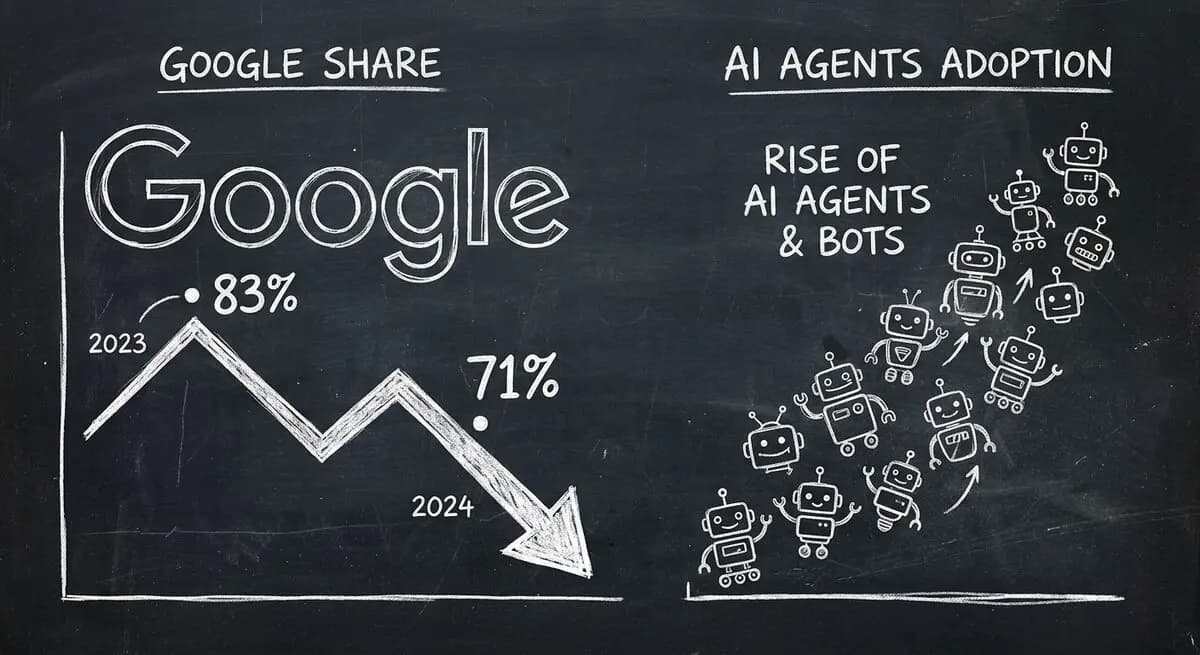
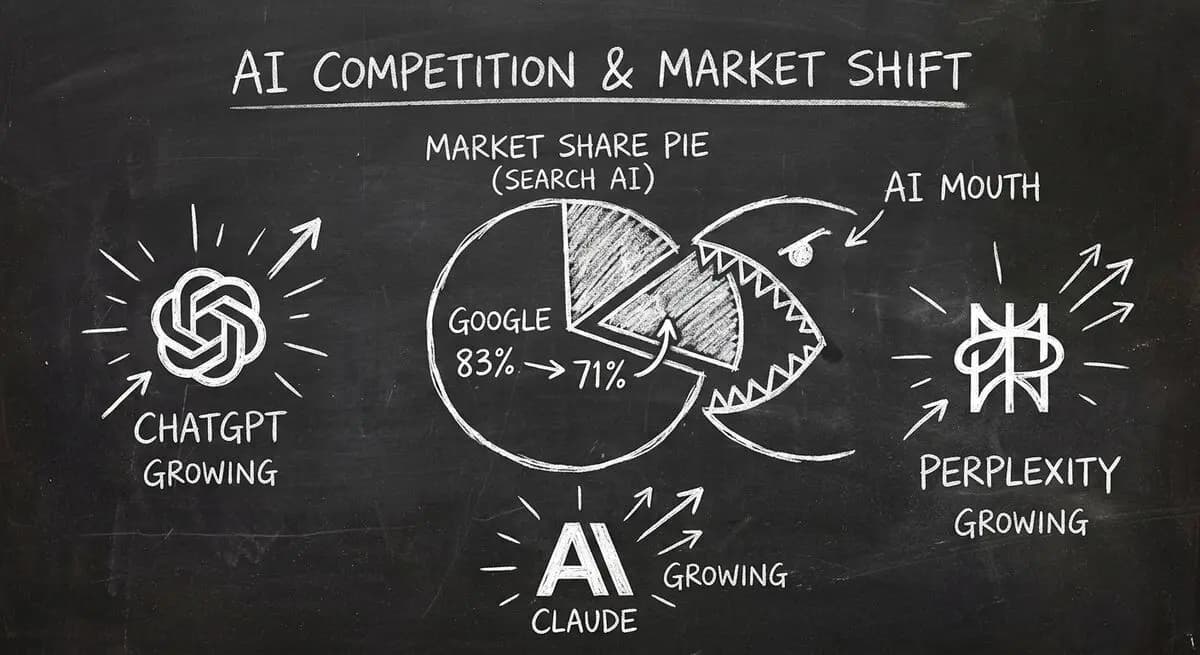
BrightLocal's 2026 Consumer Search Behavior report reveals that Google's share of local business discovery dropped from 83% to 71% in a single year. Twelve percentage points did not vanish -- they shifted to AI-powered channels. ChatGPT is now the third most popular way consumers discover local services, behind only Google and direct recommendations from friends and family.
For local service businesses that depend on online bookings -- wellness spas, salons, dental practices, home service providers -- this shift demands immediate attention. This article breaks down where Google's lost traffic went, what AI-powered discovery means for your business, and exactly what to do about it.
Local Business Discovery: Google vs AI Channels (2025-2026)
| Metric | 2025 | 2026 | Change |
|---|---|---|---|
| Google share of local discovery | 83% | 71% | -12 pts |
| Consumers using AI for local services | ~25% | 45% | +20 pts |
| Trust in AI recommendations | ~25% | 40% | +15 pts |
| Adults using AI for personal tasks | ~35% | 54% | +19 pts |
| AI agents market size | $5.1B | $7.63B | +49.6% CAGR |
| Businesses agent-ready | <3% | ~7% | Still very low |
The Numbers Behind the Shift
The data from BrightLocal's 2026 report tells a clear story. Google's share of local discovery dropped 12 points in one year, from 83% to 71%. At the same time, 45% of consumers now use AI assistants to find local services. ChatGPT ranks as the third most popular discovery channel for local businesses.
Zendesk's 2026 CX Trends Report adds context: 74% of consumers expect 24/7 service availability, and 40% already trust AI recommendations for local services. PYMNTS research found that 54% of U.S. adults use AI for personal tasks including finding and booking services.
The global AI agents market was valued at $7.63 billion in 2025 and is projected to reach $182.97 billion by 2033, a 49.6% compound annual growth rate according to Grand View Research. Accenture's 2025 Technology Vision report found that 77% of executives agree AI agents will fundamentally transform digital systems.
These are not future projections. These are current measurements of a shift already underway.
Where Google's Lost Traffic Went
The 12 percentage points Google lost did not disappear. They moved to three categories of AI-powered discovery.
AI Chat Assistants
Consumers increasingly ask ChatGPT, Claude, Perplexity, and Google's own Gemini to find local services. Instead of typing "best dentist near me" into Google and browsing ten results, they say "find me a dentist accepting Blue Cross insurance near Brooklyn" and get a direct recommendation.
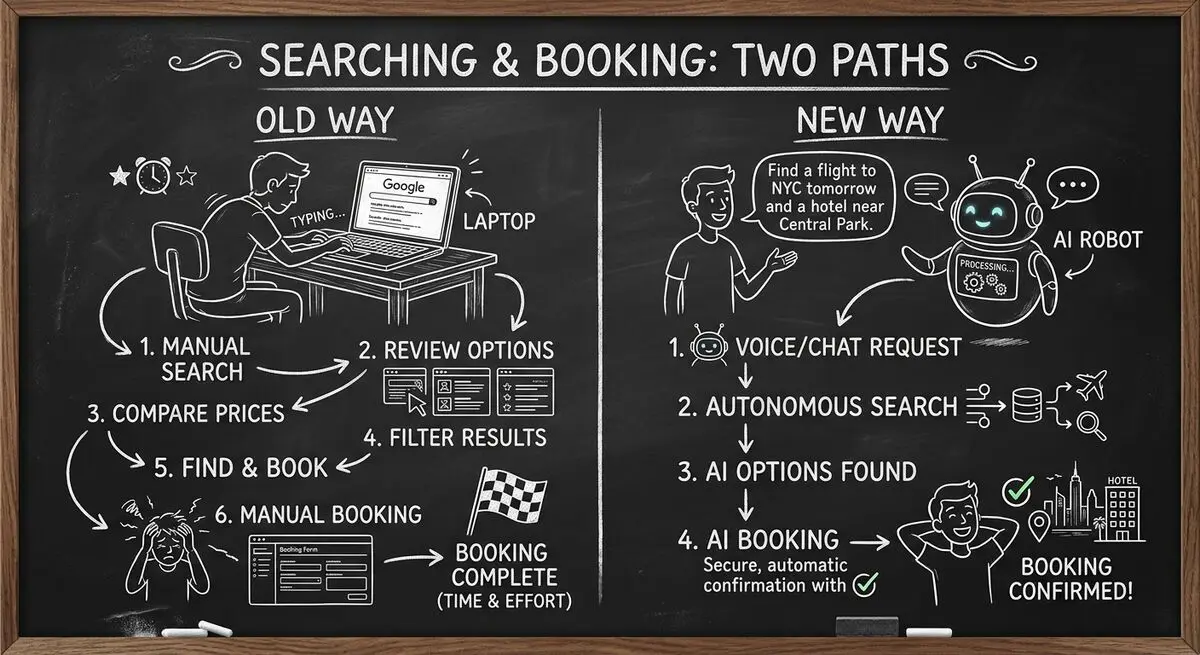
The difference is fundamental. Google returns a list of links for humans to evaluate. AI assistants evaluate on the user's behalf and return a recommendation or take action directly.
AI-Powered Search Experiences
Google itself is shifting toward AI-powered search through its AI Overviews (formerly SGE). When a consumer searches for a local service, Google increasingly shows an AI-generated summary at the top of results. This summary often answers the query without requiring clicks to individual business websites.
Bing Copilot and Perplexity operate similarly, providing synthesized answers that reduce the need for traditional website visits.
Autonomous AI Agents
The newest category -- and the one growing fastest -- is autonomous AI agents that do not just recommend but take action. These agents search for businesses, evaluate service fit, check availability, and submit bookings programmatically. The consumer never visits a search engine or a business website.
Visa launched its "Agentic Ready" program for agent-based commerce. Google updated its Universal Commerce Protocol for agent transactions. OpenAI, Microsoft, and Amazon adopted MCP (Model Context Protocol) as the standard for AI-to-service communication. The infrastructure for autonomous AI commerce is live and funded by the largest technology companies in the world.
Why Traditional SEO Cannot Capture This Traffic
If you have invested in SEO for years, your instinct might be to optimize harder. More keywords, better content, stronger backlinks. But the traffic leaving Google is not going to a different search engine that uses the same ranking factors. It is going to AI systems that evaluate businesses entirely differently.
Traditional SEO optimizes for search engine crawlers that rank pages based on keywords, backlinks, domain authority, and user signals. AI-powered discovery evaluates businesses based on structured data, machine-readable service information, programmatic accessibility, and qualification fit.
Here is the critical difference. In traditional search, a consumer sees your listing and decides whether to click. In AI-powered discovery, the AI agent decides whether to recommend you -- and often whether to book you -- before the consumer sees anything. If your business data is not machine-readable, the AI agent does not evaluate you at all. You are invisible.
Consider what happens when someone asks Claude to "find a couples massage in Manhattan under $300 this Saturday." The AI agent needs to discover businesses offering massage services, read structured service catalogs with pricing, check that couples massage is available for under $300, verify Saturday availability, and submit a booking or inquiry.
If your spa's services exist only in a visual booking widget or PDF price list, the AI agent cannot read them. Your spa does not exist in that transaction. A competitor whose services are structured with Schema.org data and bookable through MCP gets the customer.
The 90% Invisibility Problem
How many businesses are actually prepared for AI-powered discovery? Almost none.
A scan of 100 business websites for AI agent readiness found an average score of just 23 out of 100. Ninety-three percent scored "Not Ready" for AI agents. The most common failures: 67% blocked AI crawlers like GPTBot and ClaudeBot in their robots.txt, 78% had no structured data for their services, 96% had no llms.txt file, and 99% had no MCP endpoints.
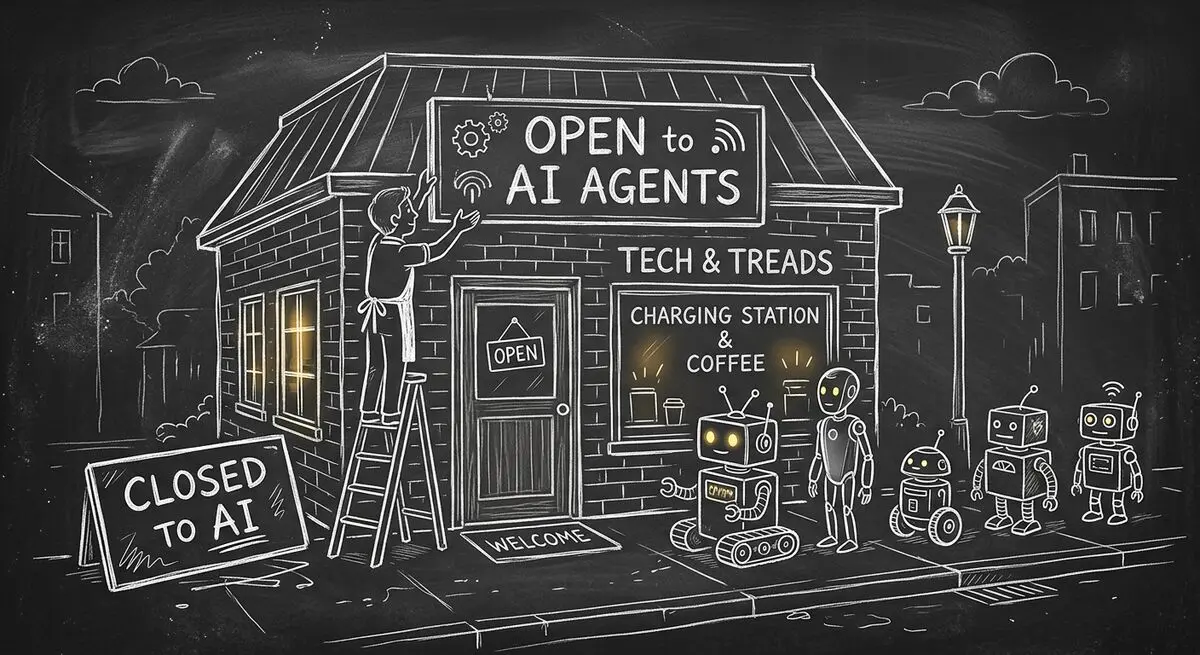
This means 99 out of 100 businesses are completely invisible to autonomous AI agents. For the businesses that are agent-ready, the competitive landscape is nearly empty. When an AI agent searches for a service in a specific category and location, the few businesses that show up win the customer by default.
Compare this to Google SEO, where ranking for any meaningful local keyword means competing against dozens of optimized businesses. In the AI agent channel, early movers face almost no competition.
What AI Agents Need From Your Business
Making your business discoverable by AI agents requires a fundamentally different approach than SEO. AI agents need three things from businesses:
Machine-Readable Discovery
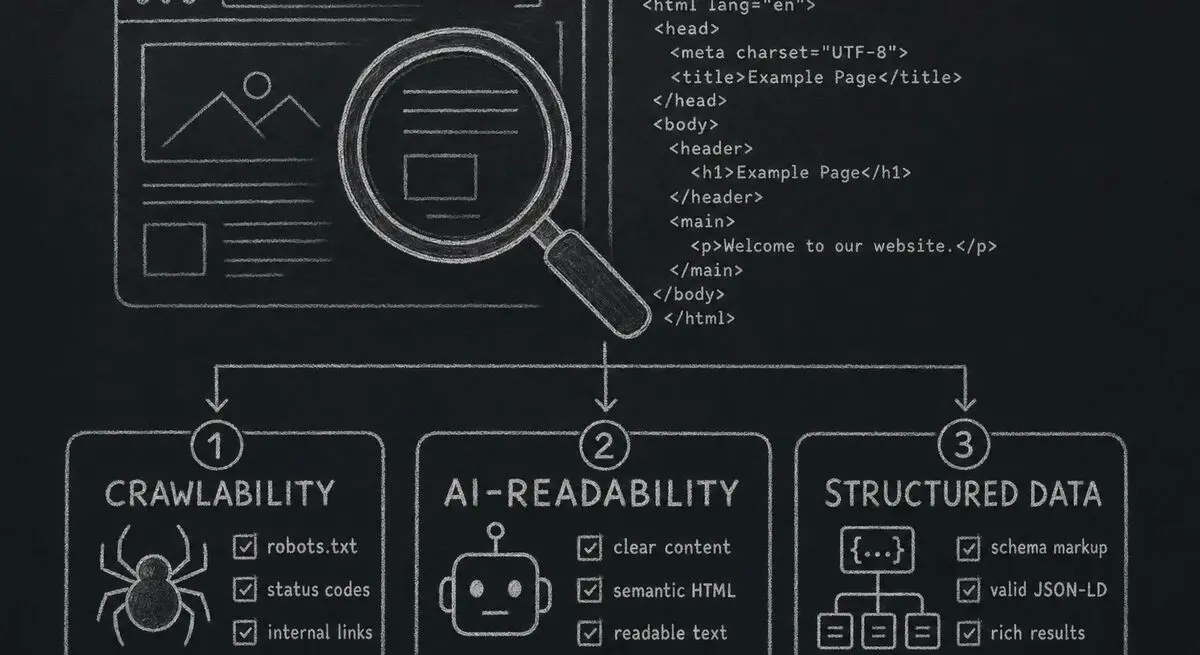
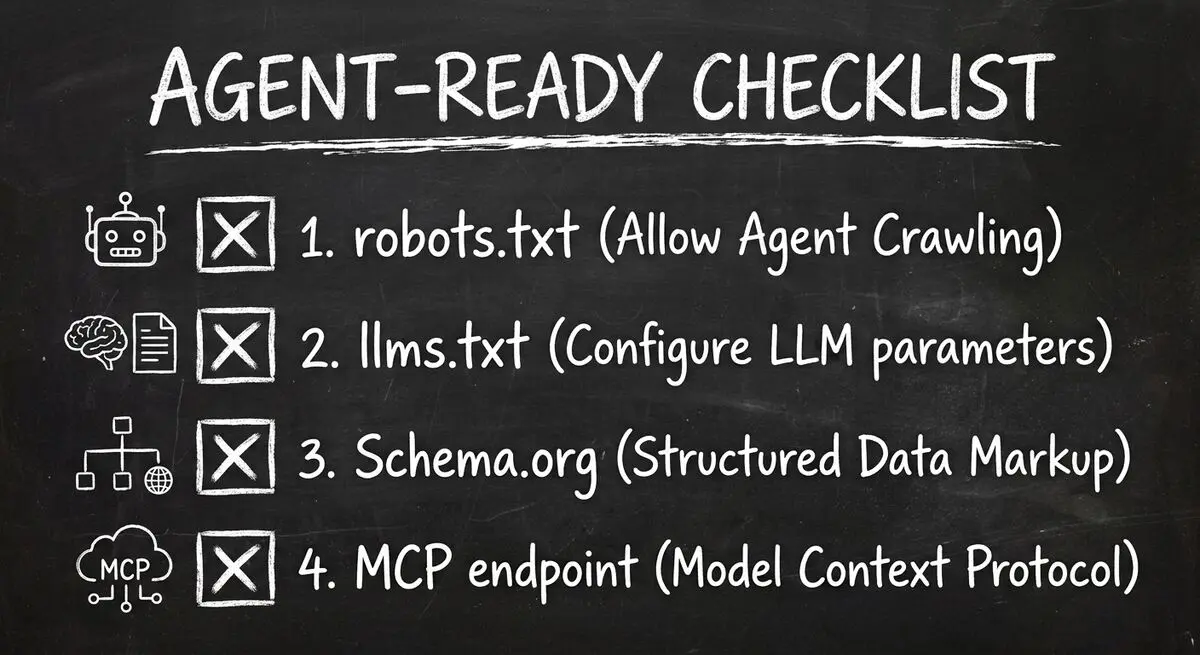
AI agents do not browse websites. They query structured registries and read machine-readable files. Your business needs to be discoverable through: robots.txt configuration that allows AI crawlers (GPTBot, ClaudeBot, Google-Extended), an llms.txt file that describes your business to AI models, Schema.org structured data that makes your services machine-readable, and a .well-known/mcp.json endpoint that tells agents how to connect.
Structured Service Information
AI agents need to understand what you offer in a format they can process. This means your services, pricing tiers, specializations, insurance accepted, availability windows, and location details must exist as structured JSON data -- not as text on a webpage or items in a visual booking widget.
Programmatic Transaction Capability
The agent must be able to take action -- submit a booking, schedule a consultation, or request a quote -- through a clean API call. No form filling, no button clicking, no CAPTCHA solving. MCP (Model Context Protocol) is the emerging standard that provides this capability.
Five Steps to Capture the Shifting Traffic
The path from invisible to agent-ready has concrete steps that any business can implement:
Step 1: Audit Your AI Agent Readiness
Run a free AX Audit on your website. It checks 6 dimensions -- Crawlability, Structured Data, Content Quality, Agent Interaction, Discoverability, and Security & Trust -- and gives you a score out of 100. Most businesses score below 30. This tells you exactly what to fix.
Step 2: Unblock AI Crawlers
Check your robots.txt file. If it blocks GPTBot, ClaudeBot, Google-Extended, or other AI crawlers, update it immediately. These crawlers need access to understand and recommend your business.
Step 3: Add Structured Data
Add Schema.org JSON-LD markup to your website describing your business type, location, services, and pricing. This is the foundation that AI agents use to understand what you offer.
Step 4: Create an llms.txt File
Add an llms.txt file to your website root. This describes your business in plain text specifically for AI models -- the equivalent of robots.txt but for LLMs.
Step 5: Enable Agent-Ready Booking
Set up Dashform Agent Funnel to make your services discoverable and bookable by AI agents. One toggle enables MCP access, auto-generates your business profile, and lists you in the agent marketplace. This addresses discovery, qualification, and transaction in one step -- the highest-impact action you can take.
Industry Impact: Who Needs to Act First
The businesses most affected by this shift are those that depend on online discovery and booking.
Wellness and Spa
When consumers ask AI assistants to "find a spa with hot stone massage near me under $200," only spas with structured service data and MCP endpoints appear. The rest do not exist in this channel.
Dental and Medical
Health-related queries are among the most common AI assistant requests. "Find a dentist accepting Blue Cross near Brooklyn" requires the practice to have insurance information, specializations, and availability in machine-readable format.
Fitness and Personal Training
Class schedules, membership tiers, trial session options, and personal training rates need to be structured data -- not just items on a webpage. AI agents match consumers to fitness options based on budget, schedule, class type, and location.
Real Estate
Buyer agents are increasingly using AI assistants to find real estate professionals. Specializations, service areas, languages spoken, and client types need to be machine-readable.
Home Services
Home management AI agents are emerging that handle maintenance scheduling, emergency repairs, and home improvement projects. Licensed plumbers, electricians, and HVAC providers with structured service data and agent-ready booking capture these automated inquiries.
What Happens If You Wait
Google's local search share did not drop from 83% to 71% slowly. It happened in one year. The transition from "most consumers use Google" to "most consumers use AI" could happen faster than any previous technology shift.
Consider the precedent. Businesses without websites in the early 2000s lost ground to competitors who went online. Businesses without Google Business Profiles in the early 2010s became invisible to local searchers. Each transition happened faster than the one before.
The AI agent transition is the fastest yet. The infrastructure is funded and deployed by Visa, Google, OpenAI, Microsoft, Amazon, and Anthropic. Forty-five percent of consumers already use AI for local discovery. The question is not whether this transition will happen. It is whether your business will be visible when it does.
The cost of entry is near zero. An AX Audit takes 30 seconds. Setting up Dashform Agent Funnel takes 5 minutes. Every day without agent readiness is a day your competitors have the AI agent channel to themselves.
FAQ
Is Google still important for local businesses?
Yes. Google remains the single largest source of local business discovery at 71%. The point is not that Google is irrelevant -- it is that relying solely on Google means missing a rapidly growing channel. Agent-ready businesses capture traffic from both Google and AI-powered sources.
How quickly is AI-powered discovery growing?
BrightLocal's data shows Google's share dropped 12 percentage points in one year. The AI agents market is growing at 49.6% annually. Forty-five percent of consumers already use AI to find local services. The growth trajectory is accelerating, not slowing.
Do I need to stop doing SEO?
No. SEO continues to drive the majority of local discovery through Google. Agent readiness is an additional layer -- structured data, machine-readable files, and MCP endpoints that AI agents use. Think of it as adding a new storefront for robots while keeping your existing storefront for humans.
What is the cost of becoming agent-ready?
Near zero. AX Audit is free and requires only a URL. Dashform Agent Funnel is included in all plans, including the free tier. No code, no API configuration, no developer needed.
Which AI assistants are driving this shift?
ChatGPT (OpenAI), Claude (Anthropic), Perplexity, Google Gemini, and Bing Copilot are the primary consumer-facing AI assistants. Behind them, autonomous AI agents are emerging that book services programmatically without consumer involvement in the search process.
What if my competitors are not agent-ready yet?
That is the opportunity. In SEO, being early to Google Business Profile optimization gave lasting advantages. The same dynamic applies to AI agent readiness. Being among the first businesses in your category and location to be agent-ready means AI agents recommend you by default. Competitors who wait will face an established field.