


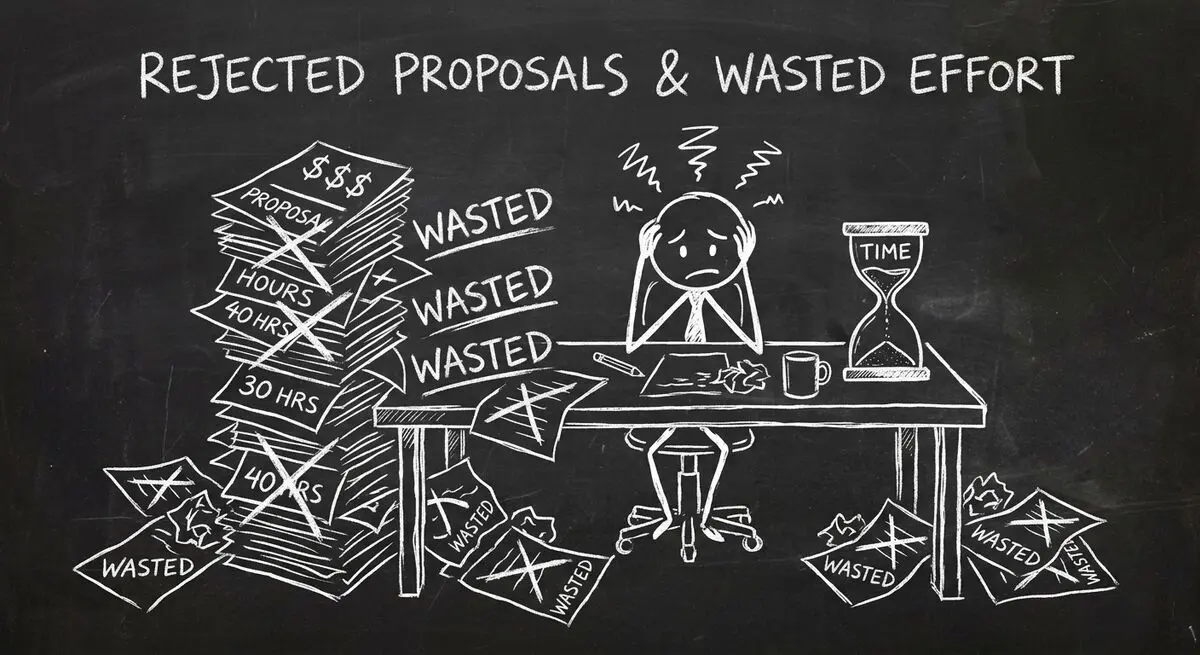
A 12% close rate sounds bad. For a web development agency writing $15,000–$60,000 proposals, it's catastrophic — each lost proposal represents 10–20 hours of unpaid strategy, scoping, and design mockup work. Multiply that by 30+ proposals a year, and you're looking at hundreds of billable hours burned on prospects who were never going to sign.
This is the story of a 12-person web development and digital strategy agency in the Pacific Northwest that was hemorrhaging time and margin on unqualified proposals. Within 90 days of implementing an AI-powered intake system, their close rate tripled, their pipeline value doubled, and their team got 15 hours per week back.
The Hidden Cost of Unqualified Proposals
| Metric | Agency's Numbers (Before) |
|---|---|
| Inbound inquiries per month | 62 |
| Proposals written per month | 18 |
| Average hours per proposal | 12 |
| Monthly hours on proposals | 216 |
| Close rate (proposals → signed) | 12% |
| Deals closed per month | 2.2 |
| Average project value | $34,000 |
| Revenue from new clients/month | $74,800 |
| Cost of lost proposals (hours × rate) | $25,920/mo |
The math was brutal: at a $120/hour internal cost rate, those 16 lost proposals per month represented nearly $26,000 in wasted capacity — enough to fund another full-time developer.
The Proposal Trap: Why Web Agencies Over-Invest in Wrong-Fit Prospects
Web development agencies face a unique qualification challenge. Unlike branding or marketing work (where scope is somewhat flexible), web projects have hard technical constraints that prospects rarely understand upfront.
A prospect requesting a "simple website" might actually need a complex e-commerce platform with custom integrations, a CMS, multilingual support, and ADA compliance. The gap between what the prospect imagines and what the project requires creates a dangerous dynamic:
The agency invests 10+ hours in discovery, technical scoping, and proposal creation — only to present a number 3–5x higher than the prospect expected.
Proposify's analysis of 900,000 proposals found that the average B2B proposal close rate is 36% — but that's among companies that already have some qualification process. Agencies with a basic contact form as their only intake mechanism consistently underperform this benchmark.
This particular agency identified four root causes of their 12% close rate:
-
Budget mismatch (42% of lost proposals) — The prospect's budget was less than half of the project cost.
-
Scope confusion (28%) — The prospect wanted something fundamentally different from what was proposed.
-
Decision-maker absence (18%) — The person on the calls couldn't actually approve the project.
-
Timeline conflict (12%) — The prospect needed delivery faster than technically feasible.
The Intake Overhaul: From Contact Form to AI-Scored Assessment
The agency replaced their contact form with a Dashform smart intake assessment — a 9-question flow designed to surface the exact information that predicts close probability.
The assessment covered three critical dimensions:
Technical Scope Discovery
Questions 1–3 mapped the actual project requirements: What does the project involve? (marketing site, e-commerce, web app, redesign, etc.) Do you need custom integrations? (CRM, payment processing, inventory, APIs) What's your current tech stack? (WordPress, Shopify, custom, none)
Business Readiness Assessment
Questions 4–6 evaluated whether the prospect was genuinely ready to start: What's your project timeline? (ASAP, 1–3 months, 3–6 months, exploring options) Who will be the primary decision-maker for this project? (I am, my team, a committee, the board) Do you have brand guidelines, content, and assets ready? (Yes, partially, no)
Investment Alignment
Questions 7–9 addressed the budget elephant directly: What's your investment range for this project? ($5K–$15K, $15K–$30K, $30K–$60K, $60K+) Have you received quotes from other agencies? (Yes, no, currently comparing) What's driving this project? (Revenue growth, rebrand, technical debt, investor requirement, competitive pressure)

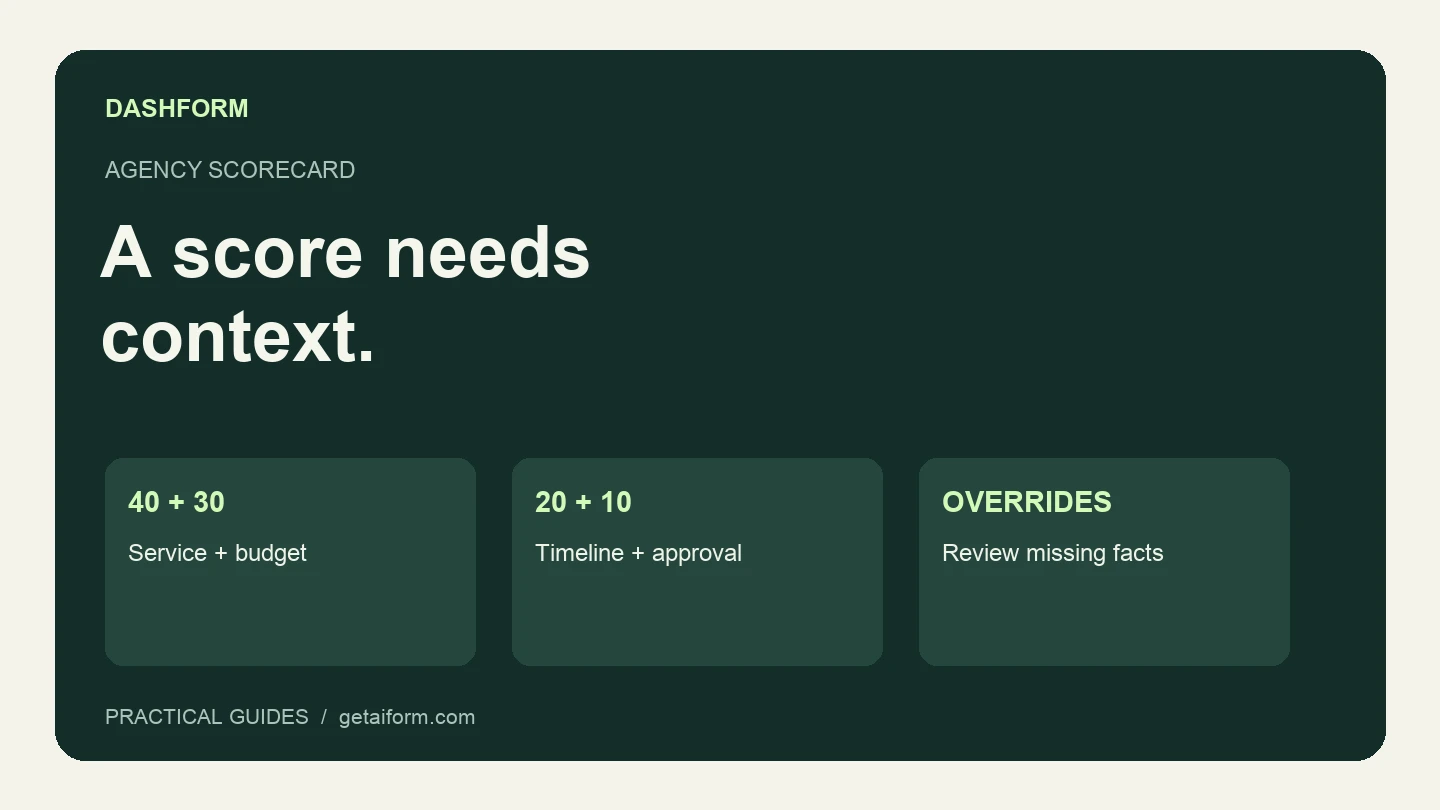
Each response was weighted and scored by Dashform's AI engine. The scoring model prioritized budget alignment (30%), scope-to-capability match (25%), decision-maker access (20%), timeline feasibility (15%), and readiness level (10%).
The Three-Tier Routing System
The real innovation wasn't just scoring leads — it was what happened after the score was calculated:
Tier 1: High-Fit (Score 75–100)
These prospects matched on budget, scope, timeline, and authority. They were immediately shown a personalized results page with: a relevant case study from their industry, a transparent pricing range for their project type, and a one-click calendar booking for a 30-minute strategy session. No email delays, no "we'll get back to you."
Tier 2: Potential Fit (Score 45–74)
These prospects had one or two misalignment factors — usually budget or timeline. They received an automated email sequence with educational content: a web project planning guide, a "How Much Does a Website Really Cost?" breakdown, and relevant case studies. This zero-party data nurture approach converted 11% of Tier 2 leads into Tier 1 prospects within 60 days.
Tier 3: Not Yet Ready (Score 0–44)
These prospects were redirected to the agency's free resource library — blog posts on web project planning, budget calculators, and a "Website Readiness Checklist" PDF. No human time invested, but goodwill maintained.
90-Day Results: Close Rate, Pipeline, and Team Capacity
Before vs After — 90-Day Comparison
| Metric | Before | After (90 Days) | Change |
|---|---|---|---|
| Inbound inquiries/month | 62 | 54 | -13% |
| Proposals written/month | 18 | 11 | -39% |
| Proposal close rate | 12% | 38% | +217% |
| Deals closed/month | 2.2 | 4.2 | +91% |
| Average project value | $34,000 | $48,500 | +43% |
| Monthly new client revenue | $74,800 | $203,700 | +172% |
| Hours/month on proposals | 216 | 132 | -39% |
| Cost of wasted proposals | $25,920/mo | $8,160/mo | -69% |
| Pipeline value (90-day) | $142,000 | $387,000 | +173% |
| Discovery call show rate | 71% | 89% | +25% |
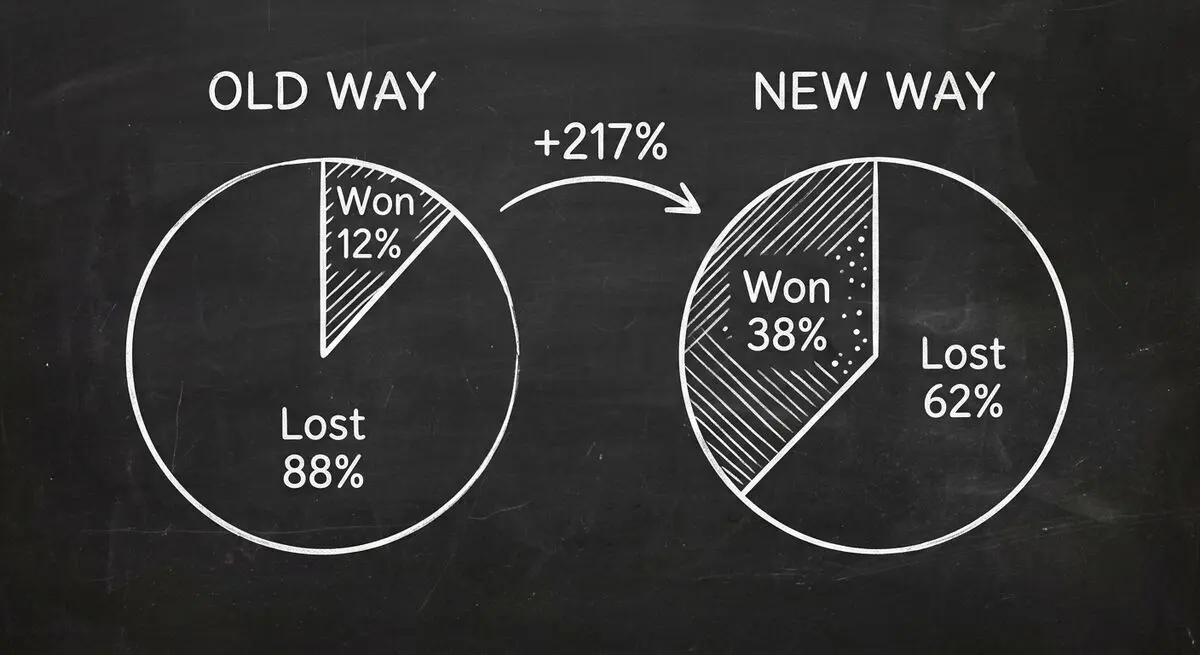
The numbers tell a clear story, but several results deserve closer examination:
Fewer proposals, more wins.
The agency wrote 39% fewer proposals but closed 91% more deals. The qualification system eliminated the 7–8 proposals per month that had near-zero close probability. Each remaining proposal received more attention, better scoping, and higher-quality design mockups — which further improved close rates.
Average project value jumped 43%.
This wasn't price inflation. The intake assessment naturally attracted and qualified prospects with larger, more complex projects — exactly the type of work the agency was best at. Smaller-budget prospects who might have turned into scope-creep nightmares self-selected into the nurture track instead.
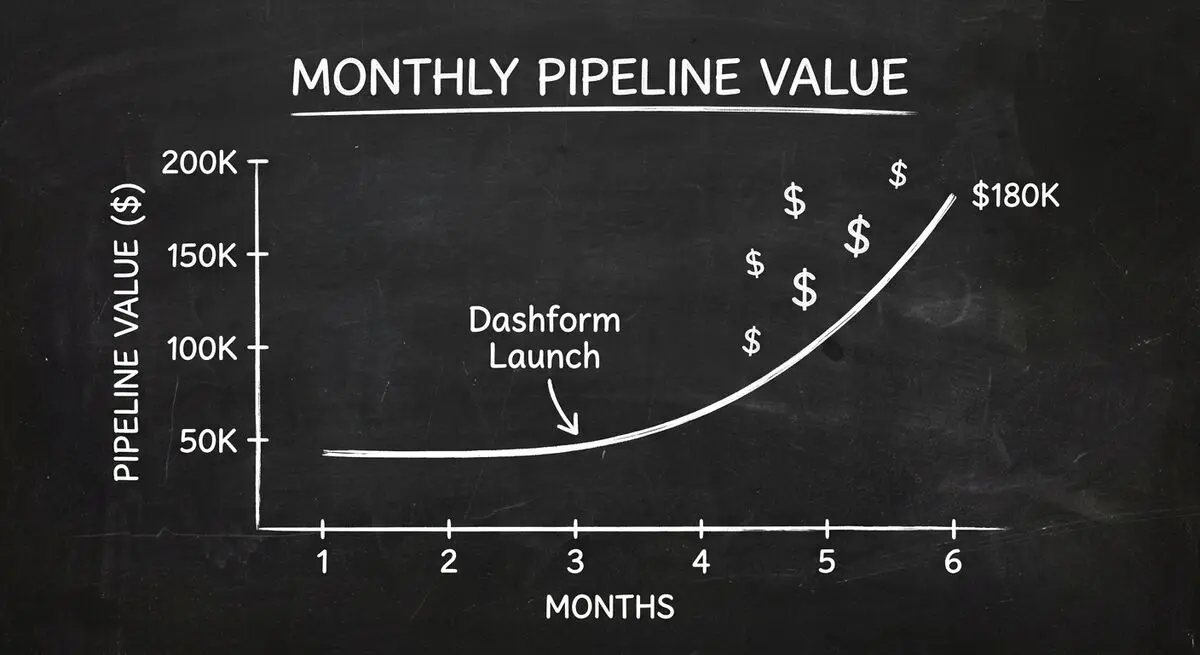
Pipeline value nearly tripled.
With higher deal values and better close rates, the 90-day pipeline grew from $142K to $387K. The agency could plan hiring and capacity with confidence for the first time in years. Multi-step qualification created a predictable, reliable revenue engine.
84 hours per month recovered.
The reduction in wasted proposal work freed up 84 developer and strategist hours per month — equivalent to half a full-time employee. The team redirected this capacity into existing client projects, improving delivery quality and client retention simultaneously.
The Compound Effect: How Better Qualification Improves Everything
What surprised the agency most wasn't any single metric — it was how qualification improvements cascaded through the entire business:
Client relationships improved. When you start an engagement with a prospect who already understands the scope, budget, and timeline, the entire project runs smoother. The agency reported a 40% reduction in scope change requests during the first quarter after implementation.
Team morale recovered. The creative director noted that "nothing burns out a team faster than spending a week on a proposal that gets ghosted." With better-qualified leads, the team's win-loss experience shifted from demoralizing (1 win per 8 proposals) to energizing (1 win per 2.6 proposals).
Referrals increased. Better-qualified clients who had realistic expectations from the start were 3x more likely to refer the agency to peers. The intake assessment itself became a referral talking point — clients told colleagues "they have this really smart intake process that figures out exactly what you need."
Implementation Details Worth Stealing
The agency shared several tactical decisions that other web studios can replicate:
-
Show pricing ranges in the results page. Instead of hiding pricing until the call, they displayed a transparent range based on the prospect's scope answers. "$30,000–$45,000 for your type of project" set expectations before the first conversation, eliminating sticker shock.
-
Use conditional branching for different project types. Dashform's conditional logic let them create different question paths for e-commerce vs. marketing sites vs. web applications. Each path had its own scoring weights because the qualification signals differ by project type.
-
Include a "What stage are you at?" question. They found that prospects who selected "Just exploring options" had a 3% close rate, while those who selected "Ready to start within 30 days" had a 52% close rate. This single question became their strongest predictor.
-
Integrate the assessment everywhere. Beyond the website, they embedded the intake link in their email signatures, LinkedIn profiles, and even client referral templates. Every inbound channel pointed to the same qualification flow.
Preparing for the Agent Economy
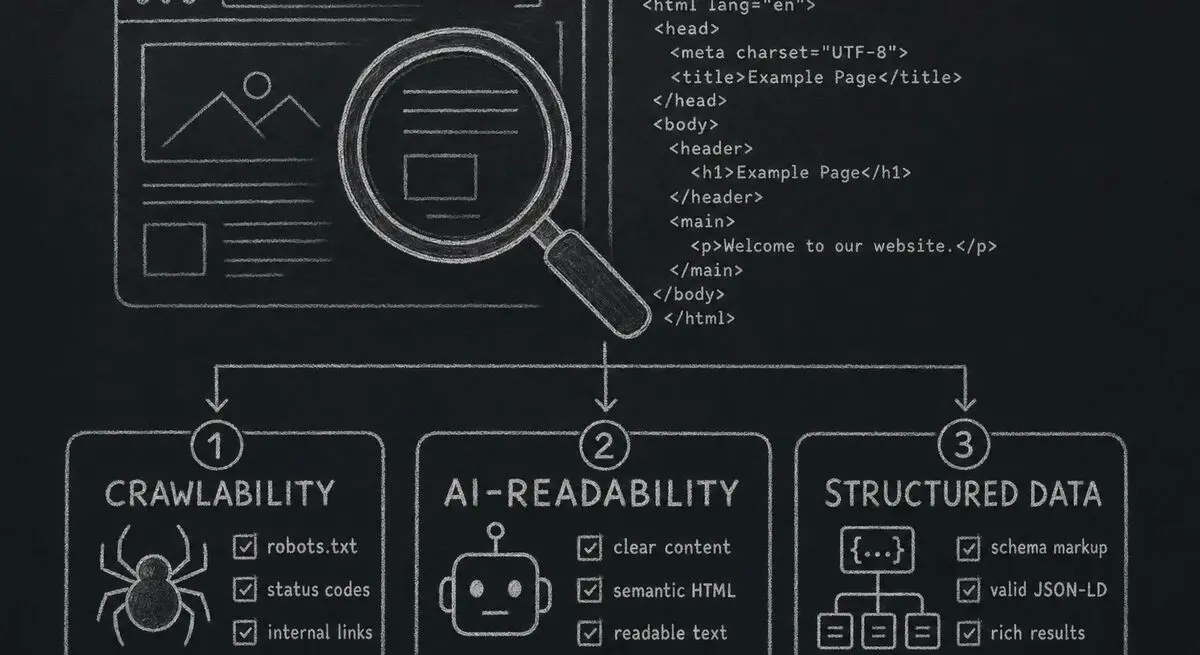
The agency is now taking qualification one step further with agent economy readiness. As AI agents increasingly help businesses find and evaluate service providers, having a structured, machine-readable intake process becomes a competitive advantage.
Dashform's Agent Funnel feature makes the intake assessment accessible to AI agents via the MCP (Model Context Protocol) standard. When a CMO asks Claude or ChatGPT to "find a web development agency for a $40K e-commerce rebuild," the AI agent can interact with the intake assessment, evaluate the fit, and present the agency as a qualified option — complete with relevant case studies and booking availability.
The agency checked their AX Score using Dashform's free AX Audit tool and scored 41 out of 100. Key gaps: no llms.txt file, no Schema.org service markup, and no MCP endpoint. They're addressing each gap systematically, treating AI agent visibility as the next frontier of business development.
With Google's search share declining and AI agents becoming a primary discovery channel, agencies that invest in qualification infrastructure now will have a significant head start in the agent-mediated marketplace.
Frequently Asked Questions
Is a 38% close rate realistic for a web development agency?
Yes, when measured against qualified proposals. Proposify's data across 900,000 proposals shows a 36% average close rate for companies using structured proposal tools. The key difference is qualification: a 38% rate on pre-screened leads is conservative compared to the 50–60% rates some highly selective agencies report.
How detailed should the intake assessment be?
For web development agencies, 7–10 questions is the sweet spot. You need enough depth to assess technical scope, budget, and readiness, but not so many questions that qualified prospects abandon. Research on multi-step form optimization shows that each question should earn its place by providing a clear qualification signal.
What about prospects who lie about their budget on the form?
It happens, but less than you'd expect. The multi-step format creates a commitment dynamic — prospects who've invested 3 minutes answering detailed scope questions are psychologically primed to answer the budget question honestly. The agency found that budget overstatement dropped from ~25% (estimated from phone call experience) to under 10% with the structured assessment.
Should we stop doing proposals for mid-tier leads?
Not necessarily. The agency's Tier 2 nurture sequence converted 11% of mid-scoring leads into qualified prospects within 60 days. Some of the best client relationships started in Tier 2 — prospects who needed time to align internal stakeholders or secure budget. The key is not investing heavy proposal time until they re-qualify as Tier 1.
How quickly can we set this up?
Most agencies have the intake assessment live within a day. Dashform's AI builder generates the initial structure from a description of your ideal client and common disqualification reasons. Budget 2–3 hours for customizing the scoring weights, writing the results page copy, and connecting your CRM and calendar integrations.
Can this work for agencies that primarily get leads through referrals?
Absolutely — and it may be even more important. Referrals feel pre-qualified because someone vouched for them, but budget and scope mismatches happen just as often. The agency sends the intake assessment link to referrals before the first call with a message: "To make the most of our time together, fill this out so we can prepare a few relevant examples." It frames qualification as preparation and respect, not gatekeeping.