

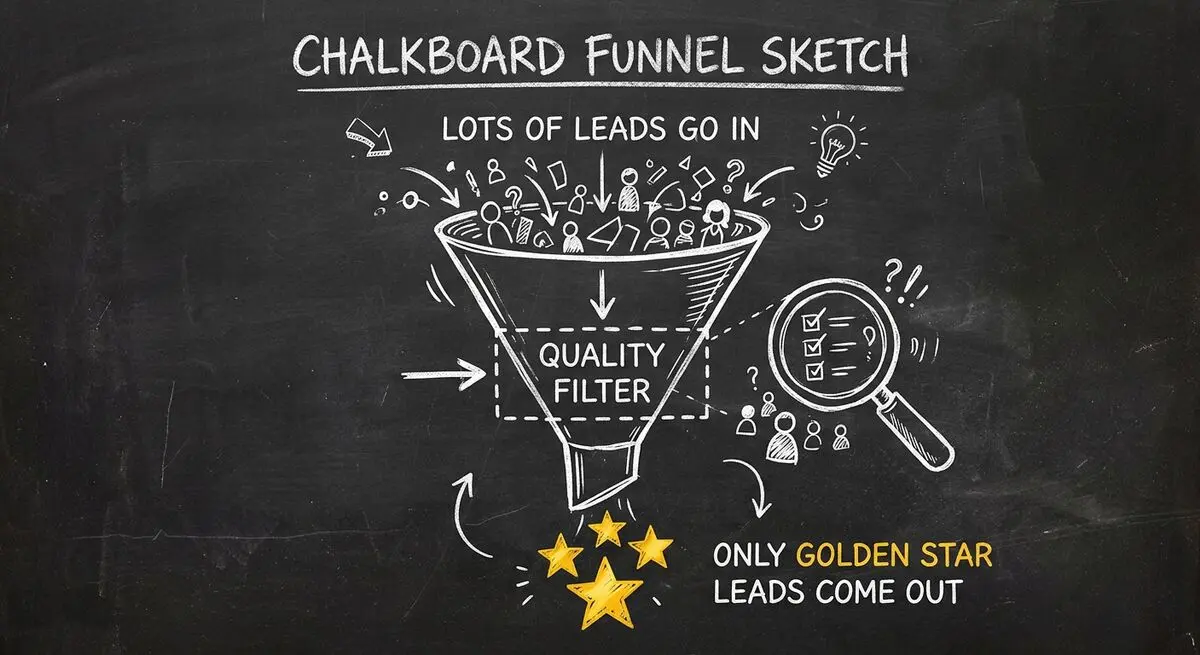
You're spending $10,000 a month on lead generation for your B2B clients. The leads are coming in. But sales keeps complaining: "These leads are garbage."
Sound familiar? You're not alone. Low lead quality is the number one pain point for B2B agencies in 2026, and it's getting worse. The proliferation of AI-generated content has increased top-of-funnel volume while diluting quality. More people are filling out forms, but fewer are actually qualified buyers.
The Demand Gen Report's 2026 survey found that the MQL model is breaking down across B2B marketing. Leads that meet basic criteria (downloaded a whitepaper, visited a pricing page) are no longer reliable indicators of buying intent. The result: sales teams drown in low-quality leads, agencies get blamed, and client relationships deteriorate.
This guide identifies the five root causes of low-quality B2B agency leads and provides the specific fixes that turn lead volume into lead quality.
Lead Quality Diagnostic: Root Causes and Fixes
| Root Cause | Symptoms | Fix | Expected Impact |
|---|---|---|---|
| No qualification layer | High volume, low conversion to SQL | Add interactive assessment before sales handoff | 2-3x improvement in SQL rate |
| ICP-blind content | Traffic from wrong audience | Align content strategy to buyer personas | 30-50% reduction in unqualified leads |
| Static form fatigue | Low form completion, fake emails | Replace forms with quiz funnels | 3-4x increase in genuine completions |
| Missing scoring | Sales treats all leads equally | Implement lead scoring based on ICP fit | 50% reduction in wasted sales time |
| No intent signals | Can't distinguish browsers from buyers | Capture buying stage and timeline via assessment | 2x improvement in lead-to-opportunity rate |
Root Cause 1: You're Capturing Leads Without Qualifying Them
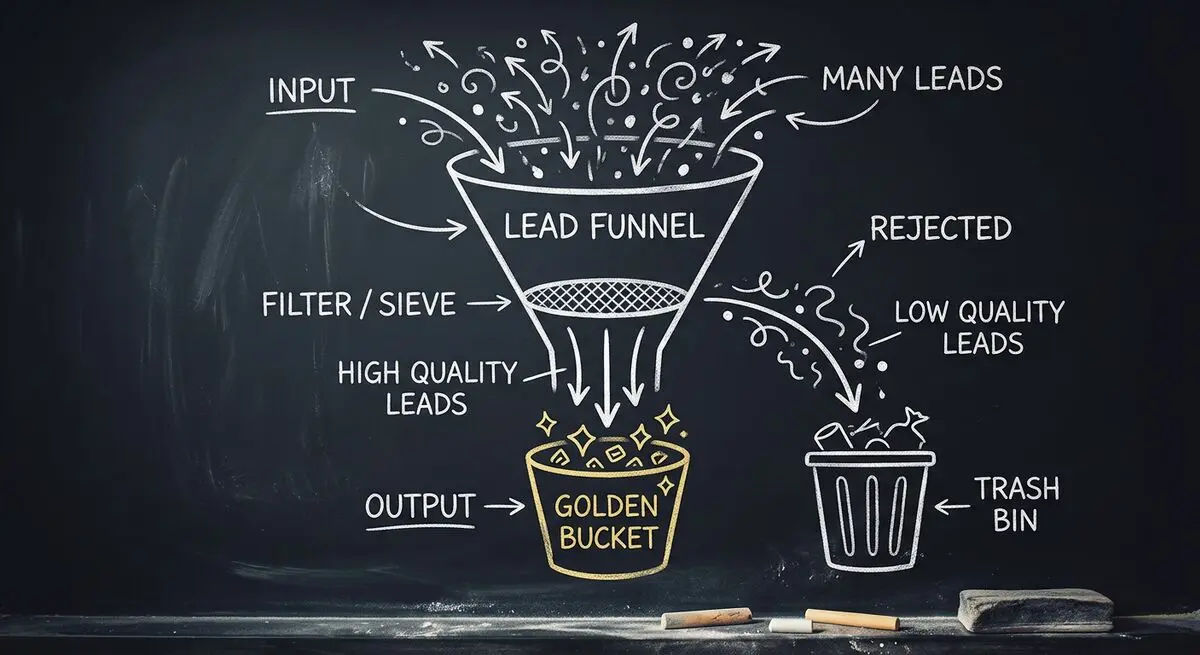
The most common cause of low-quality leads is also the simplest to fix: there's no qualification step between lead capture and sales handoff.
Here's the typical flow: Visitor reads a blog post, clicks a CTA, fills out a 3-field form (name, email, company), gets added to the CRM as a "lead," and sales gets notified. The problem? You know their name and email, but nothing about their budget, timeline, authority, or fit. Sales calls them, discovers they're a student writing a thesis, and marks the lead as disqualified. Repeat 50 times a month.
The Fix: Add an Interactive Qualification Layer
Between content consumption and sales handoff, add a qualification assessment that captures the data sales actually needs. A 3-5 question quiz that identifies: company size and revenue range, specific pain point or use case, buying timeline (now, next quarter, exploring), role and decision-making authority, and current solution or competitor being evaluated.
Build this on Dashform using multi-step qualification flows. The platform scores each respondent automatically and routes high-fit leads to sales with full qualification context -- so the sales rep knows exactly who they're talking to before the first call.
Root Cause 2: Your Content Attracts the Wrong Audience
Your blog posts rank well and drive traffic, but the traffic is from the wrong people. This happens when content is optimized for search volume rather than ICP alignment.
For example: a B2B SaaS company targeting enterprise CFOs has blog posts ranking for "what is financial modeling" and "excel budget template." These terms get thousands of searches a month -- from finance students, small business owners, and junior analysts. Not from the enterprise CFOs who are the actual buyers.
The Fix: ICP-Aligned Content Strategy
Audit your client's top 50 keywords by traffic. For each one, ask: would our ideal buyer search for this? If the answer is no, deprioritize it. Shift toward problem-aware and solution-aware content that maps to specific ICP pain points.
Then embed micro-assessments in the remaining content to filter out non-ICP visitors. Even if some wrong-audience traffic still comes in, the assessment ensures only qualified visitors progress to sales.
Root Cause 3: Static Forms Are Generating Fake Leads

In 2026, the average B2B buyer has been trained to game static forms. They use disposable email addresses, enter fake company names, and submit the minimum information required to access gated content. The result: your CRM is full of leads that don't exist.
Demand Gen Report data shows that download-to-MQL conversion rates for gated PDFs have dropped below 2%. The gating model is broken because buyers have learned to circumvent it.
The Fix: Replace Static Gates with Interactive Qualification
Instead of asking for contact information upfront, lead with value. Replace PDF gating with interactive quiz funnels that deliver personalized results. Visitors are willing to share genuine information when they get something valuable in return -- a customized score, personalized recommendations, or a benchmarking report.
Interactive assessments generate 3-4x more genuine leads than static forms because the exchange feels valuable rather than transactional. Respondents answer honestly because the quality of their results depends on the accuracy of their inputs.
Root Cause 4: No Lead Scoring Means Sales Wastes Time on Bad Fits
Without scoring, every lead looks the same in the CRM. The enterprise decision-maker and the curious intern both show up as "New Lead." Sales has no way to prioritize, so they either cherry-pick randomly or work the list sequentially -- wasting hours on leads that will never close.
The Fix: Implement Qualification Scoring
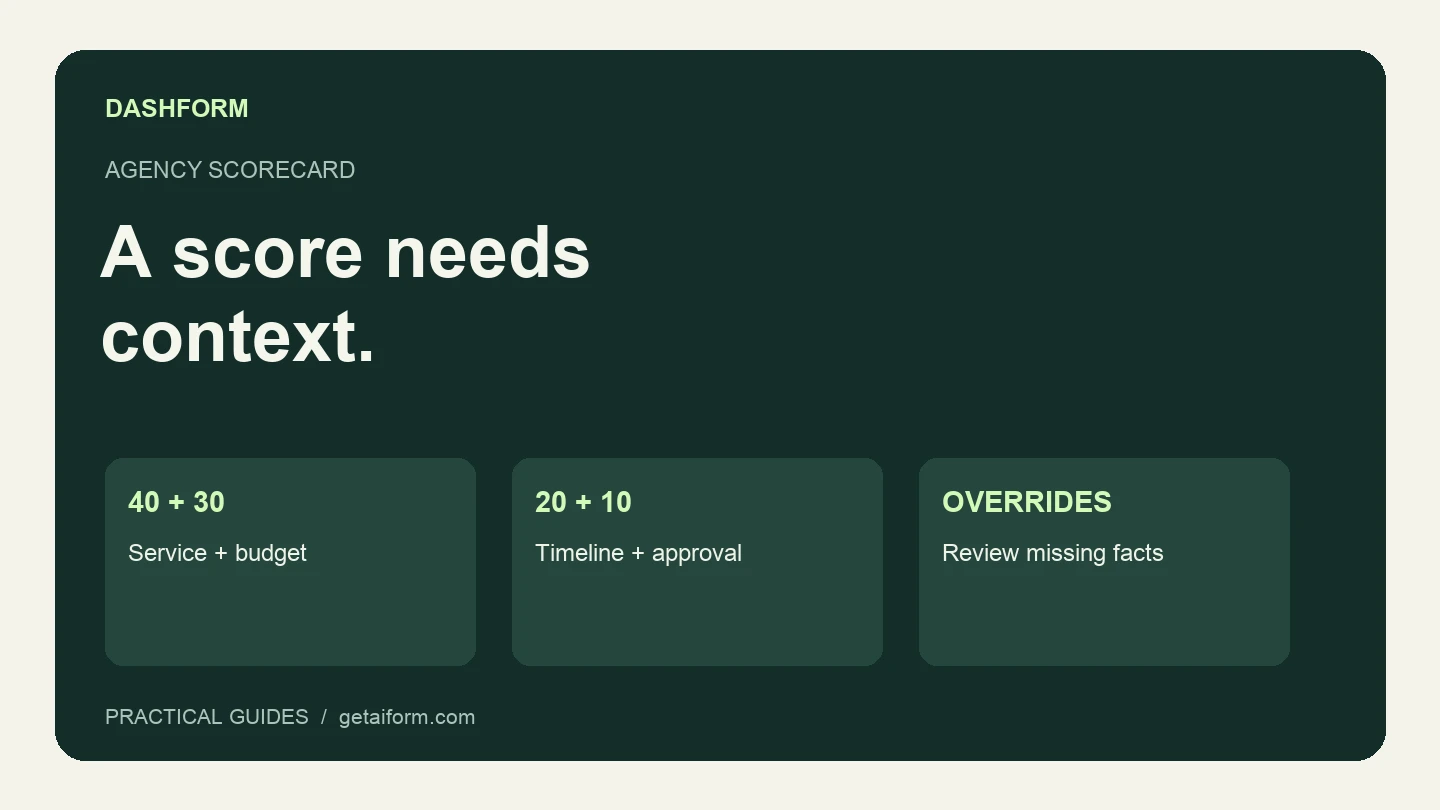
Build scoring directly into the qualification experience. With Dashform's multi-step forms, you can assign point values to each answer and generate a composite ICP fit score. Score 80+? Route immediately to sales with a hot lead alert. Score 50-79? Enter a targeted nurture sequence. Score below 50? Send educational content but don't burden sales.
This scoring happens before the lead ever touches the CRM, so sales teams only see qualified opportunities. The result: less wasted time, higher conversion rates, and a sales team that actually trusts the leads marketing sends.
Root Cause 5: You Can't Distinguish Browsers from Buyers
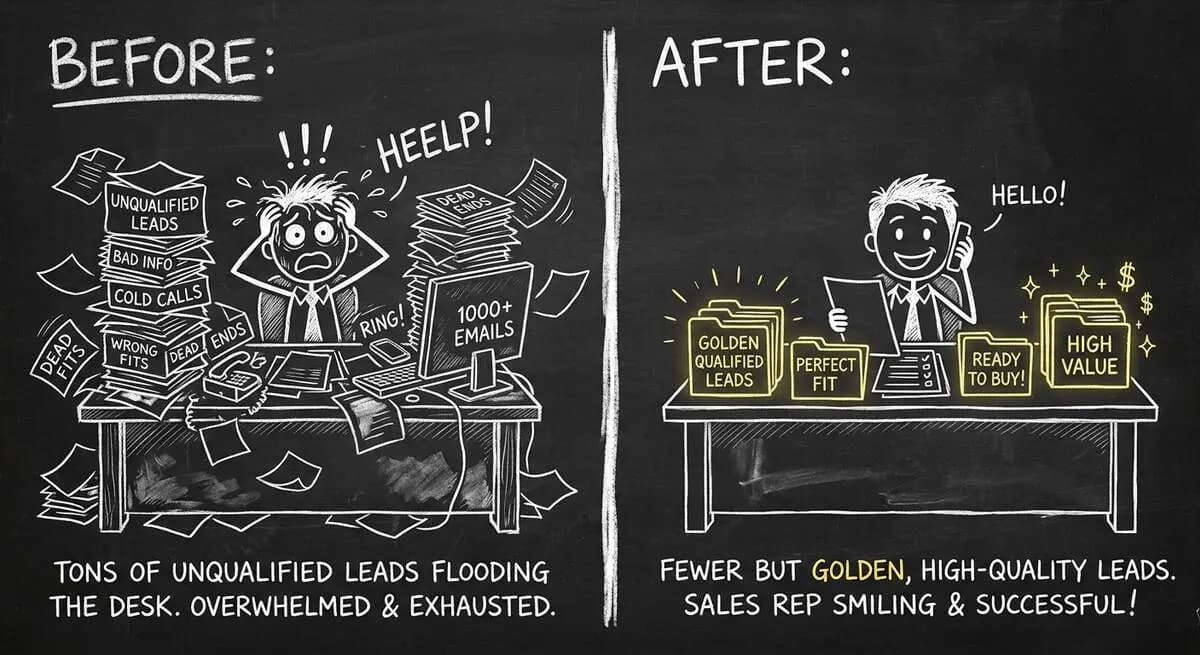
Many leads look qualified on paper but have no buying intent. They're researching for a future project, writing a report, or just curious. Without intent signals, you can't tell the difference between a buyer who needs a solution this quarter and a browser who won't buy for two years.
The Fix: Capture Intent Signals Through Assessment Design
Design your qualification assessments to capture not just fit data but intent data. Include questions about: current status (actively evaluating vs researching vs exploring), timeline (this month, this quarter, next year), trigger event (budget approved, mandate from leadership, competitive pressure), and current solution (happy with status quo vs actively looking to switch).
When you combine fit scoring with intent signals, you get a two-dimensional view of lead quality. High fit + high intent = immediate sales handoff. High fit + low intent = nurture with zero-party data-driven content. Low fit = disqualify regardless of intent.
Building a Complete Lead Quality System for Your Clients
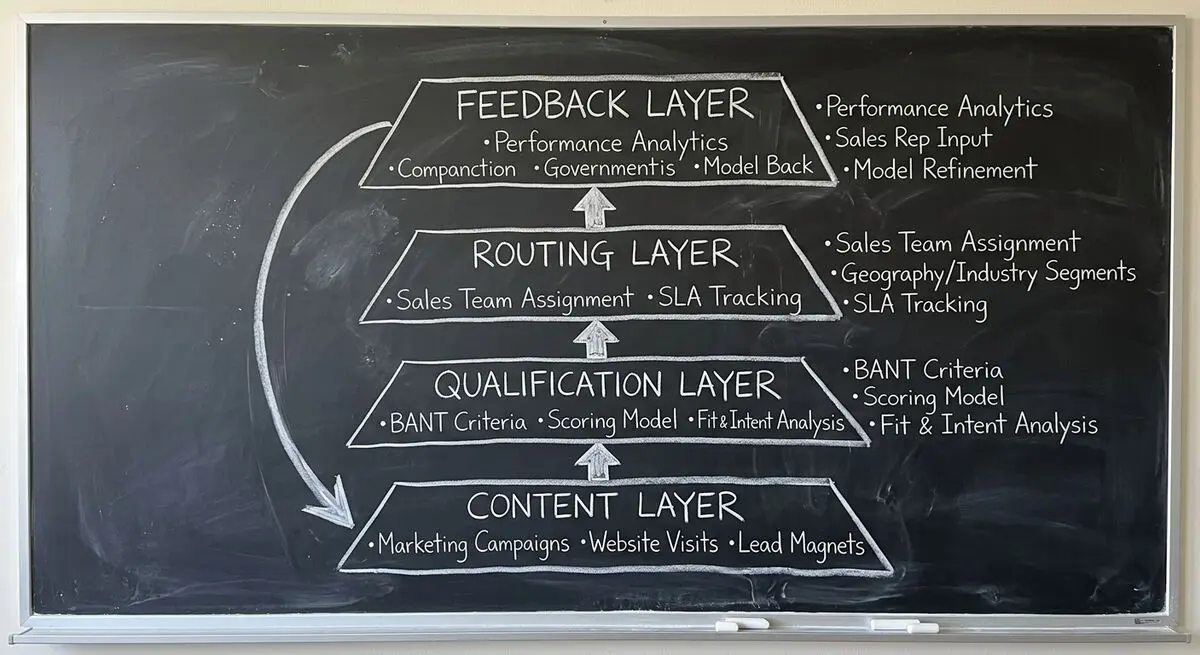
Here's the end-to-end system that transforms lead quality for your B2B clients:
Content Layer: ICP-aligned content that attracts the right audience. Every major content piece includes an embedded assessment CTA.
Qualification Layer: Interactive assessments that capture fit, intent, and context data. Built on Dashform with automatic scoring and segmentation.
Routing Layer: Automatic lead routing based on scores. High-quality leads go directly to sales. Mid-quality leads enter targeted nurture. Low-quality leads get filtered out.
Feedback Layer: Sales provides feedback on lead quality. Assessment questions and scoring are optimized monthly based on which leads actually close.
For agencies, this system becomes a competitive moat. It's not something a client can replicate with an AI writing tool, and it's directly tied to the metrics that matter. Agencies running this system have seen 2-3x improvements in discovery call quality and significant reductions in sales cycle length.
The AI Agent Dimension: Quality Leads from AI Discovery
There's a new source of high-quality leads emerging: AI agents. When a B2B buyer asks ChatGPT or Claude to find a vendor, and your client has an Agent Funnel set up, the AI agent can run the buyer through qualification automatically. These AI-sourced leads tend to be higher quality because the buyer has already expressed specific intent to the AI agent.
Make sure your client's website is visible to AI agents by running an AX Audit and implementing the recommended fixes. This is a growing channel that most agencies haven't tapped yet.
Frequently Asked Questions
Why are my B2B agency leads low quality?
The five most common causes are: no qualification layer between capture and sales, content attracting the wrong audience, static forms generating fake leads, no scoring to prioritize leads, and inability to distinguish browsers from buyers. Most agencies have at least two of these issues.
How do I improve lead quality without reducing volume?
Add a qualification layer that filters rather than reduces. Interactive assessments typically increase total engagement (3-4x more completions than static forms) while simultaneously improving quality through scoring and segmentation. Volume goes up and quality goes up.
What's the fastest way to fix lead quality for a client?
Add a qualification assessment to their top 5 traffic pages using Dashform. This can be implemented in 1-2 weeks and will start delivering qualified, scored leads immediately. You'll see measurable improvement within 30 days.
How do I score leads effectively?
Build scoring into the qualification assessment. Assign points for: company size (ICP fit), role and authority, buying timeline, budget range, and pain point specificity. Use Dashform's multi-step scoring to generate a composite score automatically.
Should I tell sales about all leads or only qualified ones?
Only qualified ones. The fastest way to rebuild sales' trust in marketing leads is to only send them leads that meet a minimum quality threshold. Start with a high bar and adjust down if volume is too low. It's better to send 20 qualified leads than 200 mixed ones.
How do interactive assessments reduce fake leads?
Interactive assessments create a value exchange: visitors answer honestly because the quality of their personalized results depends on accurate inputs. Unlike static forms where visitors can enter garbage data to access a PDF, assessment respondents are motivated to be truthful.
What role do AI agents play in lead quality?
AI agents are becoming a source of high-quality leads because they pre-qualify buyer intent before connecting to your client. With Agent Funnel technology, AI agents can run buyers through qualification flows automatically. AI-sourced leads tend to have higher intent and better fit than organic leads.