


Your booking system works perfectly for humans. Customers visit your website, pick a date, fill in their details, and confirm. But here is the problem: a growing number of customers never visit your website at all.
They ask an AI assistant instead. "Find me a massage therapist near downtown this Saturday under $150." The AI agent searches, evaluates, and books -- all without opening a browser. And when it tries to find your business, it hits a wall. Your Calendly link, your Acuity scheduler, your custom booking form -- none of them speak the language AI agents understand.
This article explains exactly why traditional booking systems are invisible to AI agents, what this costs your business in lost revenue, and how a single toggle can make you fully bookable by every major AI assistant.
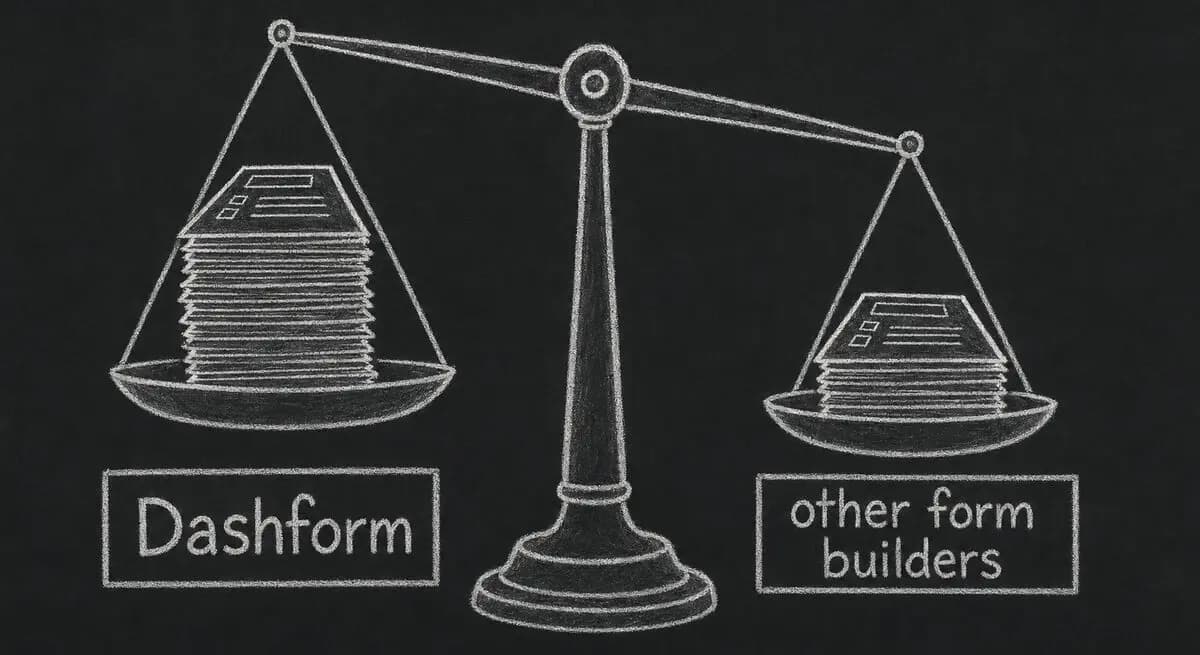
Online Booking Systems: AI Agent Compatibility Check
| Booking System | Human Bookable | AI Agent Discoverable | AI Agent Bookable | Lead Qualification |
|---|---|---|---|---|
| Calendly | Yes | No | No | No |
| Acuity Scheduling | Yes | No | No | No |
| Custom HTML Form | Yes | No | No | No |
| Typeform | Yes | No | No | No |
| Chatbot (Intercom/Drift) | Yes | No | No | Rule-based |
| Dashform Agent Funnel | Yes | Yes (6 layers) | Yes (MCP) | Yes (AI, 0-100) |
The Invisible Booking Problem
Every online booking system built before 2025 was designed for one user: a human with a web browser. These systems rely on visual interfaces -- date pickers, dropdown menus, confirmation buttons, CAPTCHA challenges. They work beautifully for people. They are completely useless for AI agents.
Here is what happens when an AI agent tries to book through a traditional system:
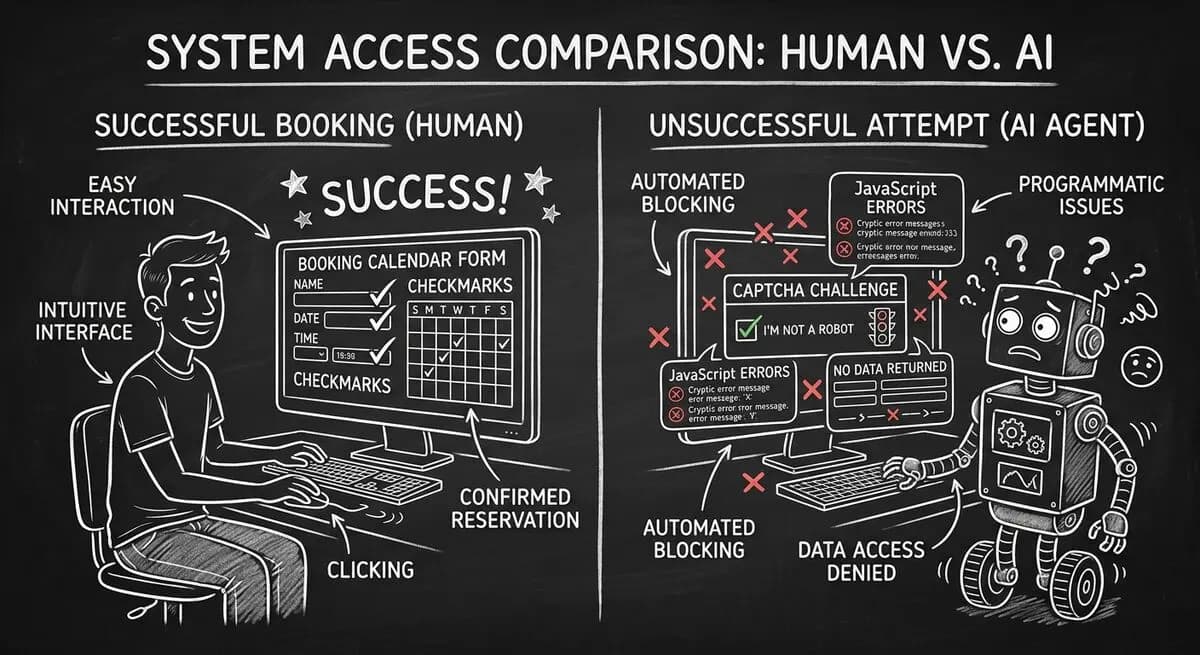
No machine-readable service catalog. Your booking page shows services with photos, descriptions, and pricing. But that information is locked inside JavaScript widgets, iframe embeds, or dynamically loaded content. An AI agent cannot parse a Calendly embed to understand what you offer.
No structured business data. AI agents need Schema.org markup and JSON-LD to understand your business type, location, hours, and services. Most booking pages have none of this.
AI crawlers are blocked. Many websites use robots.txt rules that block AI crawlers like GPTBot, ClaudeBot, and Google-Extended. If crawlers cannot access your site, AI agents cannot recommend you.
No programmatic booking endpoint. Even if an AI agent somehow discovers your services, there is no API or protocol for it to actually submit a booking. It cannot click buttons, fill forms, or solve CAPTCHAs.
No lead qualification layer. Traditional booking systems accept anyone who fills out the form. There is no way for an AI agent to pre-screen whether a lead is a good fit before submitting.
How Big Is the Problem
The numbers tell a stark story. According to BrightLocal's 2026 Consumer Search Behavior report, 45% of consumers now use AI assistants to find local services. Google's share of local business discovery dropped from 83% to 71% in a single year.
Zendesk's 2026 CX Trends Report found that 74% of consumers expect 24/7 service availability, and 40% trust AI recommendations for local services. PYMNTS research shows 54% of U.S. adults now use AI for personal tasks including finding and booking services.
For a business that relies on online booking -- spas, salons, dental clinics, fitness studios, consultants, real estate agents -- every day without AI agent visibility is lost revenue. When a potential customer asks Claude or ChatGPT to find a service, your competitors with agent-ready booking get the customer. You get nothing.
Why Traditional Booking Tools Cannot Fix This
Calendly, Acuity, and similar tools are designed for human-to-calendar scheduling. Their APIs exist for developers to build custom integrations, not for AI agents to discover and use autonomously.
Custom booking forms built with Typeform, JotForm, or Google Forms have the same problem. They produce HTML forms that require a human to interact with. No AI agent protocol, no structured service data, no discovery mechanism.
Chatbots like Intercom, Drift, and Tidio are reactive -- they wait for a human to initiate conversation on your website. AI agents do not visit your website's chat widget. They search for businesses programmatically.
The fundamental issue is not the quality of these tools. It is that they were built for a different era. They were built for humans navigating websites. The new era requires machines discovering and transacting with businesses programmatically.
What AI Agents Actually Need
For an AI agent to book your services, it needs four things:
1. Discovery. The agent must be able to find your business. This means your website needs to be crawlable by AI crawlers, have an llms.txt file describing your business, and ideally be listed in a registry that agents can search by category and location.
2. Understanding. The agent must comprehend what you offer. This requires structured data: your services, pricing, location, hours, and specializations in a machine-readable format.
3. Qualification. The agent needs to evaluate whether its user is a good fit for your business. Budget match? Location proximity? Service availability?
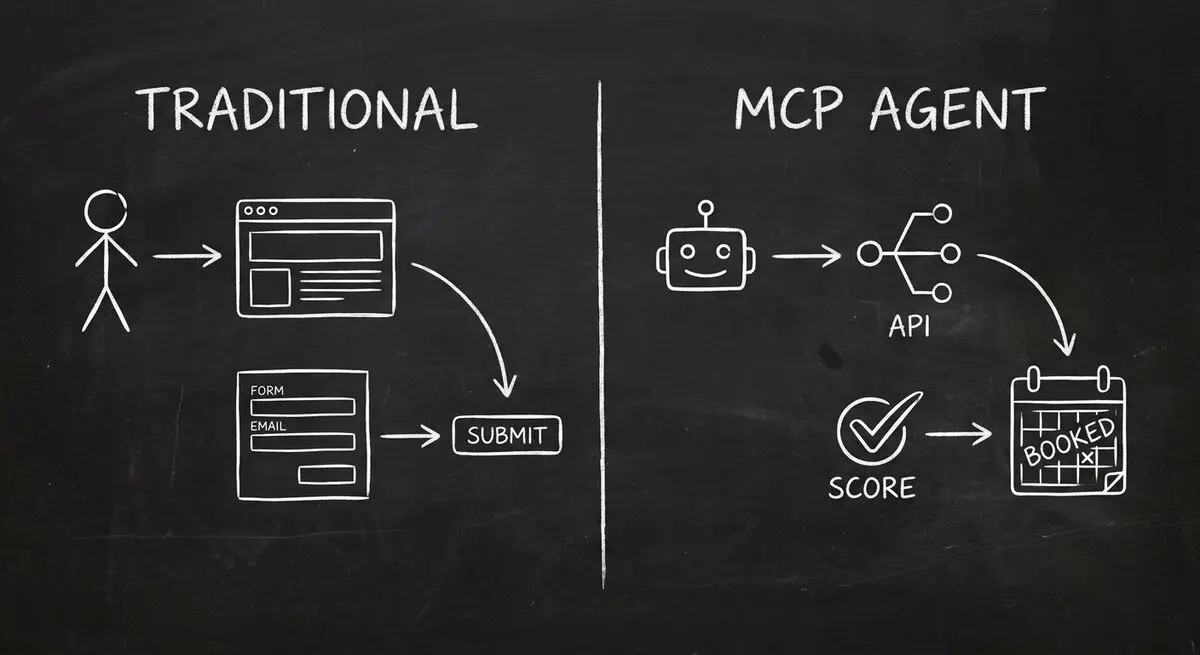
4. Action. The agent must be able to submit a booking programmatically. No forms to fill. No buttons to click. A clean API call that creates a qualified lead in your system.
This is exactly what the Model Context Protocol (MCP) provides -- a universal standard for AI-to-business communication. And Dashform's Agent Funnel feature implements it with zero technical complexity.
The One-Click Fix: Dashform Agent Funnel
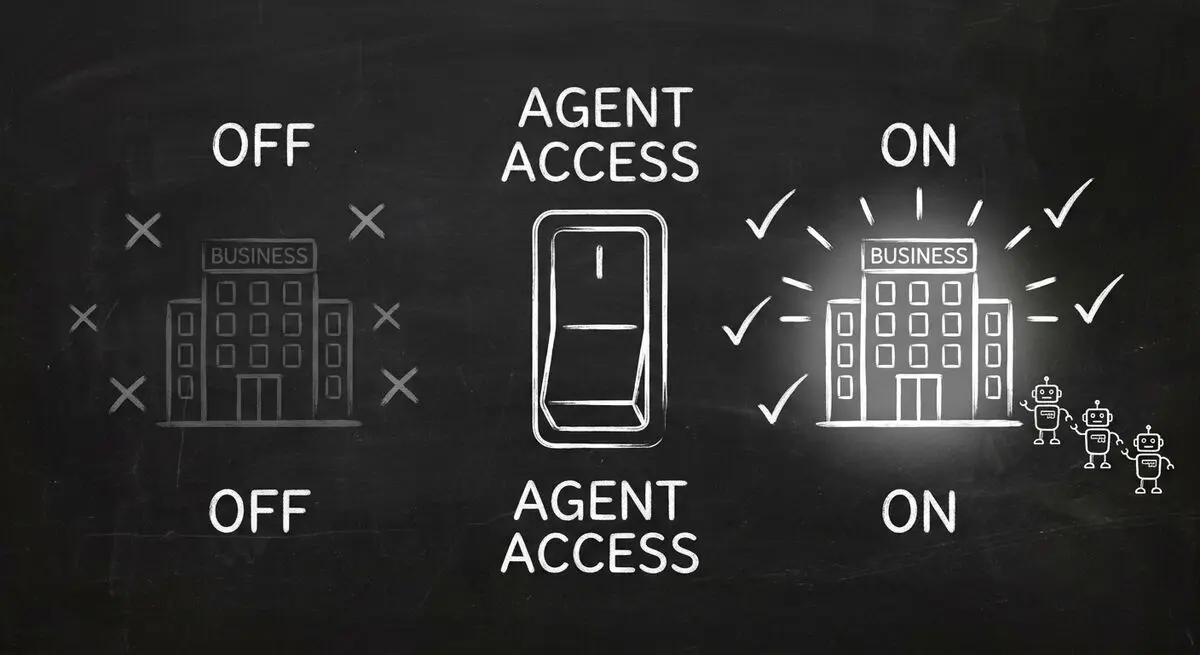
Dashform Agent Funnel turns any lead funnel into an MCP-accessible service. One toggle, and your business becomes fully discoverable and bookable by AI agents.
Your business appears in the agent marketplace. AI agents can browse all opted-in businesses by category (12 categories including Health & Wellness, Beauty & Personal Care, Fitness & Sports, Medical & Dental, and more), search by keyword and location, and compare services with pricing.
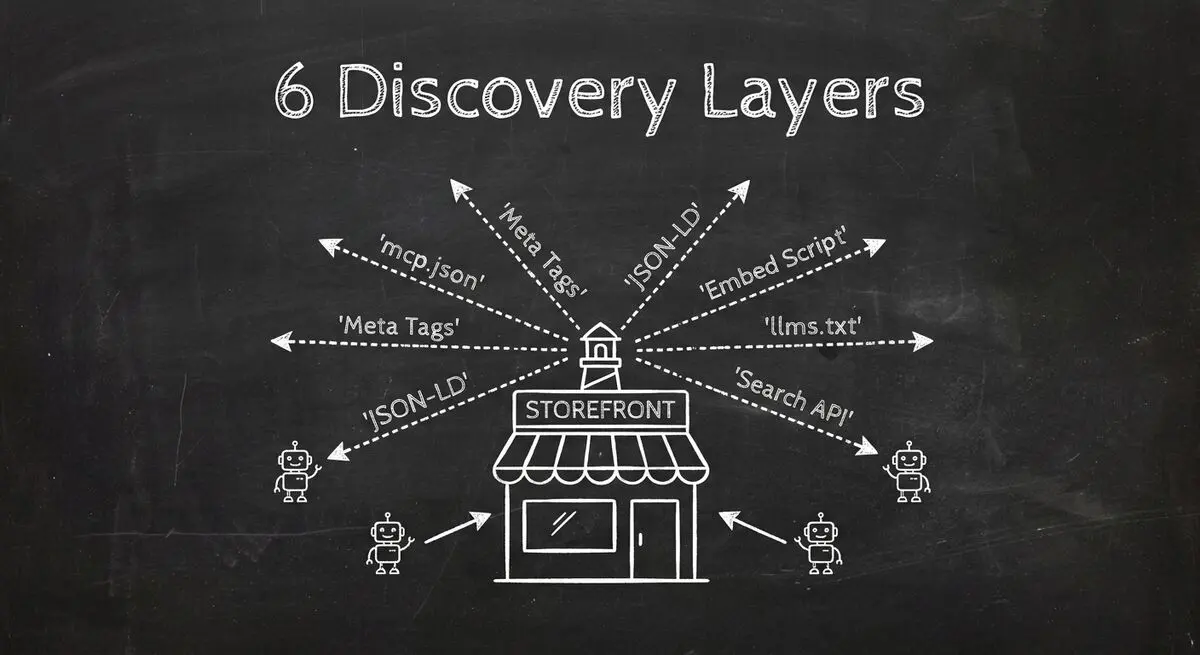
Every AI agent can find you through 6 discovery layers. Dashform implements .well-known/mcp.json, HTML meta tags, JSON-LD structured data, embed script injection, llms.txt, and unified search tools.
AI agents can qualify leads before submitting. The check_marketplace_fit tool uses AI to evaluate each lead against your business criteria and returns a score from 0 to 100 with reasoning. Only qualified leads reach your dashboard.
Agents book directly. The create_reply tool lets AI agents submit qualified leads programmatically. No forms, no CAPTCHAs, no human interaction required.
You track everything. Every agent-sourced lead is tagged with source: "agent" in your dashboard. You can filter by source, compare agent lead quality versus direct form fills, and see which AI agents are driving leads.
The setup takes less than five minutes. Enable agent access, import your website profile (Dashform auto-extracts your business info), review your services, and publish. You are now bookable by every MCP-compatible AI assistant.
What Your Competitors See When They Are Agent-Ready
Consider a real scenario. A consumer in New York asks their AI assistant: "Find me a wellness spa with deep tissue massage this weekend, budget $200."
Without Agent Funnel, your spa does not appear. The AI agent cannot find you in any registry, cannot read your booking page, cannot evaluate fit, and cannot book.
With Agent Funnel, the AI agent calls list_marketplace_services with the query filtered by location and price. Your spa appears with full details. The agent calls check_marketplace_fit -- score: 85, strong match. The agent calls create_reply. Your dashboard shows a new pre-qualified lead. The customer did not visit your website. They asked their AI assistant and got booked. This is how AI agents find and book services today.
Check Your Current Score
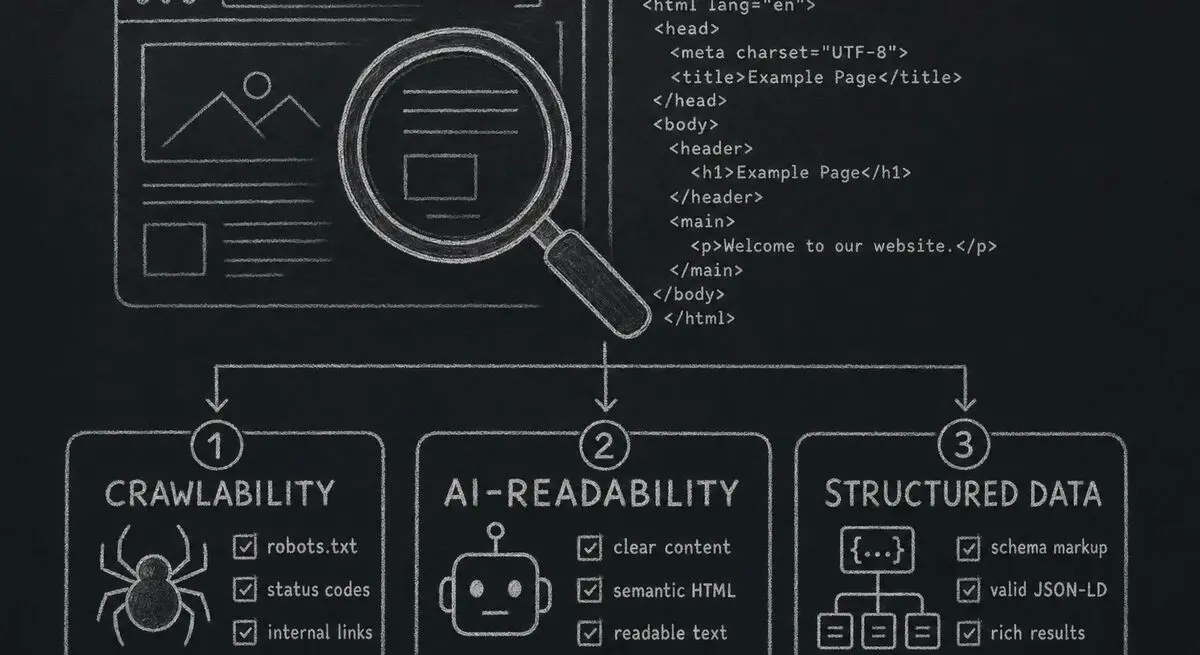
Not sure how visible your business is to AI agents right now? Run a free AX Audit -- it scans your website across 6 dimensions (Crawlability, Structured Data, Content Quality, Agent Interaction, Discoverability, Security & Trust) and gives you a score out of 100.
Most businesses score below 30. The average across 100 websites we recently scanned was just 23. The good news: improving your score is straightforward, and enabling Agent Funnel on Dashform addresses the highest-impact categories immediately.
FAQ
Can AI agents actually book appointments right now?
Yes. AI agents using MCP (Model Context Protocol) can discover businesses, evaluate services, qualify leads, and submit bookings programmatically. Claude, ChatGPT, and other MCP-compatible clients support this today. The protocol is backed by Anthropic and adopted by OpenAI, Google, Microsoft, and Amazon.
Will this replace my existing booking system?
No. Agent Funnel adds a new acquisition channel on top of your existing setup. Humans still book through your website, Calendly, or phone. AI agents book through MCP. Both types of leads appear in your Dashform dashboard and flow to your existing integrations.
What if I get spam from AI agents?
Every lead submitted through Agent Funnel goes through AI-powered qualification first. The check_marketplace_fit tool scores leads from 0 to 100 and only recommends booking for strong matches (score 70+). Agent leads are actually higher quality because they are pre-screened.
How much does it cost?
Agent Funnel is included in all Dashform plans, including the free tier. Agent-submitted leads count against the same response quota as direct form fills. There is no separate pricing for MCP access.
Do I need technical skills to set it up?
No. The setup is one toggle to enable agent access, plus a website URL import that auto-fills your business profile. No code, no API keys, no configuration files.
Which AI assistants support MCP?
Claude (Anthropic), ChatGPT (OpenAI), Cursor, Windsurf, and every MCP-compatible client. The ecosystem is growing rapidly because MCP is becoming the standard protocol for AI-to-service communication.
I already have Calendly or Acuity. Do I need to switch?
No. Keep your existing booking system for human visitors. Add Dashform Agent Funnel as a parallel channel for AI agent bookings. The two systems complement each other.