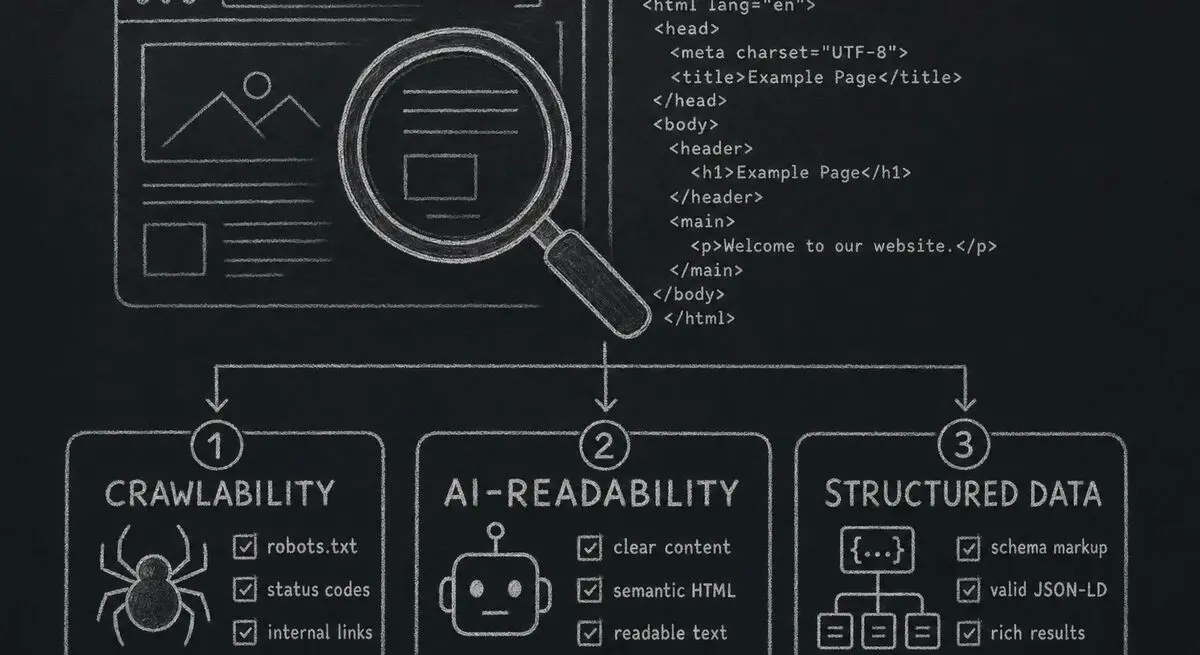


If your website has a robots.txt file, you already understand the concept: a standardized file that tells automated systems how to interact with your site. Now imagine the same idea, but for AI agents -- autonomous assistants that don't just crawl your content but actually do business with you.
That's exactly what .well-known/mcp.json does. It's the emerging standard that tells AI agents like Claude, ChatGPT, and Gemini: "Here's how to interact with this business programmatically." And if your website doesn't have one, you're invisible to the fastest-growing customer acquisition channel of 2026.
What Is .well-known/mcp.json?
The .well-known directory is a standardized location on any website (defined by RFC 8615) where services publish discovery metadata. You've probably seen it before:
- "/.well-known/security.txt" -- security contact info
- "/.well-known/apple-app-site-association" -- iOS deep linking
- "/.well-known/openid-configuration" -- OAuth discovery
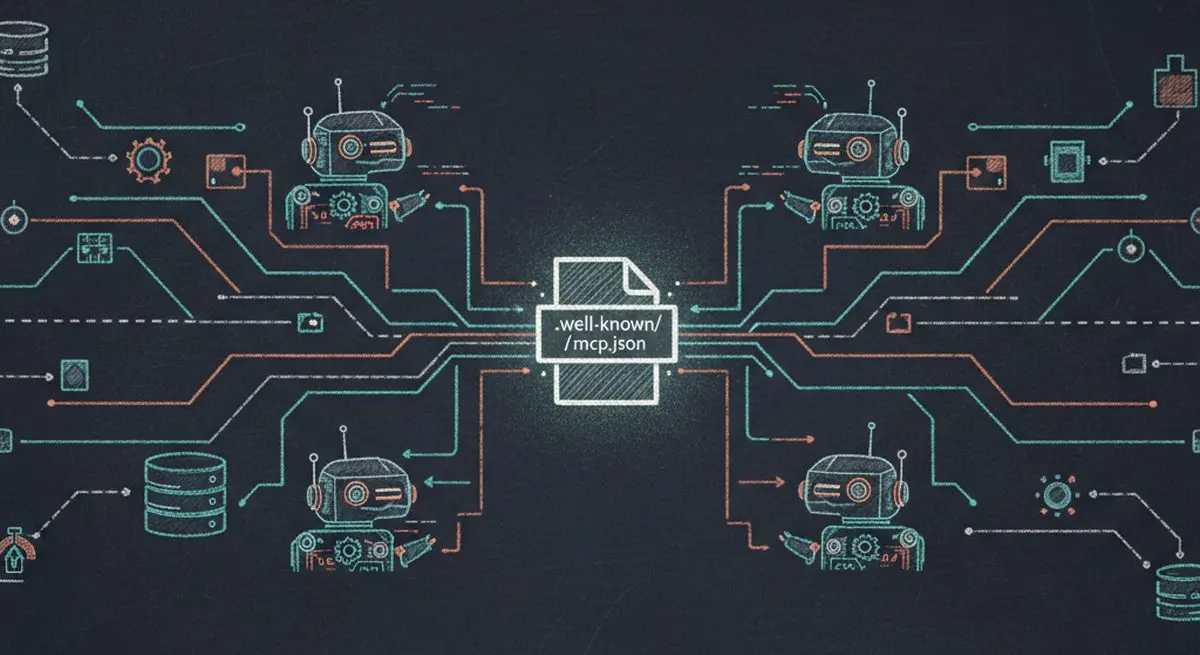
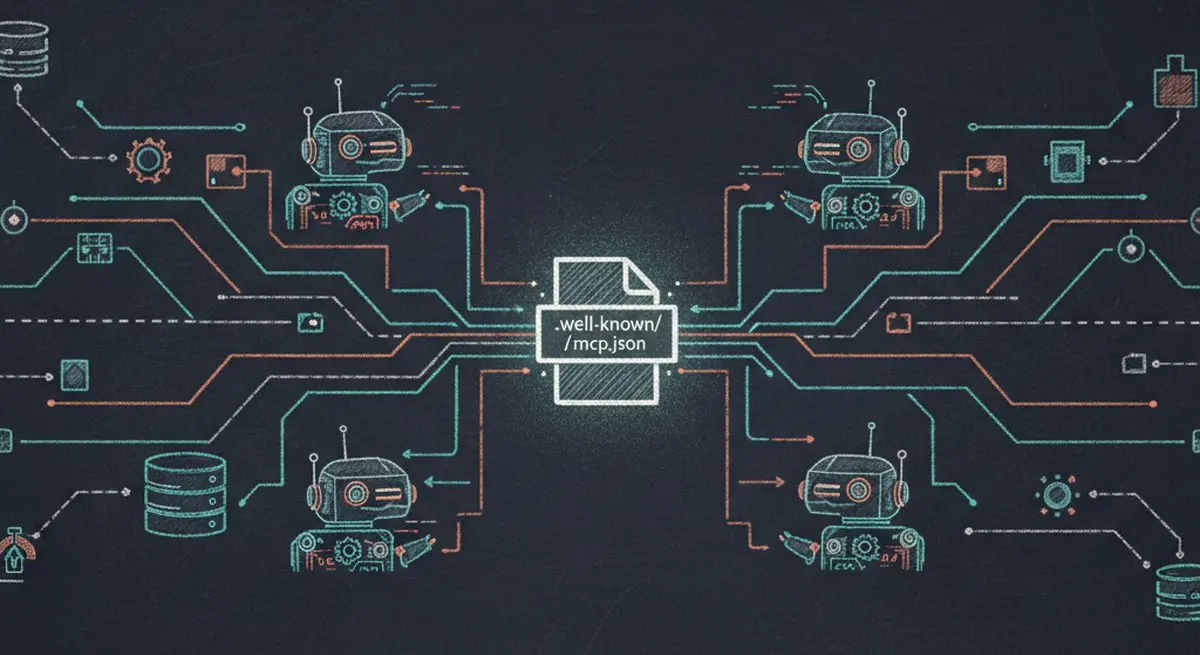
mcp.json follows the same pattern. It's a JSON file hosted at yourdomain.com/.well-known/mcp.json that declares your website's MCP (Model Context Protocol) server endpoint. When an AI agent visits your domain, the first thing it checks is this file.
The Anatomy of mcp.json
A typical .well-known/mcp.json file contains:
| Field | Purpose | Example |
|---|---|---|
| endpoint | URL of the MCP server | https://yourdomain.com/api/mcp |
| transport | Connection protocol | streamable-http |
| name | Human-readable server name | Your Business MCP |
| description | What the server does | Book appointments, browse services... |
| tools | List of available agent tools | list_marketplace_services, check_marketplace_fit, create_reply |

Why .well-known/mcp.json Matters for Your Business
Think of it this way: robots.txt tells search engines what to crawl. mcp.json tells AI agents what to do. And the shift from crawling to doing is the defining technology transition of 2026.
| Dimension | robots.txt (SEO Era) | mcp.json (Agent Era) |
|---|---|---|
| Audience | Search engine crawlers (Googlebot) | AI agents (Claude, ChatGPT, Gemini) |
| Purpose | Control content indexing | Enable programmatic interaction |
| Outcome | Appear in search results | Get discovered, evaluated, and booked by AI |
| Data Format | Plain text directives | Structured JSON with tool definitions |
| Business Impact | Organic traffic | Autonomous lead generation and booking |
The numbers tell the story:
- 47% of consumers now use AI assistants to research and book services
- 84% of search queries will include AI-generated responses when fully deployed
- 90% of business websites are currently invisible to AI agents
- The agentic AI market is projected to reach $199 billion by 2034
If an AI agent can't find your mcp.json, it doesn't know you exist as an interactive business. It might read your website, but it can't book, qualify, or transact.
How AI Agents Use .well-known/mcp.json
When an AI agent encounters a business website, it follows a systematic discovery process:
- Step 1: Agent checks yourdomain.com/.well-known/mcp.json
- Step 2: If found, reads the endpoint URL and available tools
- Step 3: Connects to the MCP endpoint using the specified transport
- Step 4: Calls discovery tools (list categories, search services)
- Step 5: Evaluates business fit for the user's request
- Step 6: Takes action (qualifies lead, books appointment, submits inquiry)
This entire flow happens in under 5 seconds. The user never visits your website. The AI agent does everything autonomously.

The 6-Layer Discovery System: Beyond Just mcp.json
While .well-known/mcp.json is the primary discovery mechanism, modern agent-ready websites implement multiple layers to ensure AI agents find them regardless of how they encounter the business. Dashform's Agent Funnel implements all six automatically:
| Layer | Mechanism | Where It Lives | What It Does |
|---|---|---|---|
| 1. .well-known/mcp.json | Standard MCP discovery | Root domain | Primary entry point for all MCP clients |
| 2. HTML Meta Tags | Page-level metadata | Form pages | Agents scanning HTML find MCP endpoint |
| 3. JSON-LD | Schema.org structured data | All pages | Search engines and agents parse business data |
| 4. Embed Injection | Auto-injected discovery | Third-party sites | Any page with embedded form becomes discoverable |
| 5. llms.txt | LLM-specific documentation | Root domain | Large language models read capabilities |
| 6. Marketplace Tools | Programmatic browsing | MCP endpoint | Agents browse all businesses by category |
Layer 4 is particularly powerful: when you embed a Dashform form on your website, the embed script automatically injects MCP discovery metadata into your page's HTML. Your website becomes agent-discoverable without any manual configuration.
MCP Tools: What AI Agents Can Do Through Your Endpoint
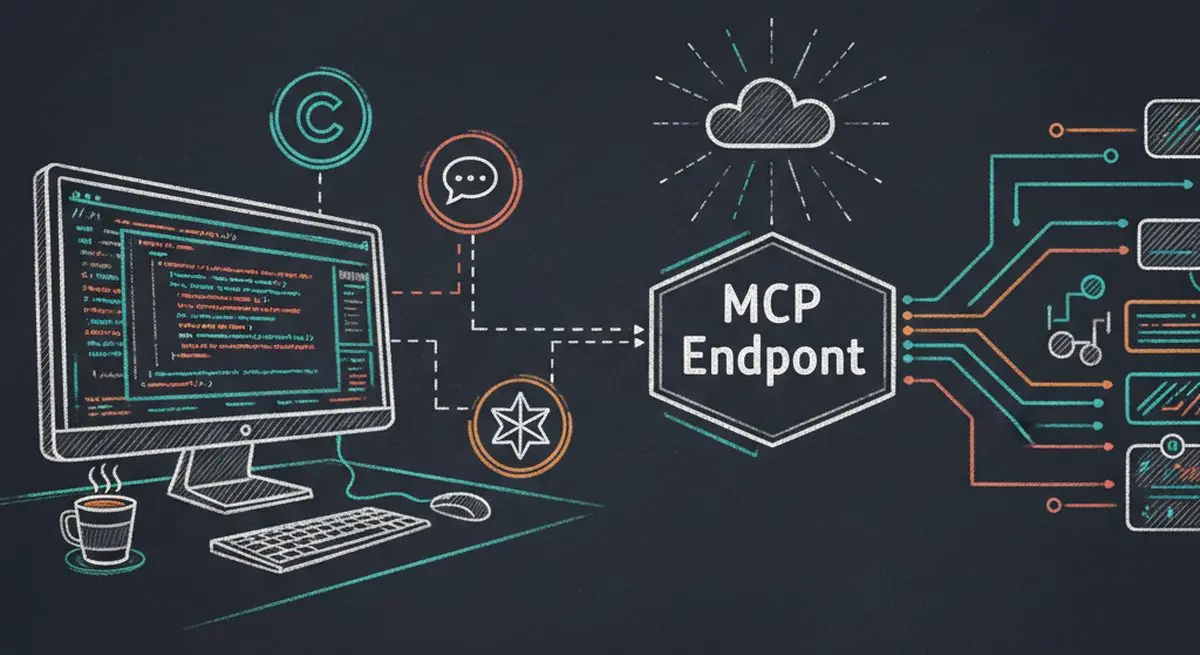
A well-configured MCP endpoint exposes tools that AI agents can call programmatically:
Discovery Tools (Public)
| Tool | What It Does | Example Use |
|---|---|---|
| list_marketplace_categories | Shows all service categories | Agent browsing wellness services |
| list_marketplace_profiles | Finds businesses by keyword, category, location | "Find spas in Manhattan" |
| list_marketplace_services | Searches services with price filtering | "Deep tissue massage under $200" |
Business Tools (Per-Merchant)
| Tool | What It Does | Example Use |
|---|---|---|
| get_marketplace_profile | Returns full business profile | Agent evaluating your spa |
| list_marketplace_services | Lists all services with pricing | Agent comparing service options |
| check_marketplace_fit | AI-powered lead qualification (0-100 score) | Agent pre-screening a client |
| create_reply | Submits a qualified booking | Agent completing the transaction |
The check_marketplace_fit tool is the game-changer. Instead of dumping unqualified leads into your inbox, AI agents first evaluate whether a potential client is a good match based on budget, location, service needs, and timing. Only leads scoring above your threshold get through.
Who Needs .well-known/mcp.json?
| Business Type | Why You Need It | What Agents Do For You |
|---|---|---|
| Service Businesses (spas, salons, clinics) | Clients increasingly book through AI assistants | Discover, qualify, and book appointments |
| Real Estate Agents | Buyers use AI to search properties and agents | Match buyers to agents by specialization and area |
| SaaS Companies | Procurement agents evaluate tools programmatically | Compare features, pricing, and submit demo requests |
| E-commerce Brands | Shopping agents recommend products autonomously | Browse catalogs, match preferences, recommend products |
| Coaches & Consultants | AI assistants find specialists for clients | Evaluate expertise, check availability, book discovery calls |
| Marketing Agencies | Need to make all client sites agent-ready | Enable AI discovery across entire client portfolio |
How to Set Up .well-known/mcp.json (The Easy Way)
You have two paths:
Option A: Manual Setup (Developers)
Build your own MCP server, define tools, host the endpoint, and create the .well-known/mcp.json file manually. This requires Node.js or Python development, understanding of the MCP specification, and ongoing maintenance.
Option B: Dashform Agent Funnel (5 Minutes, No Code)
Dashform handles everything automatically:
- Create a funnel and add your services
- Enable Agent Funnel with one toggle
- Import your business profile from your website URL (auto-extracted)
- Publish -- all 6 discovery layers activate automatically
No code, no API keys, no MCP specification to read. Your business gets a fully functional MCP endpoint with discovery, qualification, and booking tools. Included in all Dashform plans (including free).
The Future: MCP as the Universal Business Protocol
MCP was introduced by Anthropic and is now supported by GitHub, Microsoft, Google, OpenAI, Cursor, VS Code, and Replit. It's rapidly becoming the universal standard for AI-to-service communication.
What's coming in 2026-2027:
- Shopping agents: Shopify is building toward autonomous AI shoppers that browse and buy via MCP
- Procurement automation: Enterprise AI agents will evaluate SaaS vendors through MCP endpoints
- Voice-first booking: "Hey Claude, book me a massage this Saturday" will flow through MCP
- Multi-agent workflows: Agents will chain MCP calls across multiple businesses to plan complete experiences
Businesses that establish their .well-known/mcp.json now will have a compounding advantage as the agent economy grows.

Frequently Asked Questions
Is .well-known/mcp.json an official standard?
MCP is an open protocol created by Anthropic and adopted by major tech companies. The .well-known discovery pattern follows RFC 8615, the IETF standard for well-known URIs. While MCP itself is still evolving, it has massive industry backing.
Will this affect my SEO?
No negative impact. mcp.json is a separate file that doesn't interfere with robots.txt, sitemaps, or any existing SEO setup. In fact, the JSON-LD structured data in Layer 3 can improve your SEO rankings.
How do I check if my site has mcp.json?
Visit yourdomain.com/.well-known/mcp.json in your browser. If you see a JSON response, you have it. If you get a 404, you don't. Or run a free AX Audit which checks this automatically along with 5 other discovery layers.
Can I have mcp.json alongside robots.txt?
Absolutely. They serve different purposes and don't conflict. robots.txt controls crawling, mcp.json enables agent interaction. Most agent-ready websites have both.
Do I need a developer to set this up?
Not with Dashform. Agent Funnel creates your MCP endpoint, discovery metadata, and all 6 discovery layers automatically. Zero code required.
Make Your Website Programmable for AI Agents
The web is transitioning from human-browsable to agent-programmable. .well-known/mcp.json is the front door to this new era. Start with a free AX Audit to check your current agent readiness, then activate Dashform Agent Funnel to go live in minutes.