

Here's a number that should change how every B2B agency thinks about client strategy: according to Forrester's 2026 B2B Buyer Research, 94% of B2B buyers now use AI tools during their vendor research and purchasing process. Not search engines. Not LinkedIn. AI assistants.
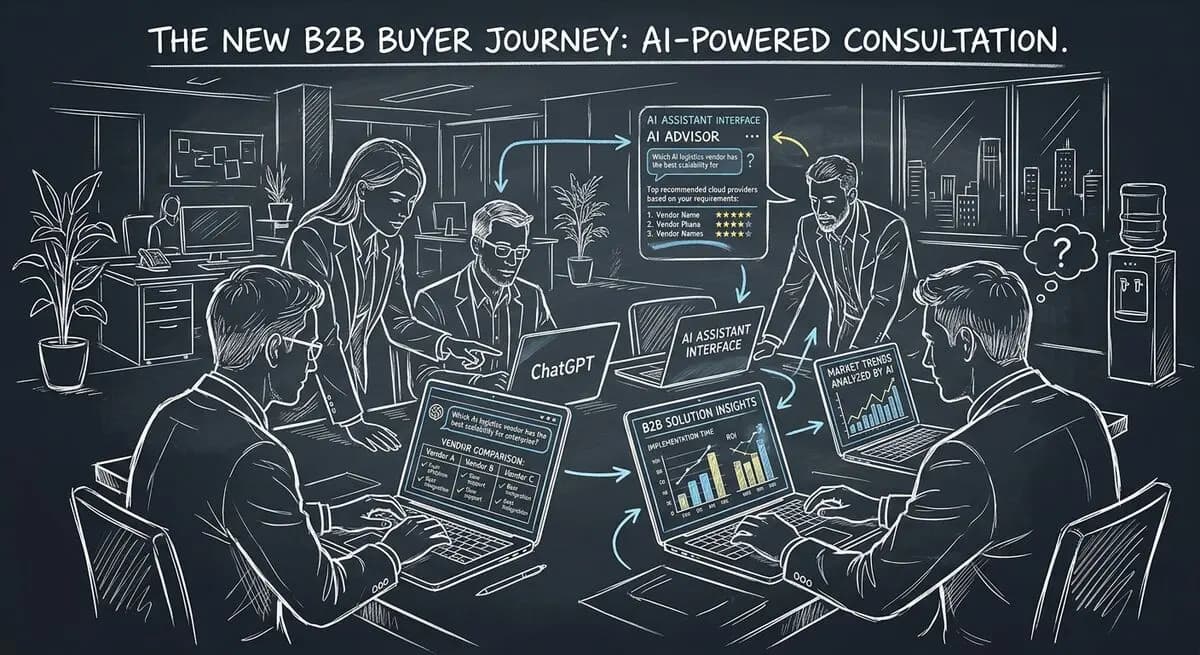
That means when your client's prospects are evaluating vendors, they're increasingly asking ChatGPT, Claude, Perplexity, or Copilot to compile shortlists, compare features, and recommend providers. If your client's business isn't visible to these AI systems, it doesn't make the shortlist. Period.
For B2B agencies, this shift represents both a threat and an enormous opportunity. Your clients are about to discover that their websites are invisible to the fastest-growing buyer research channel. The agencies that help them fix this problem first will own the next decade of client relationships.
B2B Buyer Research Channels: 2020 vs 2026
| Channel | 2020 Usage | 2026 Usage | Trend |
|---|---|---|---|
| Google Search | 96% | 71% | Declining |
| AI Assistants (ChatGPT, Claude, etc.) | <5% | 94% | Explosive growth |
| 78% | 82% | Stable | |
| Industry publications | 65% | 48% | Declining |
| Vendor websites (direct) | 87% | 63% | Declining (AI intermediary) |
| Peer recommendations | 72% | 69% | Stable |
| AI-powered search (Perplexity, Copilot) | <2% | 67% | Explosive growth |
| Trade shows / conferences | 45% | 38% | Declining |
The Shift: How B2B Buyers Actually Research Vendors in 2026
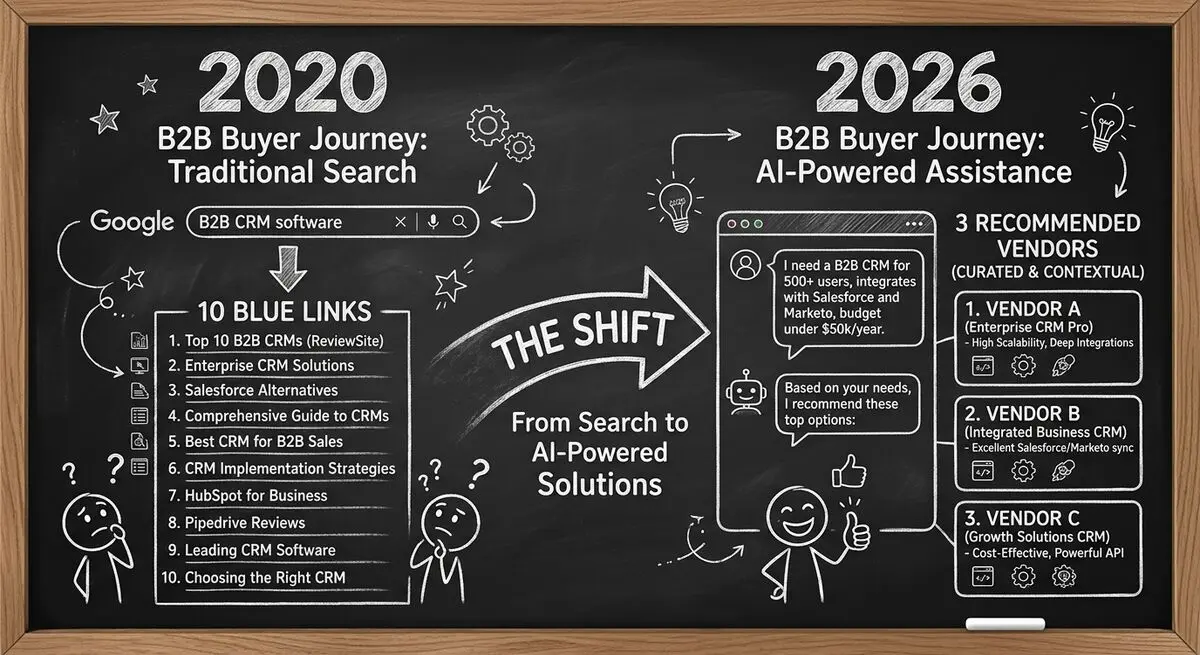
The B2B buyer journey has fundamentally changed. In 2020, a buyer looking for a content marketing agency would Google "best B2B content marketing agencies," scroll through 10 blue links, visit 5-6 websites, and build a mental shortlist. The agency with the best SEO won the first impression.
In 2026, that same buyer opens ChatGPT and types: "Recommend B2B content marketing agencies that specialize in SaaS demand generation with ABM capabilities and a track record of pipeline growth." The AI assistant returns a curated list of 3-5 vendors with structured comparisons. The buyer contacts 2-3 of them. The rest never even enter the conversation.
The critical question: how does the AI assistant decide which vendors to recommend? It pulls from three sources:
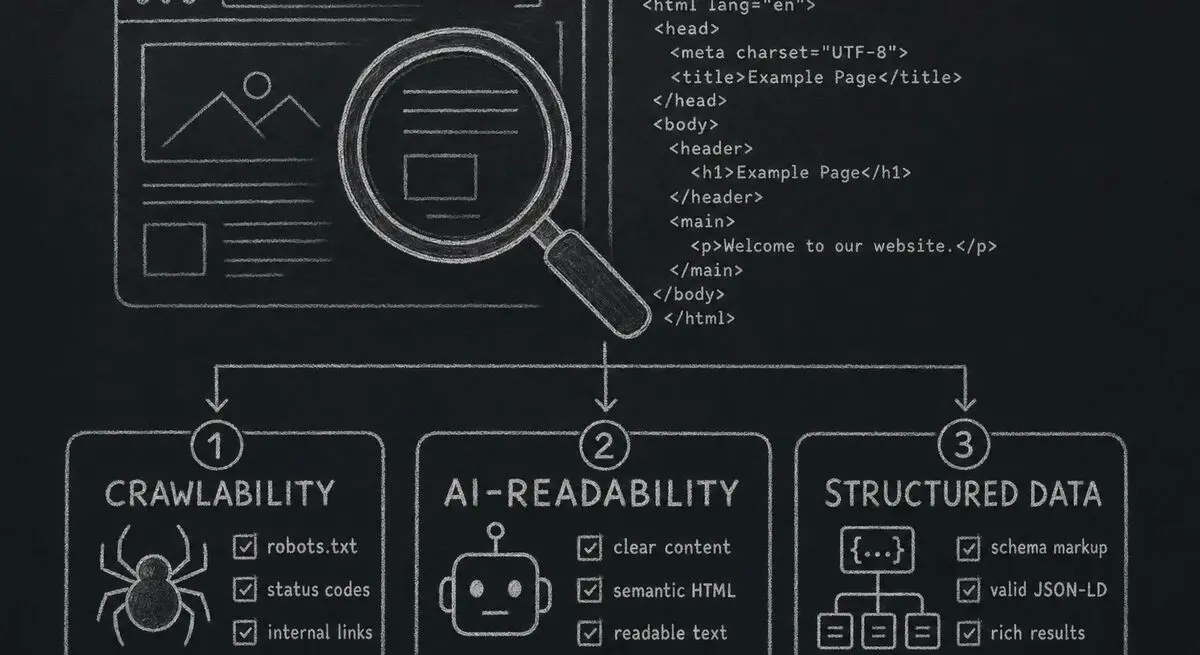
- Structured data it can crawl and parse from vendor websites (Schema.org markup, llms.txt files, robots.txt permissions)
- AI marketplace listings and MCP-compatible service endpoints
- Content quality and freshness signals that establish topical authority
If your client's website lacks these signals, the AI assistant literally cannot include them in recommendations. It's not a ranking problem -- it's a visibility problem.
Why Most B2B Websites Are Invisible to AI Buyers
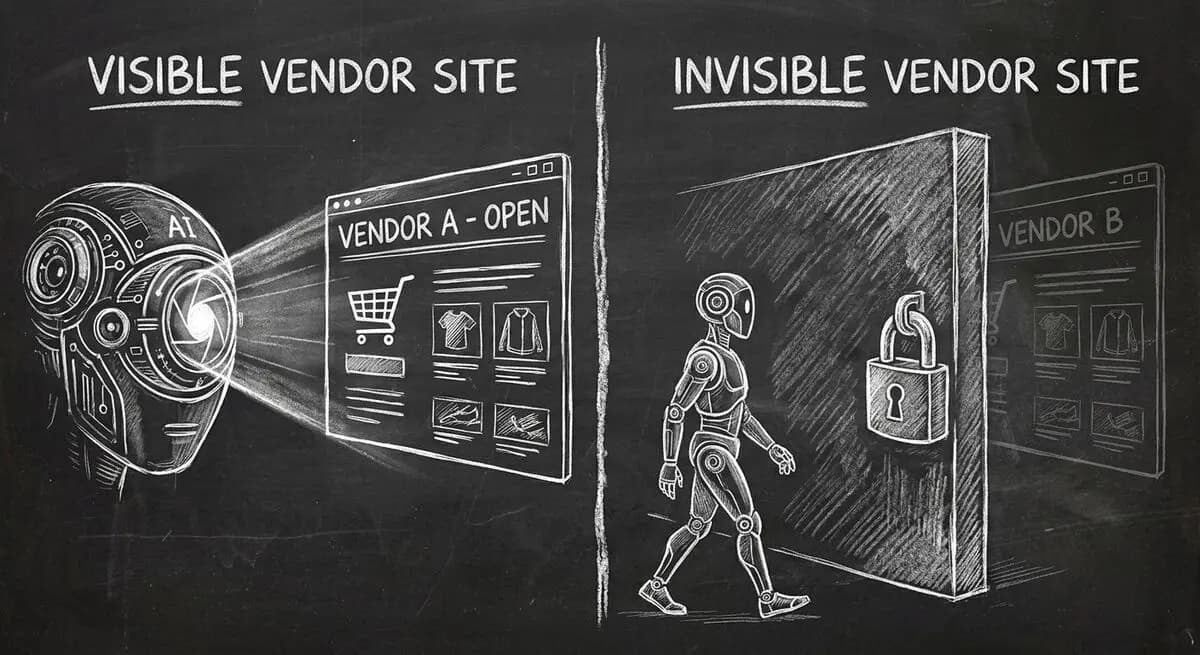
We scanned 100 B2B websites for AI agent visibility. The results were stark: 93% scored below 40 on a 100-point AI readiness scale. The most common issues:
- 67% block AI crawlers in robots.txt. GPTBot, ClaudeBot, and other AI crawlers are explicitly blocked, making all website content invisible to AI assistants.
- 89% have no llms.txt file. This file provides structured context about a business for AI systems. Without it, AI assistants have to guess what a company does from unstructured page content.
- 71% have minimal Schema.org markup. Basic Organization schema doesn't tell AI systems about specific services, capabilities, industries served, or pricing models.
- 96% have no MCP endpoint. AI agents cannot interact with, qualify through, or book services from these websites programmatically.
- 98% are not listed in any AI marketplace. They don't appear in any AI agent discovery directory.
The irony: many of these companies have invested heavily in SEO and rank well on Google. But as Google's local search share drops to 71%, that SEO investment covers a shrinking portion of the buyer research landscape.
What Agencies Must Tell Their Clients Right Now
If you're a B2B agency serving SaaS, professional services, or technology clients, this is the conversation you need to have in your next QBR:
1. "Your Website Is Invisible to 94% of Modern B2B Buyers"
Run a free AX Audit on their website and show them the score. Most B2B websites score between 15-35 out of 100. The visual impact of a low score is powerful -- it creates urgency without fearmongering because it's based on measurable, objective criteria.
2. "Your Competitors Are Already Fixing This"
Run the same audit on 2-3 of their competitors. If even one competitor scores higher, the client faces a concrete competitive disadvantage. Early movers in AI visibility will compound their advantage as AI-assisted purchasing becomes the default.
3. "The Fix Is Straightforward -- And We Can Do It"
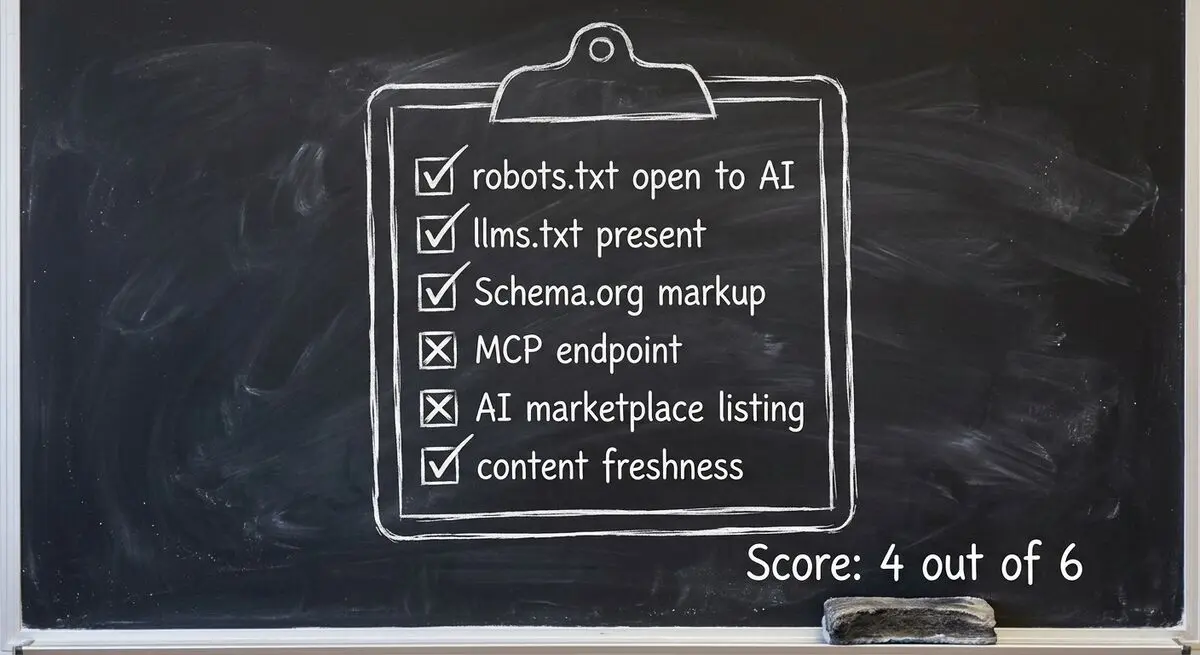
Walk them through the six dimensions of AI visibility:
- Open robots.txt to AI crawlers (1 hour fix)
- Create and deploy an llms.txt file (2-3 hours)
- Implement comprehensive Schema.org markup (1-2 days)
- Set up an MCP endpoint for AI agent interaction (30 minutes with Dashform)
- List in AI marketplaces and agent directories (1-2 hours)
- Optimize content for AI comprehension and freshness (ongoing)
Most of these fixes are one-time implementations. The ongoing work (content optimization) is what agencies already do. You're not selling a new service category -- you're upgrading the existing one for the AI era. This is the same agent economy readiness shift that's reshaping every B2B vertical.
The Agency Revenue Opportunity
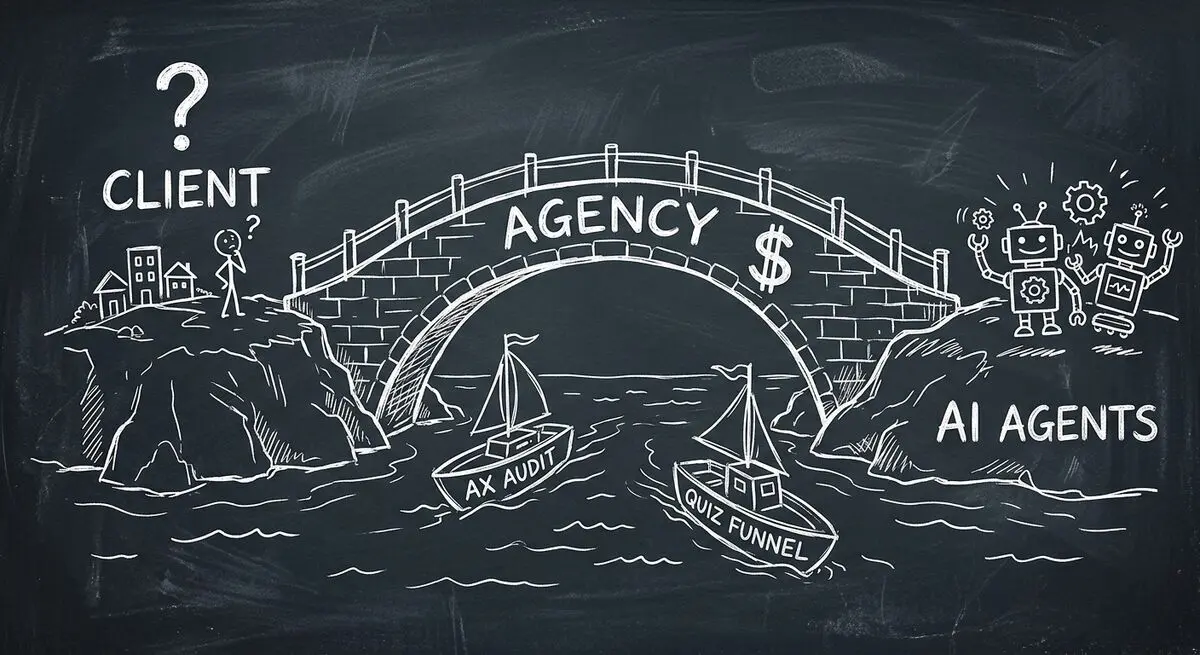
This isn't just about protecting existing client relationships. AI visibility services represent three new revenue streams for B2B agencies:
Revenue Stream 1: AI Readiness Audits ($2,500-$8,500 per engagement)
Productize the AX Audit as a paid service. Run the free scan, present findings, and charge for the comprehensive implementation. Agencies are pricing this between $2,500 for basic fixes and $8,500 for full implementations including MCP endpoint setup.
Revenue Stream 2: AI-Optimized Content Retainers (Premium over standard retainers)
Content that's optimized for AI comprehension commands a premium. This means structured data markup, entity consistency, topical authority building, and freshness signals. Position this as a natural evolution of SEO retainers -- because it is.
Revenue Stream 3: Interactive Lead Qualification ($3,500-$7,500 per build)
Build AI-powered quiz funnels for client websites that pre-qualify leads before the sales conversation. Agencies that have implemented this report 2x improvement in discovery call show rates and 67% higher close rates for their clients.
Combined, these three streams can add $15,000-$30,000 in monthly revenue for a mid-sized B2B agency within the first quarter of offering them.
How to Start This Week
Here's the action plan for agencies that want to move on this opportunity immediately:
- Today: Run AX Audits on your top 10 clients' websites. Save the results.
- This week: Schedule a 15-minute "AI visibility briefing" in your next 3 client meetings. Show them their scores.
- This month: Build your AI readiness service tiers (Essential, Professional, Enterprise). Price them based on value, not hours.
- This quarter: Offer the service to all existing clients and add it to your prospecting toolkit. Track conversion rates and refine pricing.
The agencies that move first will establish themselves as the go-to AI visibility partner for their clients. The ones that wait will be explaining to clients why their competitors are appearing in AI recommendations and they aren't.
Frequently Asked Questions
Is this really happening now, or is it a future trend?
It's happening now. Forrester's data shows 94% of B2B buyers already use AI in purchasing decisions. ChatGPT alone has over 300 million weekly active users as of early 2026. Your clients' prospects are already using these tools -- the question is whether your clients are visible to them.
How do I explain AI visibility to clients who don't understand AI?
Use the AX Audit as a visual tool. A score of 23/100 is universally understood as "bad" regardless of technical knowledge. Then explain: "This score measures how easily AI assistants can find and recommend your business. A low score means you're invisible to the fastest-growing buyer channel."
Won't this just be another fad like voice search optimization?
No. Voice search was a minor input method change. AI-assisted purchasing is a fundamental shift in how B2B buyers research and select vendors. The data supports this: Google's search share has dropped from 83% to 71% in under two years, and AI tool usage in B2B purchasing has grown from near-zero to 94%. This is structural, not cyclical.
What if my client's competitors haven't fixed their AI visibility either?
That's actually the best scenario. Being first creates a compounding advantage. AI systems tend to surface the same vendors repeatedly once they can access structured data. Early movers build AI visibility moats that are difficult for latecomers to overcome.
Do I need to learn new technical skills?
The basics are straightforward: robots.txt configuration, llms.txt file creation, and Schema.org markup. Most agency developers or technical SEO specialists already have the skills. For advanced features like MCP endpoints, Dashform handles the technical complexity with a single toggle.
How does this relate to Answer Engine Optimization (AEO)?
AEO is the content optimization side of AI visibility -- making your content structured and authoritative enough that AI systems cite it in answers. AI visibility (as measured by AX Audit) is the technical infrastructure side -- making your website accessible and parseable by AI systems. Both matter, and they complement each other.