

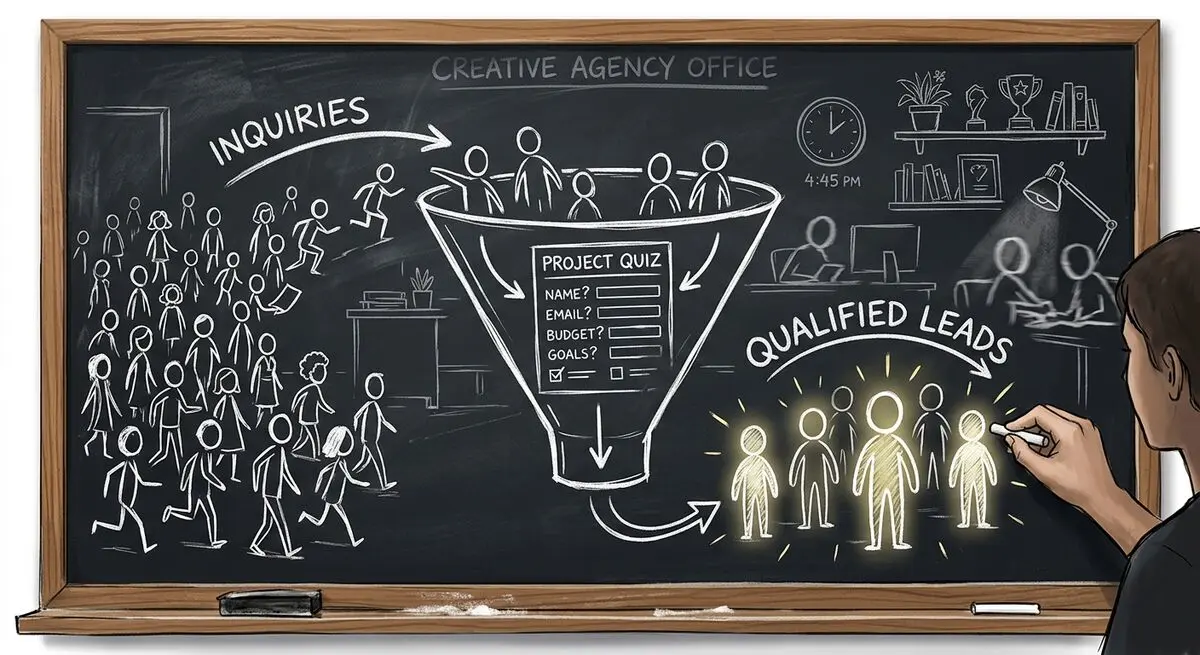
Every creative agency owner knows the feeling. You block off an hour for a discovery call, prep your portfolio, review the prospect's website — only to hear "we were thinking more like $2,000" for a $25,000 branding project.
For one mid-sized branding and identity agency on the East Coast (8 full-time creatives, $1.2M annual revenue), this was the weekly reality. Their simple "Contact Us" form collected a name, email, phone number, and a text box for "Tell us about your project." The result? A firehose of unqualified inquiries with no way to sort signal from noise before investing human time.
Agency Pipeline Metrics — Before AI Qualification
| Metric | Monthly Average |
|---|---|
| Website form submissions | 47 |
| Discovery calls booked | 14 |
| Discovery call show rate | 64% |
| Calls with qualified prospects | 3–4 |
| Proposals sent | 6 |
| Deals closed | 1–2 |
| Average deal size | $18,200 |
| Hours on unqualified leads | ~22 hrs/week |
The agency's co-founder estimated that over 70% of discovery calls involved a fundamental mismatch — usually budget, but sometimes scope, timeline, or simply a prospect shopping for a freelancer rather than a full-service agency.
Why Contact Forms Fail Creative Agencies
The classic contact form is a relic of the early web. It asks for the minimum — a name and a message — and leaves all qualification work to the human on the other end. For creative agencies, this creates a specific cascade of problems:
No budget signal. Prospects searching "branding agency" range from solopreneurs with $500 to enterprises with $500,000. A contact form treats them identically.
No scope clarity. "I need branding" can mean a logo refresh, a complete visual identity system, brand strategy with market research, or all of the above. Without pre-qualification, the agency discovers this on the call — after investing 30+ minutes of prep time.
No commitment filter. Filling out a 4-field form takes 30 seconds. It attracts everyone — competitors, students doing research, and prospects casually browsing five agencies simultaneously.
No prioritization. When 47 submissions look identical (name + vague message), how do you decide who to call first? Most agencies default to first-in-first-out, which means a $100K opportunity might sit in the queue behind ten $2K inquiries.
Research from HubSpot's 2026 State of Sales confirms this pattern: sales professionals spend only 30% of their time actually selling. The rest disappears into administrative qualification work.
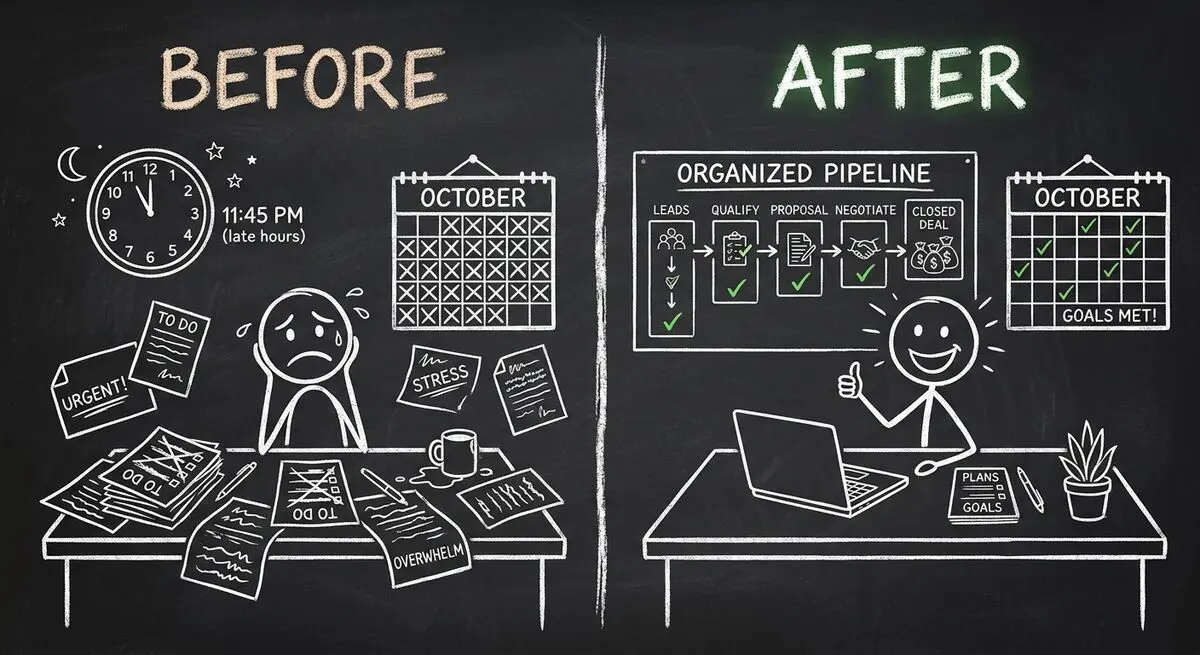
The Solution: An AI-Powered Qualification Quiz
Instead of ripping out their contact form and hoping for the best, the agency took a measured approach. They replaced their generic form with a Dashform qualification quiz — a multi-step interactive experience that feels like a conversation rather than an interrogation.
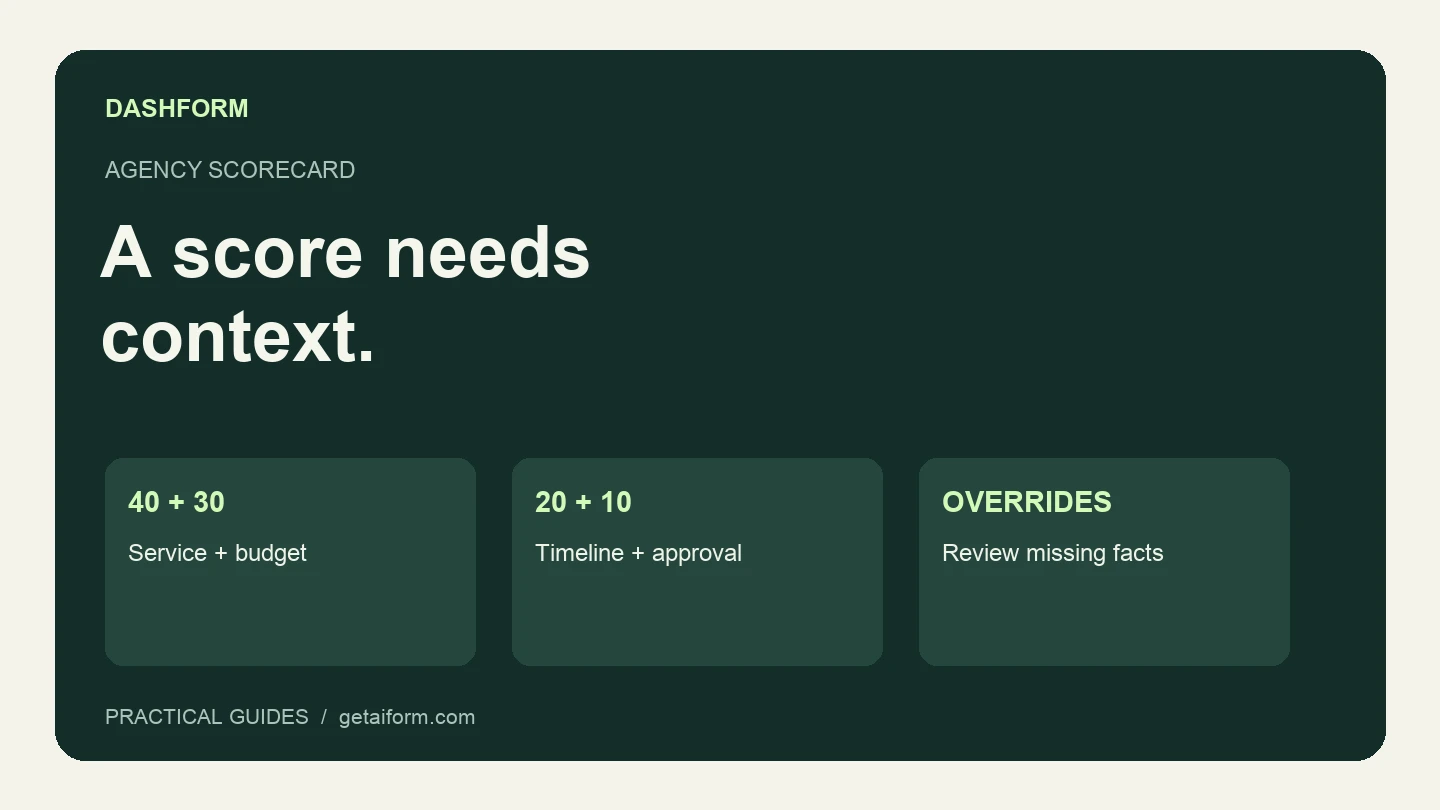
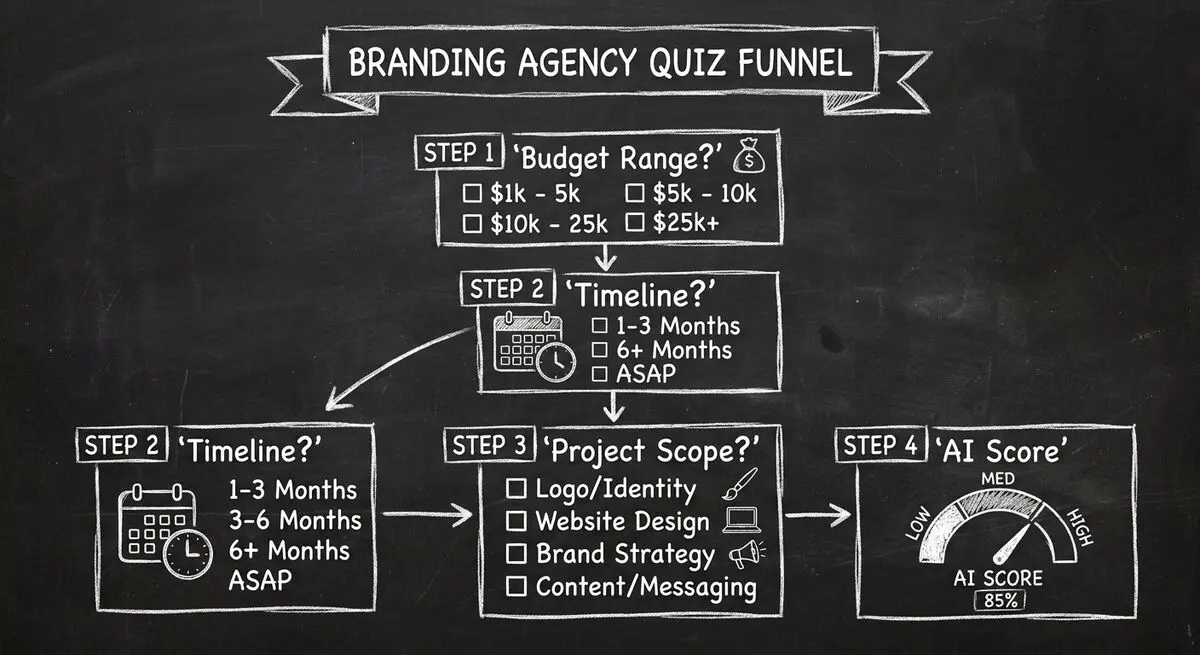
The quiz asked 7 strategic questions covering project type, business stage, timeline, investment range, decision-maker count, agency experience, and project driver. Each response fed into Dashform's AI scoring engine, which assigned a 0–100 qualification score based on weighted criteria:
Budget alignment (35% weight) — Does the stated budget match the agency's minimum project size?
Timeline realism (20% weight) — Is the timeline feasible for the requested scope?
Decision-maker access (15% weight) — Will the person on the call have buying authority?
Project complexity (15% weight) — Does the scope match what the agency excels at?
Urgency signal (15% weight) — Is there a real business driver, or is this exploratory?
Prospects scoring above 70 were automatically routed to a calendar booking page. Those scoring 40–69 received an educational email sequence. Those below 40 got a polite redirect to the agency's resource library.
The Implementation: From Setup to Live in One Afternoon
The agency's creative director — not a developer — built the entire quiz in Dashform in one afternoon. The platform's AI-powered form builder generated the initial quiz structure from a simple prompt, then the team customized the scoring weights and routing logic.
Key implementation details: embedded on the existing "Work With Us" page (no site redesign needed), connected to HubSpot CRM via native integration, automated calendar booking for high-scoring leads via Calendly webhook, conditional email sequences triggered by score bands, and real-time Slack notifications for 70+ leads.
Total setup time from "let's try this" to live on the website: approximately 2 hours, including testing and team review.
60-Day Results: The Numbers Tell the Story
Before vs After — 60-Day Comparison
| Metric | Before | After (60 Days) | Change |
|---|---|---|---|
| Form submissions | 47/mo | 38/mo | -19% |
| Discovery calls booked | 14/mo | 22/mo | +57% |
| Discovery call show rate | 64% | 91% | +42% |
| Qualified prospects on calls | 3–4/mo | 16/mo | +340% |
| Proposals sent | 6/mo | 14/mo | +133% |
| Deals closed | 1–2/mo | 5/mo | +200% |
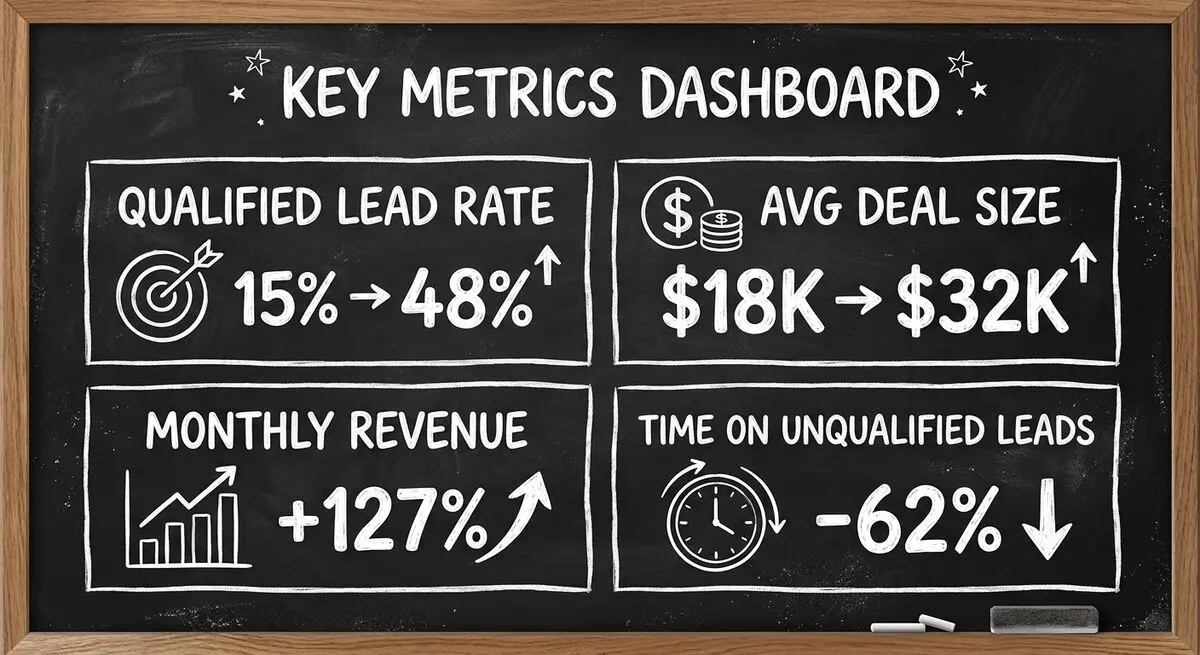
| Average deal size | $18,200 | $31,500 | +73% |
| Hours on unqualified leads | ~22 hrs/wk | ~6 hrs/wk | -73% |
| Monthly new client revenue | $27,300 | $157,500 | +477% |
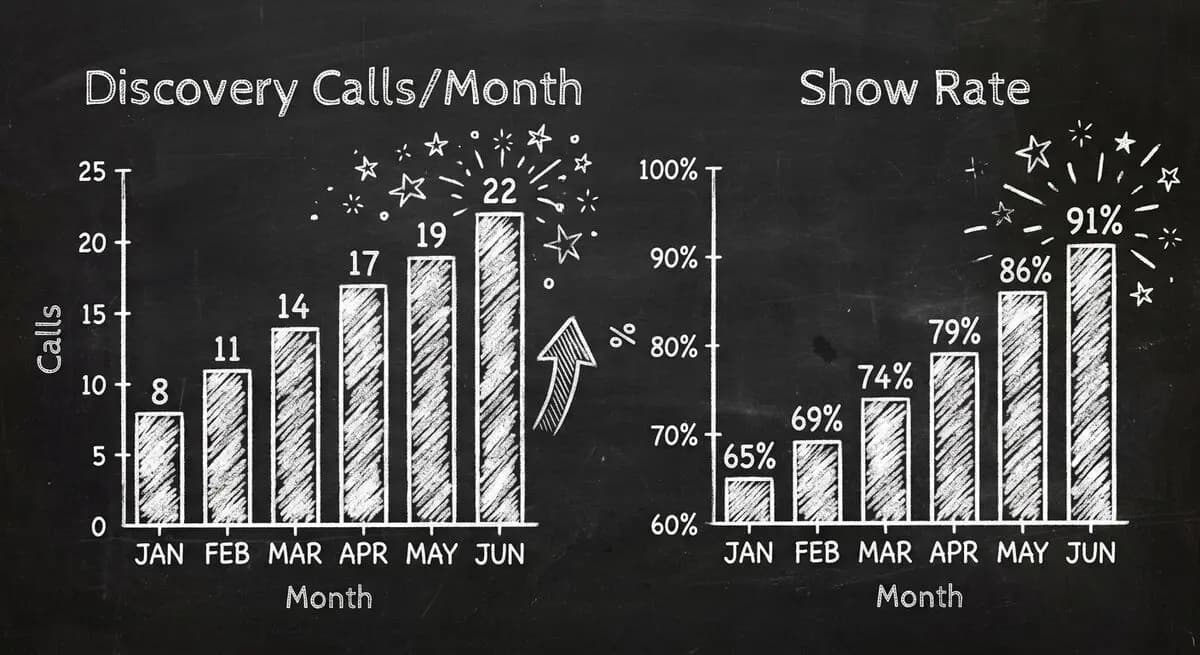
Total submissions dropped 19%, but that's the point. The quiz takes 2–3 minutes to complete versus 30 seconds for the old form. The prospects who didn't bother to finish were overwhelmingly tire-kickers. Interactive content research shows that quiz completion itself is a qualification signal.
Show rate jumped from 64% to 91%. Leads who invest 2–3 minutes answering detailed questions are far more committed than those who fire off a quick message. The multi-step form approach creates psychological commitment that carries through to the actual call.
Average deal size jumped 73% — not because the agency raised prices, but because the quiz naturally filtered for prospects with larger budgets and more complex needs.
What Made the Qualification Quiz Work
Budget Question Placement
They placed the budget question at position 4 out of 7 — after the prospect had already invested time on earlier questions. By that point, sunk cost made prospects more likely to answer honestly. Data from Proposify's 2025 Proposal Study shows transparent pricing discussions early in the process increase close rates by 18%.
Personalized Results Page
High-scoring leads saw a customized results page with a relevant case study and one-click calendar booking. This leverages zero-party data — information the prospect voluntarily shared — to build trust before the first human interaction.
Score-Based Routing
Not every prospect below the budget threshold is a lost cause. The mid-tier nurture sequence (scores 40–69) converted 8% of those prospects into qualified leads within 90 days — after their budgets, timelines, or needs evolved.
Lessons for Other Creative Agencies
-
Qualification is not rejection — it's routing. The quiz didn't turn away prospects. It directed them to the right resource for their current stage.
-
The right questions reveal more than budget. Timeline, decision-maker count, and project driver were equally important. A $50K budget with a committee of 8 and a 2-week timeline is just as unqualified.
-
Completion rate is itself a signal. Prospects who abandoned the quiz before the budget question had a 0% historical close rate.
-
Start with your real disqualification criteria. List the top 5 reasons discovery calls go nowhere. Those reasons become your quiz questions.
What's Next: Agent Funnel Integration
The agency is now exploring Dashform's Agent Funnel feature, which makes their qualification quiz discoverable to AI agents like ChatGPT, Claude, and Perplexity. With Google's local search share dropping to 71% and 45% of consumers now using AI to find services, the agency sees this as the natural next step.
They've also run their website through Dashform's AX Audit — a free scan that evaluates AI agent readiness across six dimensions. Their initial score was 34 out of 100, which they're actively working to improve.
Frequently Asked Questions
How long does it take to see results from a qualification quiz?
Most agencies see measurable changes within 2–4 weeks. The biggest immediate impact is the reduction in time spent on unqualified leads, visible from day one. Discovery call quality improvements compound over the first 30–60 days as scoring weights get fine-tuned.
Won't a longer form scare away good leads?
The data shows the opposite. Multi-step forms convert up to 300% better than single-page forms for B2B services. Serious prospects appreciate a structured process — it signals professionalism.
What if my agency handles multiple service types?
Dashform supports conditional logic, so you can branch the quiz based on the first answer. A prospect selecting "website design" sees different follow-up questions than one selecting "brand strategy." Each path can have its own scoring weights.
Should I remove my contact form entirely?
Not necessarily. Many agencies keep a simple contact form for existing clients and referrals while routing new business prospects to the qualification quiz.
How does this compare to hiring a sales development rep?
A full-time SDR costs $50,000–$80,000/year. The qualification quiz handles first-pass filtering at a fraction of the cost. Several agencies use the quiz as a complement to their SDR, letting the human focus on high-scoring leads.
Can the quiz integrate with my existing CRM and calendar?
Dashform integrates natively with HubSpot, Salesforce, Pipedrive, Google Calendar, Calendly, and 5,000+ apps via Zapier.