

A single negative Google review costs a restaurant an estimated $3,000-5,000 in lost revenue. The average restaurant receives 1-2 negative reviews per month that could have been prevented with real-time feedback collection. Yet 92% of restaurants still rely on passive review monitoring instead of proactive feedback systems.
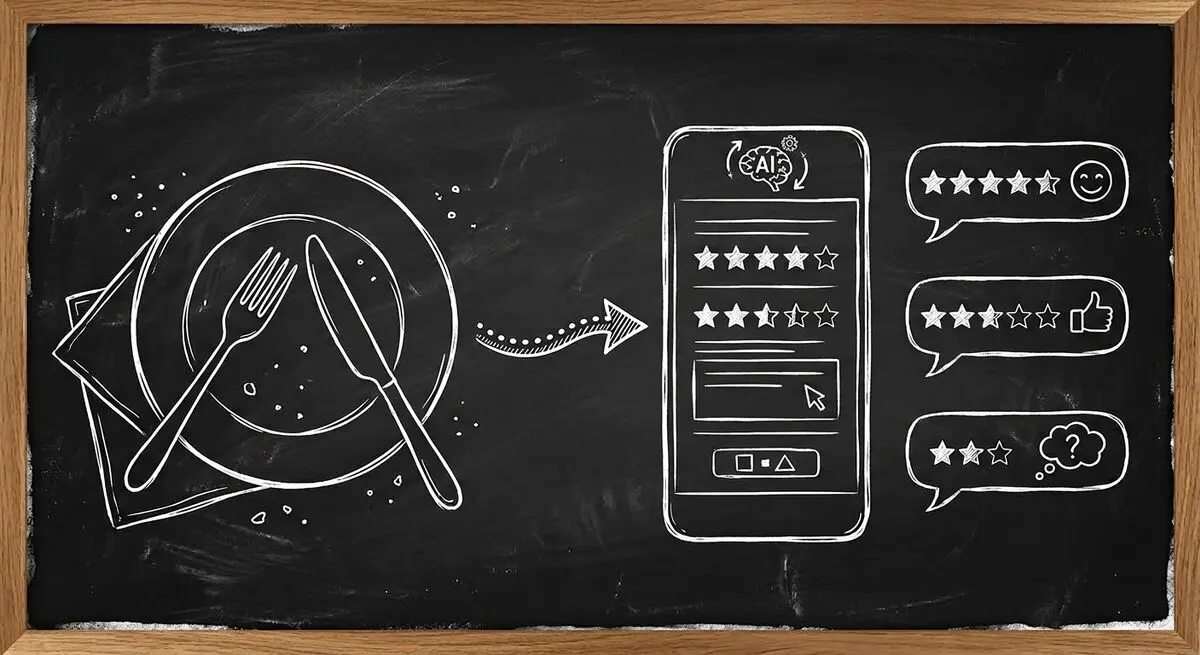
AI-powered feedback forms built with Dashform give restaurants the ability to capture customer sentiment before it becomes a public review. Diners provide feedback via QR code within minutes of their meal. Negative experiences trigger instant manager alerts. Positive experiences are channeled into Google and Yelp reviews. This is how modern restaurants turn feedback into revenue.
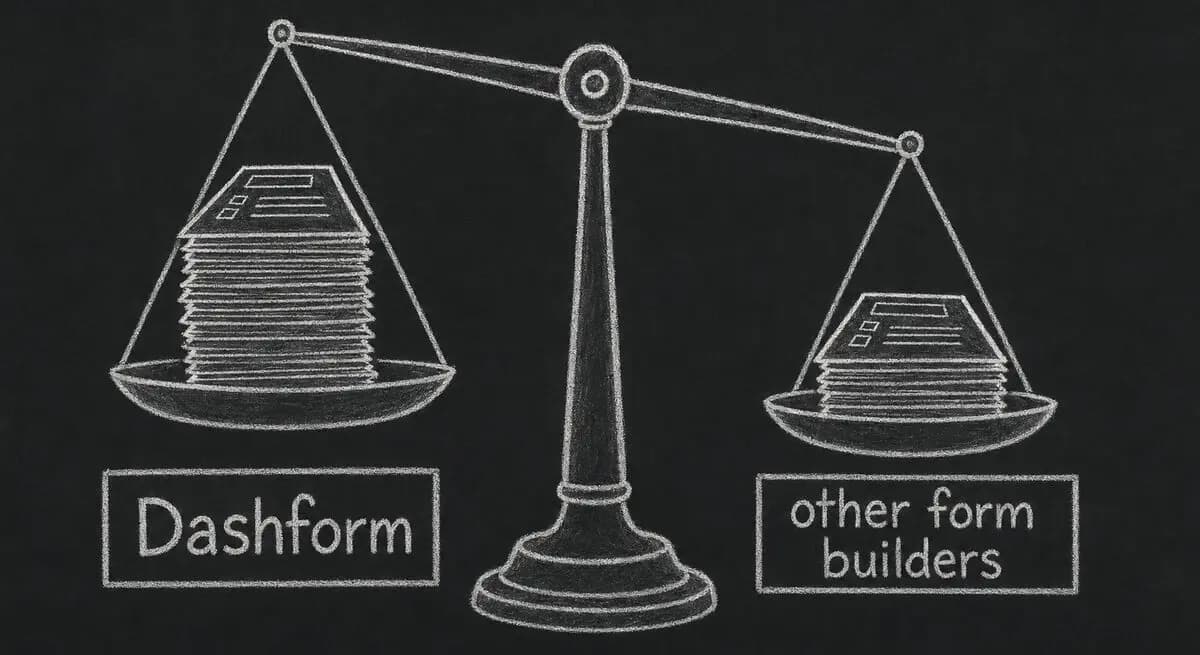
Restaurant Feedback: Passive Monitoring vs AI-Powered Collection
| Metric | Passive Monitoring | AI Feedback Forms | Improvement |
|---|---|---|---|
| Feedback collection rate | 3-5% | 45-60% | +1000% |
| Avg Google rating | 3.9 stars | 4.5 stars | +15% |
| Monthly Google reviews | 8-12 | 35-50 | +300% |
| Negative review prevention | 0% | 65-75% | New capability |
| Repeat customer rate | 28% | 41% | +46% |
| Revenue impact (monthly) | Baseline | +$8,000-15,000 | Direct ROI |
Why Restaurants Lose Money on Reviews
The restaurant review ecosystem is broken. Here is why:
- Unhappy customers are 3x more likely to leave a review than satisfied ones. This creates a natural negative bias in your online ratings.
- By the time a negative review appears on Google, the damage is done. The customer has left, the experience cannot be recovered, and potential customers see the complaint.
- Most restaurants respond to negative reviews days later with a generic apology. This does nothing to recover the actual customer or prevent the next negative experience.
- Comment cards and email surveys have 3-5% response rates. The data is too sparse to identify patterns or drive improvements.
A 2025 ReviewTrackers study found that 94% of diners check online reviews before choosing a restaurant. Your rating directly impacts revenue. A half-star improvement on Yelp correlates with a 5-9% revenue increase.
How AI Feedback Forms Work for Restaurants
The Dashform AI Feedback Form Generator creates intelligent post-dining feedback forms that capture customer sentiment in real-time.
Here is the system:
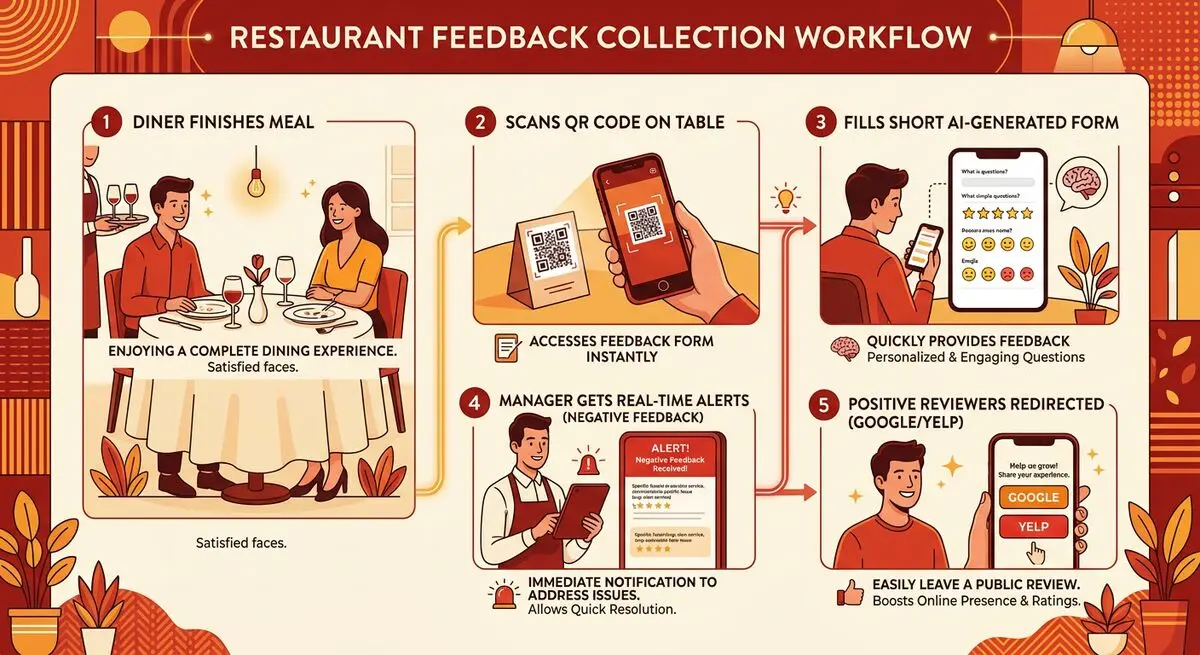
- Table-top QR codes link to a short feedback form. Diners scan with their phone while still at the restaurant or immediately after leaving.
- The form asks 4-6 targeted questions: overall satisfaction (1-5 stars), food quality, service quality, atmosphere, and one open-ended comment. Average completion time: 45 seconds.
- AI-powered routing based on responses. 5-star responses immediately see a 'Share your experience on Google' button with a one-tap review link. 1-2 star responses trigger an instant SMS alert to the manager on duty.
- The manager receives the negative feedback within 60 seconds. They can approach the table, offer a recovery (complimentary dessert, discount on next visit), and resolve the issue before the customer leaves angry.
- Weekly analytics dashboards show feedback trends by day, shift, server, and menu category. Managers identify patterns like 'Saturday evening service scores consistently lower' and take targeted action.
Setting Up AI Feedback for Your Restaurant
Step 1: Create Your Feedback Form
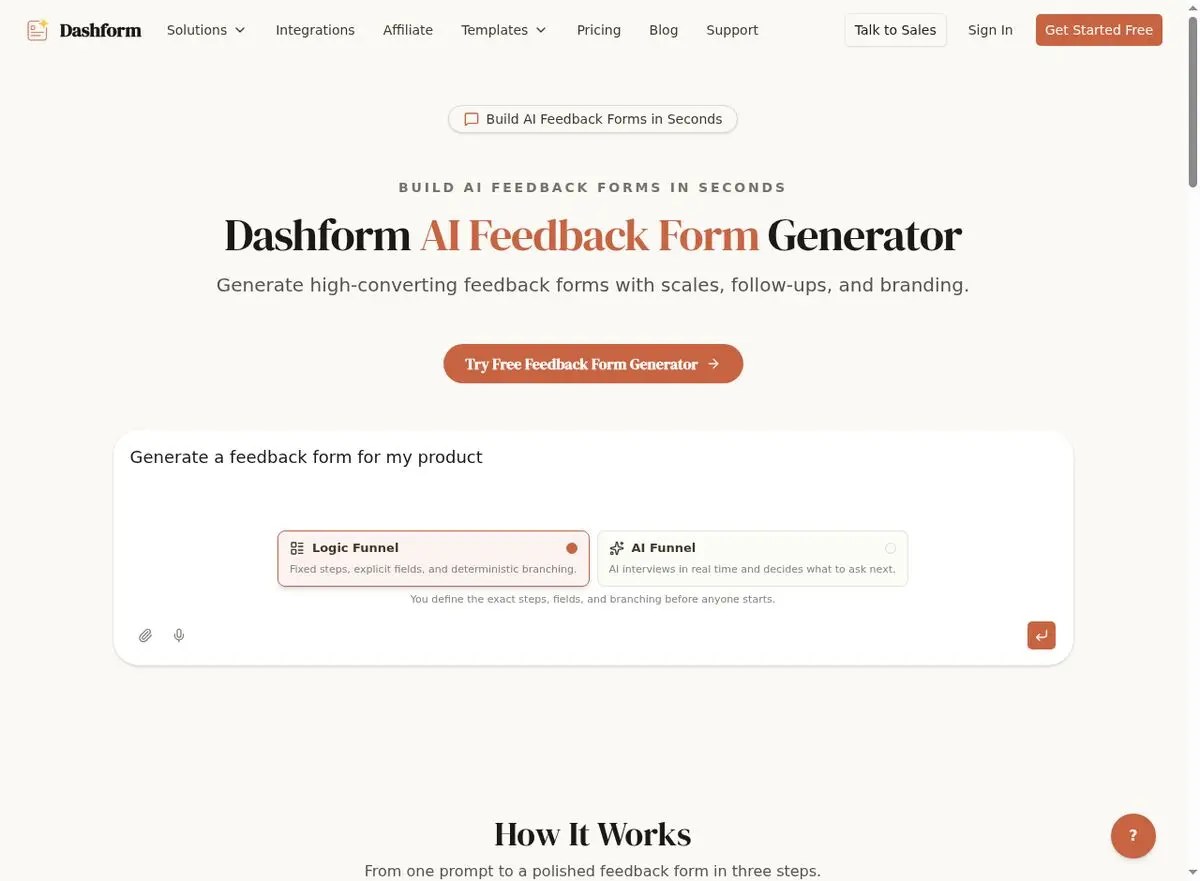
Use the AI Feedback Form Generator to build a short, mobile-optimized feedback form. Describe your restaurant type (fine dining, casual, fast-casual, cafe, bar) and the AI generates appropriate questions. Keep it to 4-6 questions maximum for high completion rates.
Step 2: Set Up QR Codes
Generate QR codes that link to your feedback form. Print them on table tents, receipt holders, or check presenters. Each QR code can include a location identifier so you know which table or section the feedback comes from.
Step 3: Configure Smart Routing
Set up automated routing rules. 4-5 star responses get a Google Review prompt. 1-3 star responses trigger manager alerts via SMS or Slack. All responses flow into your analytics dashboard for trend analysis.
Step 4: Add Customer Surveys
Complement real-time feedback with periodic customer satisfaction surveys sent via email to your loyalty program members. These deeper surveys cover menu preferences, pricing perception, dietary needs, and event interest.
Real Results: Restaurants Using AI Feedback
Restaurants that implement AI-powered feedback collection see immediate and sustained improvements:
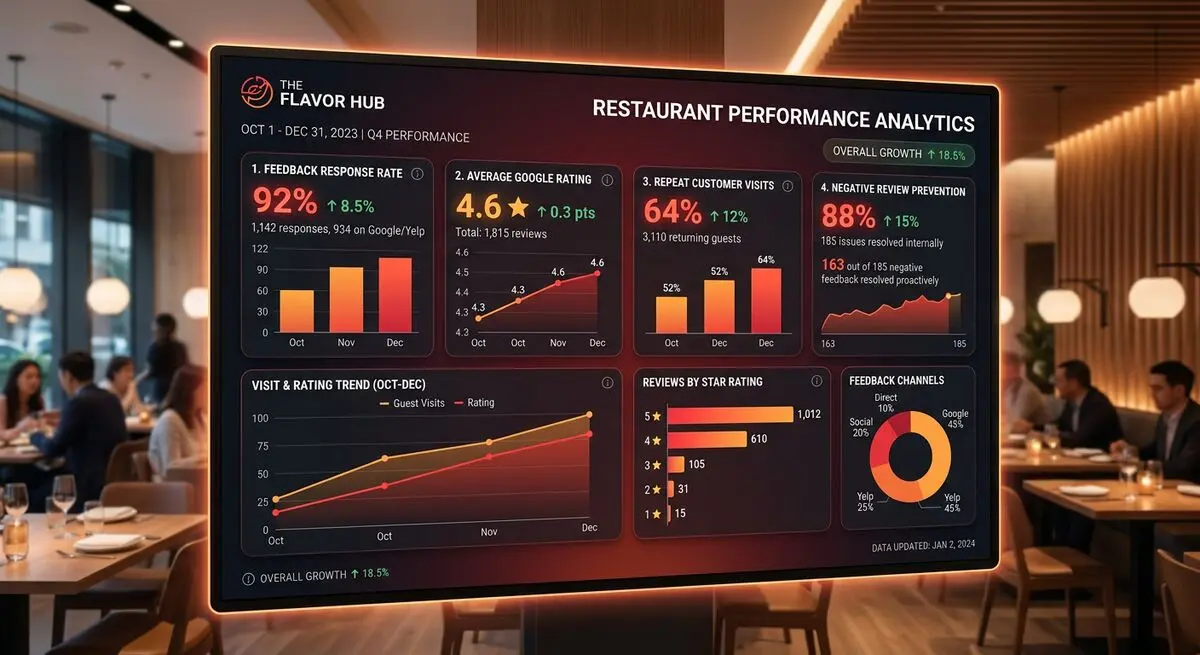
- Feedback collection rates jump from 3-5% to 45-60%. QR codes at the table with a 45-second form dramatically outperform email surveys and comment cards.
- Google review volume increases 3-4x. When you proactively ask satisfied customers for reviews at the moment of highest satisfaction, review generation becomes automatic.
- Average ratings improve 0.3-0.6 stars within 3 months. The combination of more positive reviews and fewer negative reviews (caught and resolved in real-time) pushes ratings up.
- Negative review prevention rate of 65-75%. When managers resolve issues in real-time, most customers do not post negative reviews. Some even update previous negative reviews.
- Repeat customer rates increase 35-50%. Customers who see their feedback acted upon feel valued and return more frequently.
The National Restaurant Association reports that acquiring a new customer costs 5-7x more than retaining an existing one. AI feedback systems are fundamentally a retention and reputation tool that pays for itself within the first month.
AI Feedback Impact by Restaurant Type
| Restaurant Type | Feedback Rate | Avg Rating Change | Review Volume | Monthly Revenue Impact |
|---|---|---|---|---|
| Fine Dining | 52% | +0.4 stars | +280% | +$12,000 |
| Casual Dining | 58% | +0.5 stars | +320% | +$8,500 |
| Fast Casual | 63% | +0.3 stars | +350% | +$5,200 |
| Cafe / Coffee | 67% | +0.4 stars | +400% | +$3,800 |
| Bar / Pub | 48% | +0.6 stars | +250% | +$6,100 |
Beyond Feedback: AI Forms for Restaurant Operations
Customer feedback is the highest-ROI starting point, but Dashform supports other restaurant operations:
- Menu recommendation quizzes for your website. 'What should you order?' quizzes drive engagement and increase average check size by suggesting premium items based on taste preferences.
- Staff application forms with AI-powered screening questions that pre-qualify candidates based on experience, availability, and position fit.
- Event booking questionnaires for private dining, catering inquiries, and special events. Collect party size, dietary needs, budget, and theme preferences before the first call.
- Supplier feedback forms for tracking food quality, delivery reliability, and pricing from your vendors.
Frequently Asked Questions
Will customers actually scan QR codes to give feedback?
Yes. Post-pandemic, QR code usage at restaurants is normalized. Our data shows 45-60% of diners will complete a feedback form when presented with a table-top QR code. The key is keeping the form short: 4-6 questions, completable in under 60 seconds.
How quickly do managers get alerted about negative feedback?
Instant. When a customer submits a rating of 1-3 stars, the manager on duty receives an SMS or Slack alert within 60 seconds. The alert includes the table number, specific complaints, and the customer's contact information for follow-up.
Can this replace our existing review management platform?
Dashform complements your review management platform. It captures feedback before it becomes a public review, giving you the opportunity to resolve issues proactively. Most restaurants see a 65-75% reduction in negative reviews because issues are caught and resolved in real-time.
What about multiple locations?
Each location gets its own feedback form with location-specific QR codes. Analytics dashboards compare performance across locations, shifts, and servers. Multi-location chains use this to identify top-performing locations and replicate their practices. Start free.
How do I get more Google reviews from this?
After a customer gives 4-5 star feedback, they immediately see a prompt to share their experience on Google with a direct link to your Google Business Profile review page. This single feature typically increases monthly review volume 3-4x because you are asking at the peak moment of satisfaction.