
OpenClaw exploded to 200,000+ GitHub stars by proving that open-source AI agents can handle real business tasks. Now healthcare providers are paying attention. Clinics, telehealth platforms, and multi-provider practices are deploying OpenClaw agents to manage scheduling, patient communication, and clinical documentation. But the missing piece is the front door: how do patients actually enter the system? That is where Dashform comes in.
The OpenClaw + Dashform stack gives medical practices an end-to-end AI-powered patient experience. Dashform handles the patient-facing data collection — intake forms, health assessments, consultation questionnaires, and feedback surveys. OpenClaw agents handle the backend automation — scheduling, follow-ups, record routing, and communication. Together, they eliminate 70-80% of administrative overhead without requiring a single line of custom code.
Clinic Operations: Manual vs OpenClaw + Dashform Stack
| Metric | Manual Process | OpenClaw + Dashform | Improvement |
|---|---|---|---|
| Patient intake time | 18-22 min | 4-6 min | -75% |
| Appointment scheduling | Phone + manual | AI agent auto-schedule | -90% staff time |
| Pre-visit form completion | 0% (paper at desk) | 82% (mobile before visit) | New capability |
| Post-visit follow-up | Inconsistent email | AI agent within 2 hours | 100% coverage |
| No-show rate | 24% | 11% | -54% |
| Admin staff hours/day on intake | 4-5 hrs | 0.5-1 hr | -80% |
Why Healthcare Needs the AI Agent + Smart Form Combo
Healthcare administration is the most labor-intensive customer-facing operation in any industry. A typical 5-provider clinic employs 3-4 front desk staff whose primary job is processing forms, making phone calls, and entering data. The economics are brutal:
- The average clinic spends $150,000-200,000 annually on front desk administrative labor.
- 30-40% of that time goes to tasks that AI can handle: intake processing, appointment reminders, insurance verification follow-ups, and post-visit surveys.
- Patient satisfaction scores are directly tied to wait times, and wait times are directly tied to intake efficiency.
A 2025 AMA Digital Health Report found that practices using AI-assisted intake systems saw 34% higher patient satisfaction scores and 28% lower staff turnover. The administrative burden is not just a cost problem — it is a retention problem for both patients and staff.
How OpenClaw Agents Work with Dashform in Healthcare
The integration between OpenClaw and Dashform works through MCP (Model Context Protocol), the same standard that powers AI agent interoperability across the industry. Here is the practical workflow:
Patient Discovery and Intake
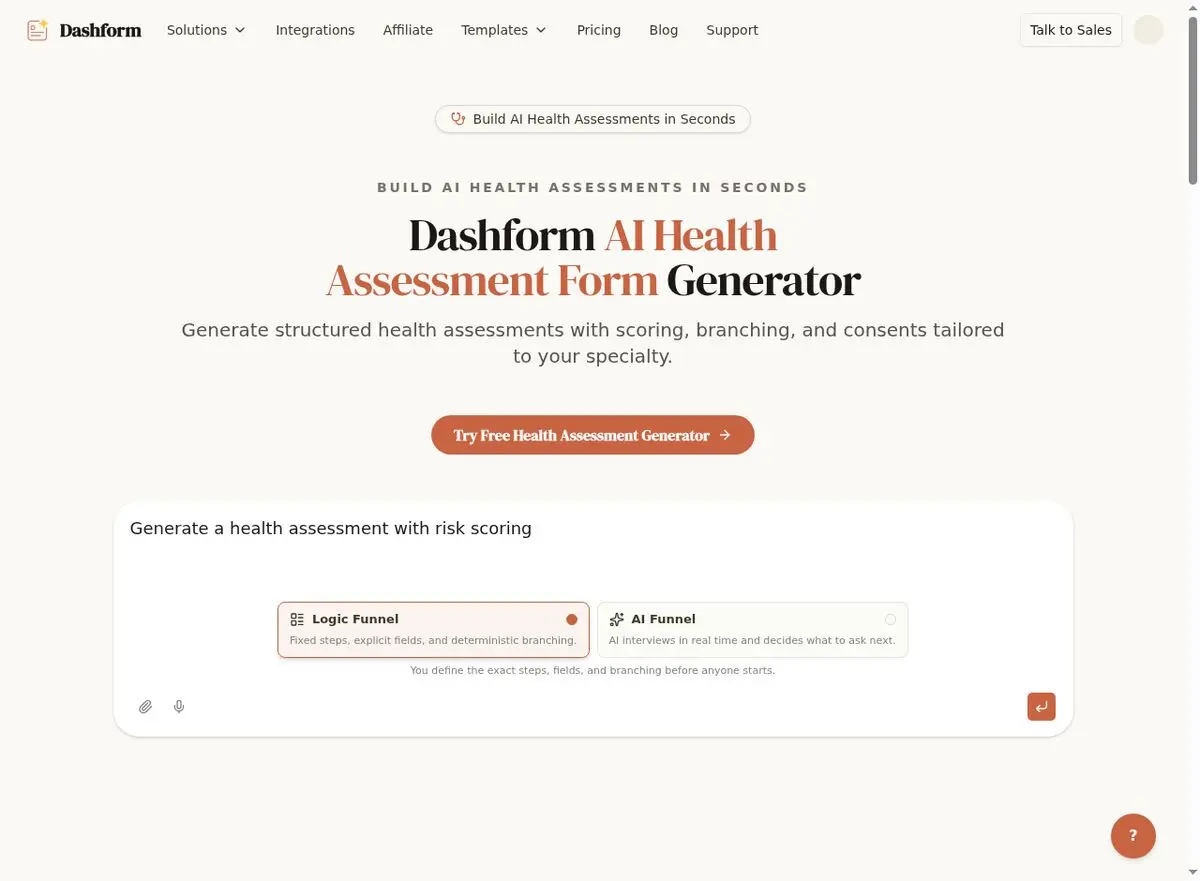
A potential patient visits your clinic website. Instead of a generic contact form, they see a Dashform health assessment form that asks about symptoms, medical history, insurance, and preferred appointment times. The form uses conditional logic — a patient reporting chest pain sees urgent care questions while a patient requesting a routine physical sees preventive health questions.
OpenClaw Agent Takes Over
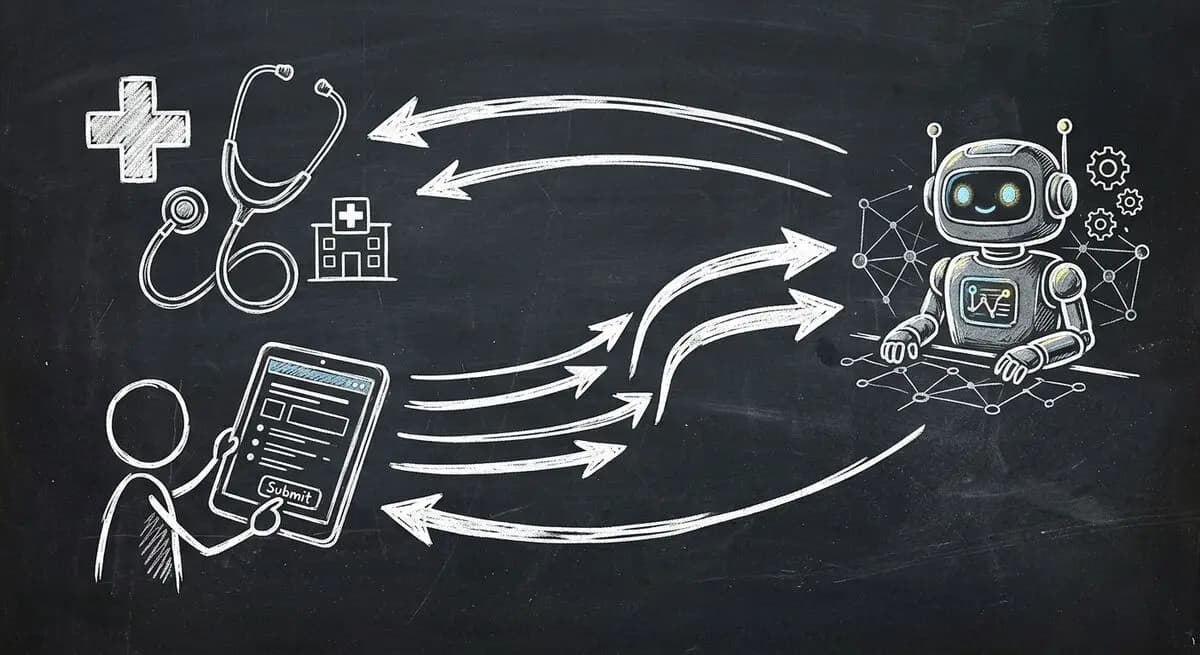
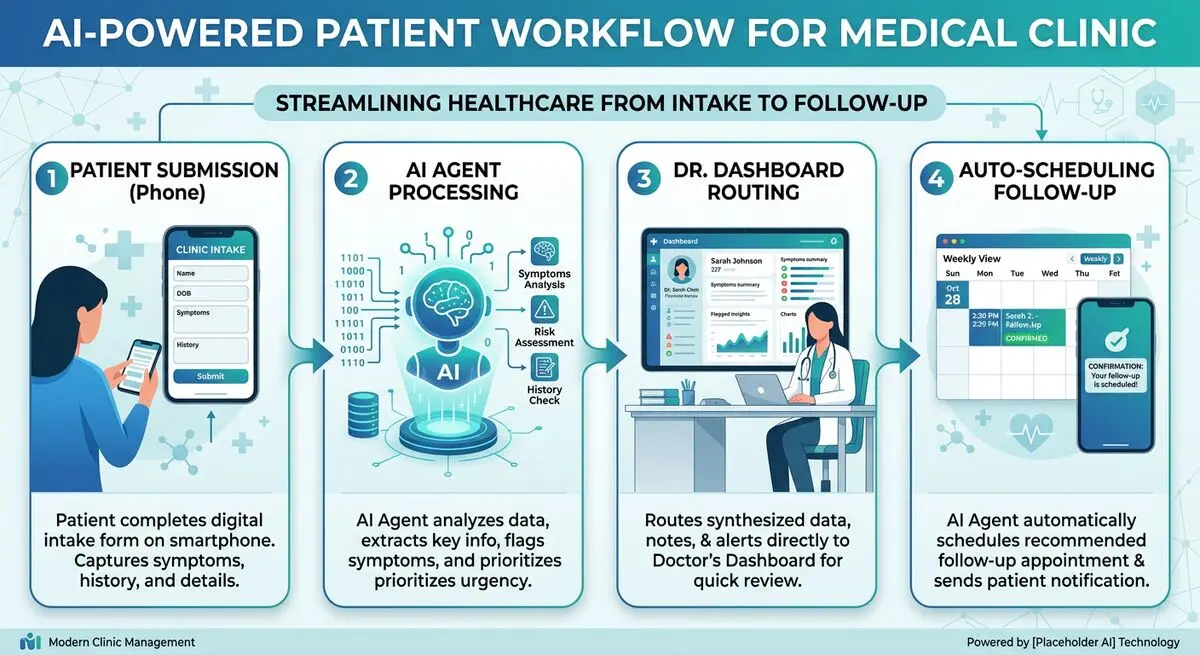
Once the patient submits the Dashform intake, the OpenClaw agent receives the structured data via webhook. The agent then: verifies insurance eligibility in real-time, matches the patient with the appropriate provider based on symptoms and specialties, checks provider availability and books the appointment, sends the patient a confirmation with pre-visit instructions, and creates a preliminary chart note for the provider.
Pre-Visit Preparation
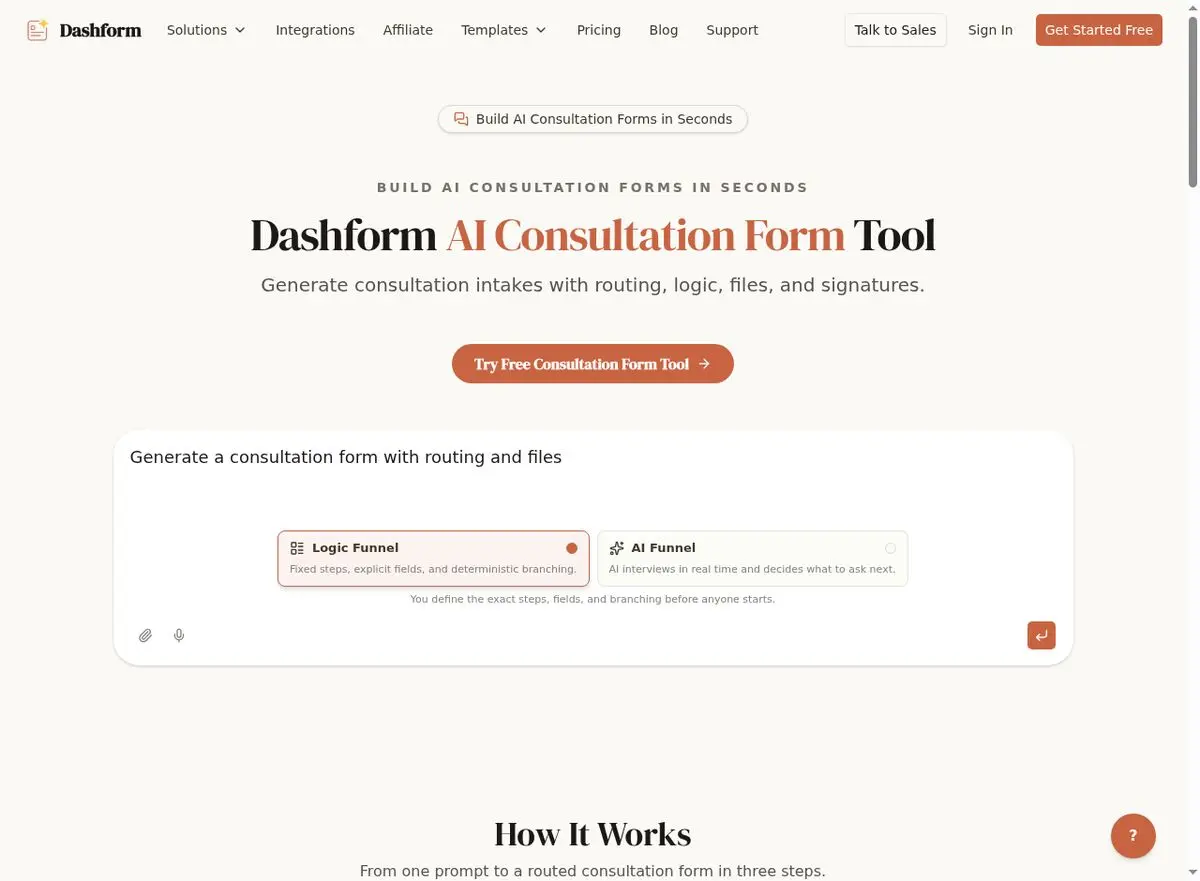
48 hours before the appointment, a Dashform consultation form is automatically sent to the patient. This treatment-specific questionnaire collects detailed information the provider needs: current medications with dosages, allergy updates, specific symptoms timeline, and questions the patient wants to address. The OpenClaw agent monitors completion and sends reminders if needed.
Post-Visit Automation
After the visit, the OpenClaw agent triggers a Dashform feedback form via SMS. Patient satisfaction is captured in real-time. Issues are flagged to the practice manager. Satisfied patients are prompted to leave Google reviews. The agent also schedules any follow-up appointments based on the provider's notes.
The Tech Stack: What You Need
Setting up the OpenClaw + Dashform healthcare stack requires no custom development:
- Dashform account (free tier available) for creating AI-powered patient forms.
- OpenClaw agent with the healthcare skill pack installed.
Dashform MCP integration enabled so the OpenClaw agent can read form submissions and trigger new forms programmatically.
- Webhook connections to your EHR/practice management system (Epic, Athena, DrChrono, etc.).
- Total setup time: 2-4 hours for a basic implementation. No developers required.
Real Impact: Healthcare Clinics Using AI Agents
Healthcare practices deploying the AI agent + smart form stack are seeing consistent results:
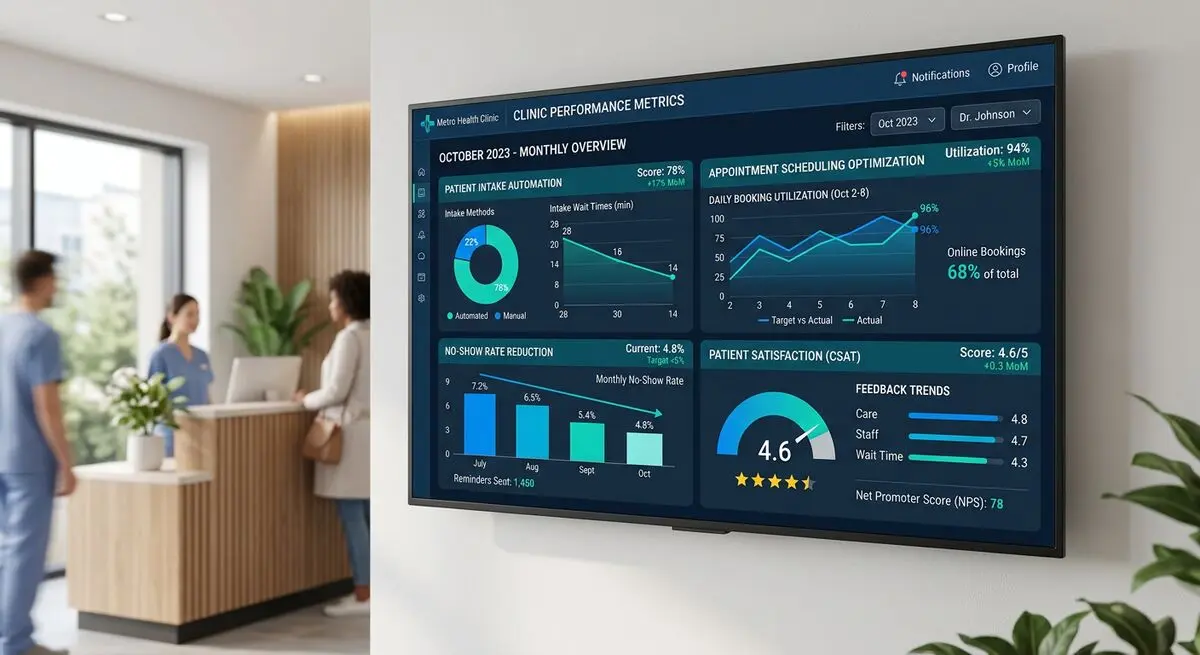
- Patient intake time drops from 18-22 minutes to 4-6 minutes. 82% of patients complete forms on their phone before arriving, so they walk in ready for their appointment.
- No-show rates decrease 50-60%. The combination of pre-visit engagement (consultation forms) and automated reminders (OpenClaw agent) creates multiple commitment touchpoints.
- Administrative staff hours on intake drop 80%. Front desk staff shift from data entry to patient relationship management.
- Post-visit feedback collection jumps from near-zero to 55-65%. Automated SMS feedback within 2 hours of the visit captures sentiment while the experience is fresh.
- Google review volume increases 3-4x. Satisfied patients prompted at the right moment convert to reviewers at much higher rates.
The healthcare IT market is projected to reach $974 billion by 2030. AI-powered patient experience tools are the fastest-growing segment. Practices that adopt now gain a significant competitive advantage in patient acquisition and retention.
OpenClaw + Dashform Impact by Practice Type
| Practice Type | Intake Time Saved | No-Show Reduction | Review Growth | Admin Hours Saved/Week |
|---|---|---|---|---|
| Primary Care | 75% | -52% | +280% | 18 hrs |
| Urgent Care | 68% | -38% | +320% | 14 hrs |
| Specialty Clinic | 72% | -55% | +250% | 16 hrs |
| Telehealth | 80% | -45% | +350% | 20 hrs |
| Multi-Location | 74% | -50% | +300% | 25+ hrs |
Getting Started: Your First AI-Powered Patient Workflow
Start with the highest-impact workflow: new patient intake. Use the AI Health Assessment Form Generator to create your intake form in minutes. Connect it to your OpenClaw agent via the Dashform MCP API . Deploy on your website and start collecting pre-visit intake data from day one.
Then expand: add pre-visit consultation forms for appointment preparation, post-visit feedback for reputation management, and symptom checker quizzes for patient acquisition.
Frequently Asked Questions
Is this HIPAA compliant?
Dashform uses encryption in transit and at rest. OpenClaw agents can be deployed on HIPAA-compliant infrastructure. For practices handling PHI, review both platforms' security documentation and ensure your specific implementation meets compliance requirements. Many practices use this stack for non-PHI workflows like scheduling and feedback while keeping clinical data in their EHR.
Do I need a developer to set this up?
No. Both Dashform and OpenClaw are designed for non-technical users. Form creation is AI-assisted and takes minutes. OpenClaw agent configuration uses natural language instructions. The MCP integration between them is plug-and-play.
Can this integrate with my existing EHR?
Yes. Through webhooks and Zapier, the stack connects with Epic, Athena, DrChrono, Practice Fusion, and most modern EHR systems. Patient data flows from Dashform forms through OpenClaw agents into your existing clinical workflow.
What is the cost?
Dashform offers a free tier to get started. OpenClaw is open-source. The primary cost is your time setting up workflows (2-4 hours initially). For most practices, the ROI is immediate — saving even one front desk staff hour per day covers the cost many times over. Start free with Dashform.
How does this compare to dedicated healthcare intake platforms?
Dedicated healthcare intake platforms like Phreesia or Yosi cost $300-800/month per provider and are limited to intake only. The OpenClaw + Dashform stack costs a fraction and covers the entire patient journey from acquisition through feedback. Plus, the AI agent capabilities extend far beyond forms into scheduling, communication, and practice management.