

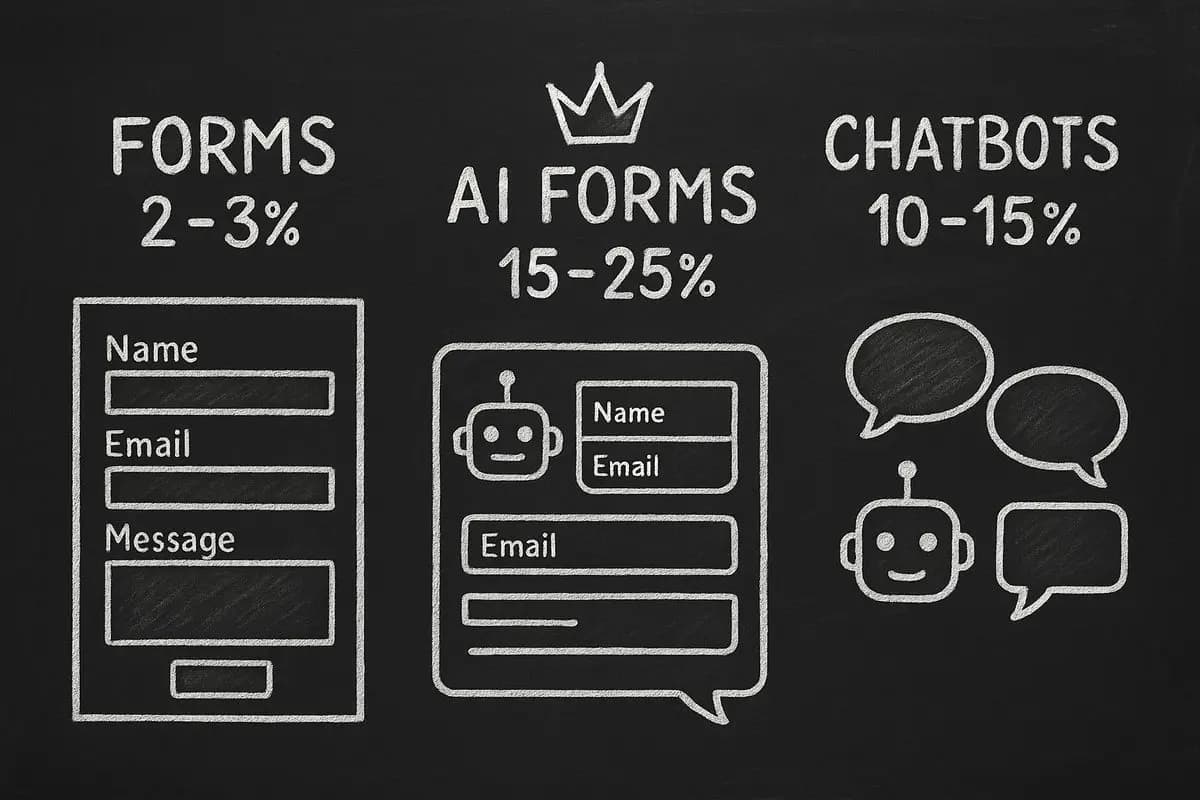
Static contact forms convert at 2-3%. AI chatbots convert at 10-15%. Conversational AI forms — the hybrid of both — convert at 15-25%. That's the headline; the choice between them depends on what you actually want a visitor to do.
Below: the actual conversion data with sources, where each approach wins (and where each one breaks), and the hybrid stack top teams use to capture 5x more qualified leads. Plus when a plain contact form is still the right answer.
The Numbers: Contact Forms vs AI Chatbots in 2026
Let's start with what the data actually says:
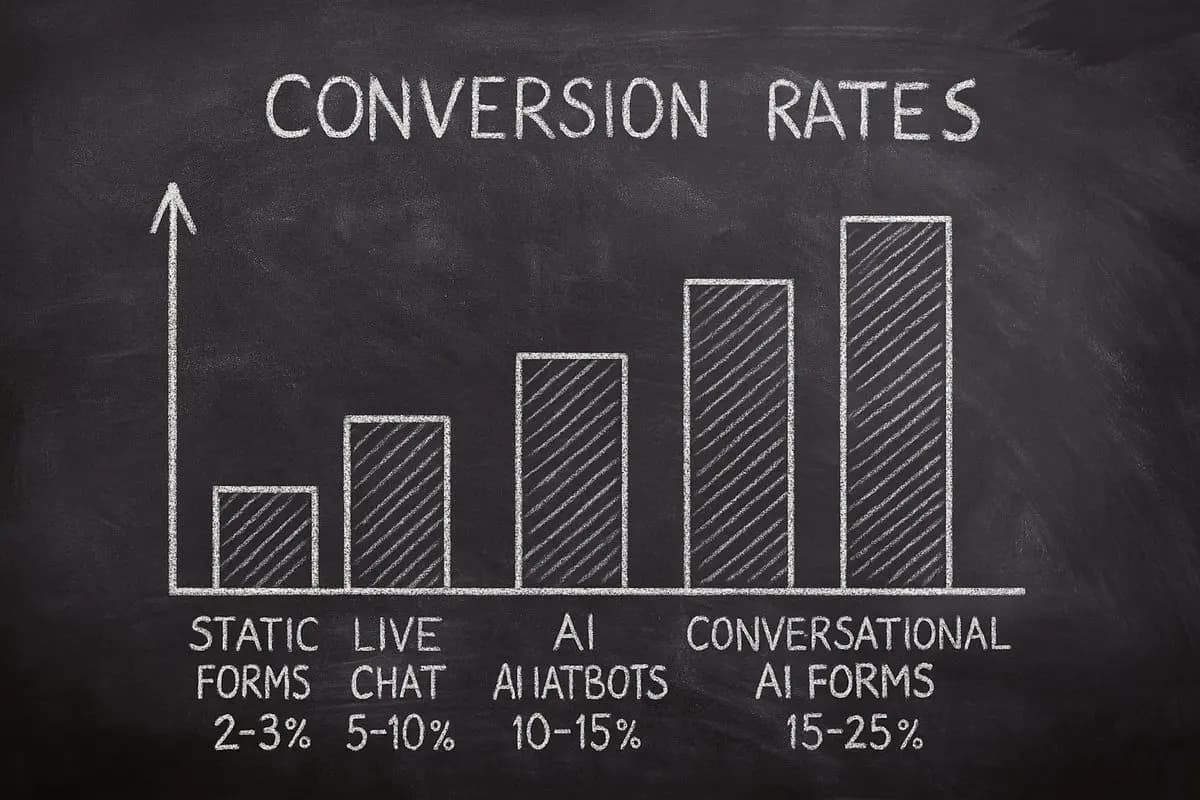
Lead Capture Conversion Rates by Channel (2026)
| Channel | Avg Conversion Rate | Response Time | 24/7 Available | Lead Quality |
|---|---|---|---|---|
| Static Contact Forms | 2-3% | 24-48 hours | Yes (but delayed) | Low — minimal qualification |
| Live Chat (Human) | 5-10% | Under 2 minutes | No — staff dependent | High — real conversation |
| AI Chatbots | 10-15% | Under 30 seconds | Yes — always on | Medium-High — depends on AI |
| Conversational AI Forms | 15-25% | Instant | Yes — always on | Highest — structured + adaptive |
The data comes from multiple sources including Oscar Chat, FastBots, Boei, and Leadoo, covering over 400 companies across 25 industries.
Contact Forms: The Familiar Workhorse
Contact forms have been the default lead capture tool since the early days of the web. They're simple, predictable, and every visitor understands how they work.
Strengths:
Universally understood — no learning curve for visitors. Structured data collection ensures consistent information. Easy to implement and maintain. Works for formal submissions (job applications, legal inquiries, file uploads). Visitors can see all fields upfront and plan their response.
Weaknesses:
Average 2-3% conversion rate — 97% of visitors leave without converting. No real-time engagement or personalization. Response times of 24-48 hours lose hot leads to competitors. High form abandonment rates (over 70% on average). Can't adapt questions based on user responses. Mobile experience is often poor with long scrolling forms.
When to use contact forms: Formal submissions requiring specific document formats, legal or compliance-driven processes, situations where users need to attach files, and detailed project briefs where seeing all fields upfront is important.
AI Chatbots: The Engagement Powerhouse
AI chatbots have evolved dramatically. In 2026, they don't just answer FAQs — they qualify leads, book appointments, and guide visitors through complex decision-making processes.
Strengths:
10-15% conversion rates — 3-5x better than forms. Proactive engagement on any page (not just the contact page). 24/7 availability with instant response times. Natural language understanding adapts to each visitor. Can qualify leads through dynamic conversation. 64% of businesses report chatbots generate more qualified leads.
Weaknesses:
Can feel intrusive with aggressive popups. Some users prefer not to "chat" — they just want to submit info quickly. AI hallucination risk with complex or technical queries. Harder to ensure standardized data collection. Setup complexity and ongoing AI training requirements. Some visitors distrust chatbot data privacy.
When to use chatbots: Real-time customer support scenarios, initial visitor engagement and qualification, complex product guidance requiring back-and-forth dialogue, and after-hours lead capture when human staff is unavailable.
The Third Option: Conversational AI Forms
Here's where it gets interesting. The highest-converting businesses in 2026 aren't choosing between forms and chatbots — they're using conversational AI forms that combine the best of both.
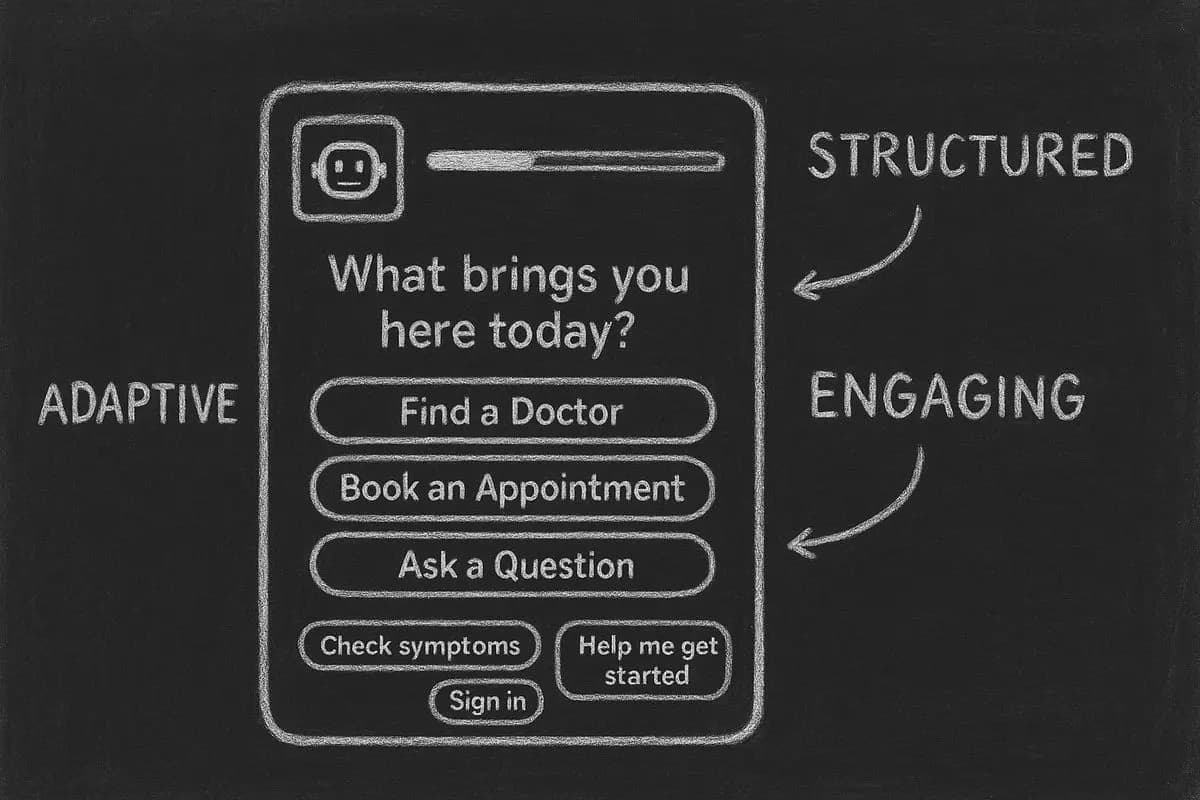
What are conversational AI forms? They present one question at a time in a chat-like interface, adapt follow-up questions based on previous answers (conditional logic), provide real-time validation and smart suggestions, maintain the structured data collection of traditional forms, and deliver an engaging experience that feels like a conversation rather than a chore.
Conversational AI Forms: The Best of Both Worlds
| Feature | Static Forms | Chatbots | Conversational AI Forms |
|---|---|---|---|
| Conversion Rate | 2-3% | 10-15% | 15-25% |
| Structured Data | Yes | Inconsistent | Yes |
| Adaptive Questions | No | Yes | Yes |
| User Experience | Predictable but boring | Engaging but unpredictable | Engaging AND structured |
| Setup Complexity | Low | High | Medium |
| Mobile Optimization | Often poor | Good | Excellent |
| Lead Qualification | None | AI-driven | AI-driven + scoring |
| Integration | Basic webhooks | Complex APIs | Native CRM connectors |
This is exactly where Dashform excels. Its AI-powered conversational forms guide leads through a dynamic qualification process — adapting questions based on previous answers, scoring leads automatically, and routing hot prospects to the right follow-up experience instantly.
How to Choose: The Decision Framework
The right tool depends on your specific situation. Here's a practical framework:
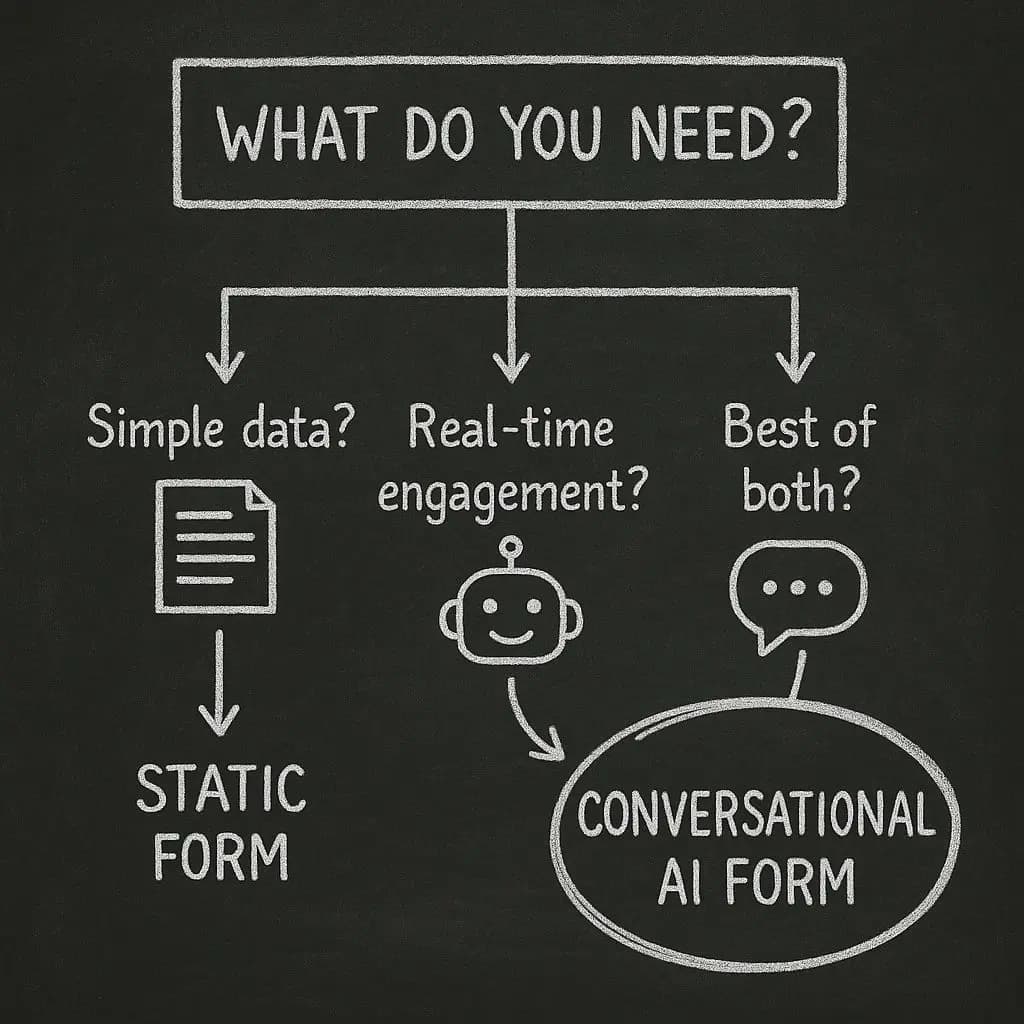
Which Tool to Use: Decision Matrix
| Your Situation | Best Choice | Why |
|---|---|---|
| Simple contact/inquiry page | Conversational AI Form | Higher conversion than static form, structured data |
| E-commerce product guidance | AI Chatbot + Quiz Form | Real-time guidance with structured recommendations |
| B2B lead qualification | Conversational AI Form | Progressive profiling with lead scoring |
| Customer support | AI Chatbot | Real-time problem solving requires flexible dialogue |
| Job applications / Legal | Static Form | Structured data with file upload requirements |
| Service businesses (dental, medspa, coaching) | Conversational AI Form | Qualification + appointment booking in one flow |
| High-traffic landing pages | Conversational AI Form | Maximum conversion with minimal friction |
| Complex technical inquiries | Hybrid (Chatbot → Form) | Chat for exploration, form for detailed specs |
The Hybrid Strategy: Why Top Businesses Use Both
The most successful lead generation strategies in 2026 don't pick one tool — they deploy a unified system:
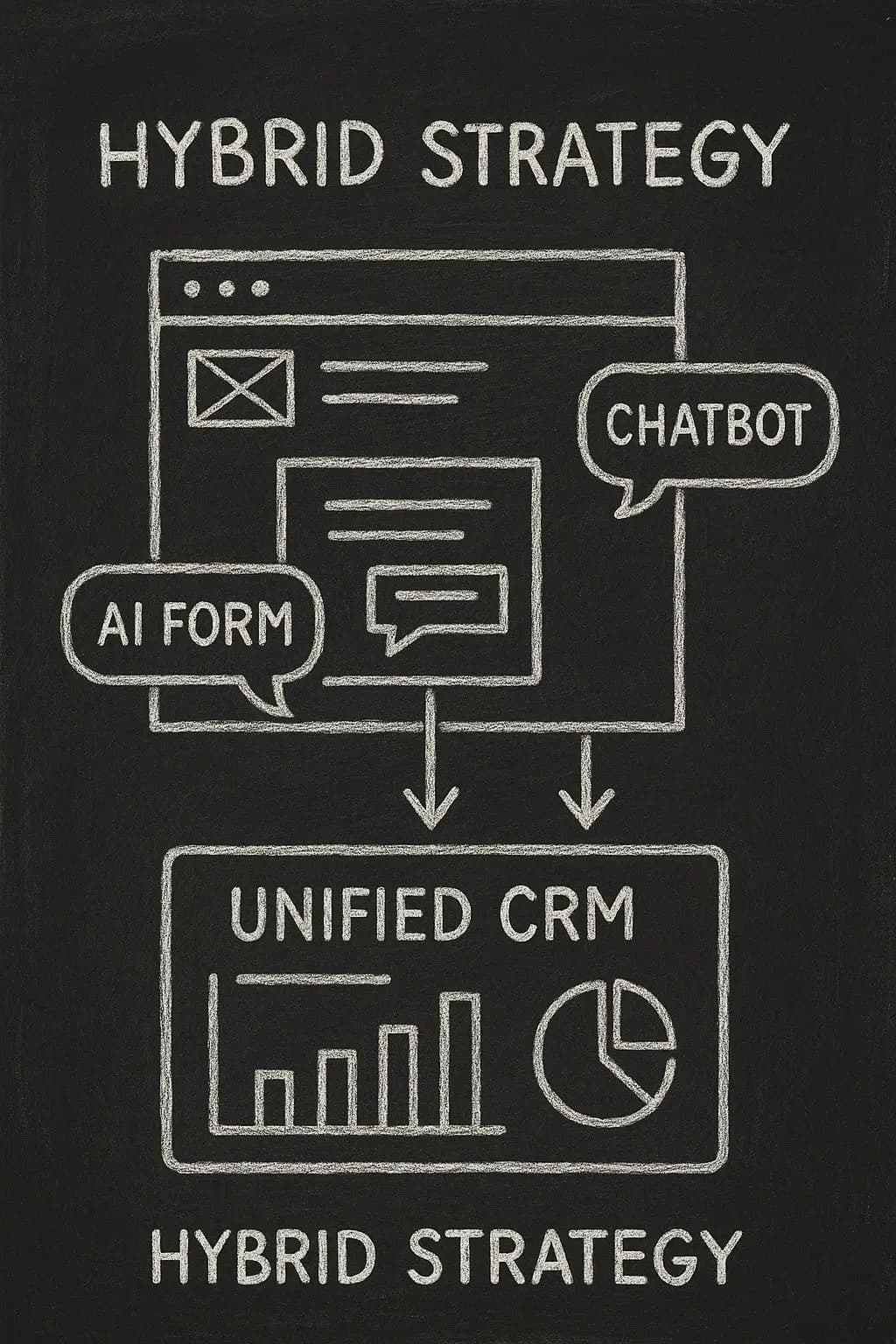
Step 1: Conversational AI Forms as Primary Lead Capture
Replace static contact forms with Dashform's AI-powered conversational forms. Present one question at a time, adapt based on responses, and qualify leads automatically. This alone can triple your conversion rate.
Step 2: AI Chatbot for Support and Exploration
Deploy a chatbot widget for visitors who have questions before they're ready to convert. The chatbot handles FAQs, guides visitors to the right page, and can hand off to a conversational form when the visitor shows buying intent.
Step 3: Unified Data in Your CRM
Both channels feed into the same CRM with consistent lead scoring. Whether a prospect converts through your form or chatbot, your sales team sees the complete picture.
Real Results: What the Data Shows
Conversion Impact by Implementation Type
| Implementation | Conversion Lift | Source |
|---|---|---|
| Static form → Conversational form | +300% | Multiple industry studies |
| Static form → AI chatbot | +200-400% | Leadoo (400 companies) |
| Chatbot + form hybrid | +10-100% over chatbot alone | Leadoo |
| Guided selling quiz (Andie Swim) | 296% conversion increase, 96X ROI | Digioh |
| Product finder quiz (Trek) | 200% conversion increase | Salsify |
| AI intake form (CrazyBulk) | 141% conversion increase | Digioh |
The pattern is clear: conversational, adaptive experiences dramatically outperform static alternatives. And when you layer in AI-powered lead qualification, the results compound.
Get Started: Replace Your Contact Form in 5 Minutes
Dashform makes it easy to upgrade from static forms to AI-powered conversational experiences:
-
Build an AI Quiz — Create a product recommendation or lead qualification quiz that adapts to each visitor
-
Create a Smart Contact Form — Replace your static form with a conversational AI form that qualifies leads as they fill it out
-
Add a Consultation Form — Let visitors book consultations through an intelligent, adaptive form experience
-
Connect to Your CRM — Sync leads to HubSpot, Salesforce, Klaviyo, or any tool via webhooks and native integrations
-
Measure and Optimize — Track conversion rates, completion rates, and lead quality scores in real-time
Key Takeaways
Static contact forms convert at 2-3% — they're leaving 97% of your potential leads on the table
AI chatbots improve conversion to 10-15% but lack structured data collection
Conversational AI forms achieve 15-25% conversion by combining chat engagement with form structure
The hybrid approach (conversational forms + chatbot support) delivers the highest overall lead generation results
Dashform's AI-powered forms make it easy to upgrade from static forms without any coding required
The form vs chatbot debate is over. The real question is: how quickly can you upgrade to conversational AI forms?