

A leader can be good at seeing the bigger picture and spend most of the week doing work that leaves no room for it. Calling that person a “visionary” tells only part of the story.
That was the problem Pia Jansson wanted her Power Zone Assessment to address. A leadership coach and strategic advisor working primarily with sales leaders, founders, and executives in small and medium-sized businesses, Pia wanted people to see both their natural strengths and how much opportunity they currently had to use them.
Someone can be thriving in one area of their life or work while feeling constrained, frustrated, or challenged in another. A single quiz outcome doesn't necessarily capture that.
She built her assessment in Dashform around four personalized result sections. In our October 2026 interview, she described the choices behind it, the work it took to get the logic right, and why everyone can see their results without joining her email list.
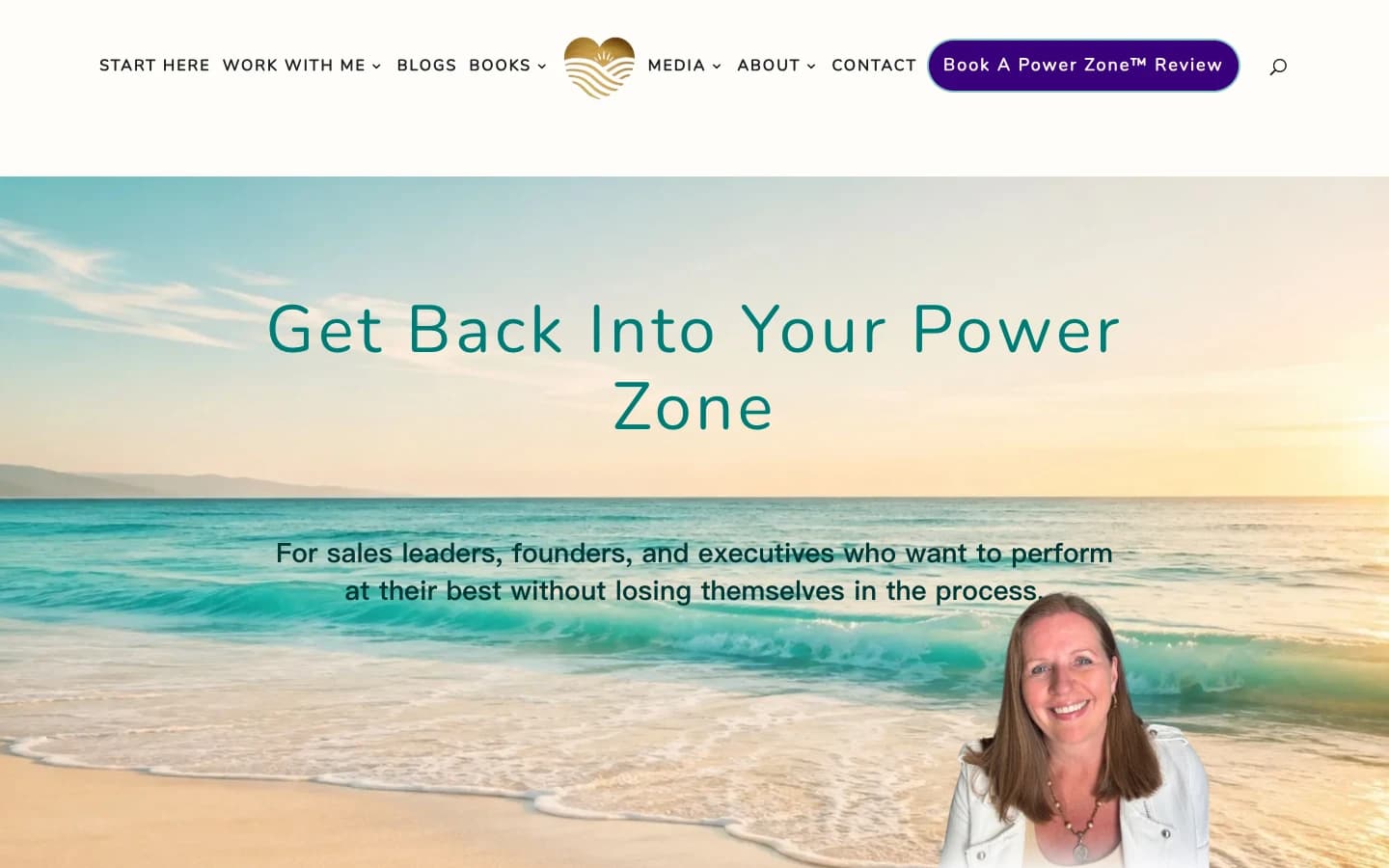
Website images in this story come from Pia's own site. The interview reflects her experience as of October 17, 2026.
Four parts of the same person
Pia's work starts with abilities people may overlook precisely because they come easily. Someone's way of noticing patterns, making decisions, or helping a team move forward can feel ordinary to them while being valuable to everyone around them.
Her assessment brings four questions about that experience together:
| Result section | What it helps someone explore |
|---|---|
| Your Natural Edge | What comes naturally to them |
| When You're at Your Best | The circumstances that bring out their strengths |
| Your Current State | How they're experiencing things right now |
| What to Look at Next | Opportunities to make more of what comes naturally |
Consider Pia's example of a big-picture thinker who enjoys exploring possibilities and generating ideas. If their responsibilities leave little room for those activities, the result needs to acknowledge both their ability and their frustration. Different sections let those two things coexist.
The aim is to give someone a useful starting point for a conversation. They might recognize a pattern they hadn't connected before, or see a possibility in a situation they had only experienced as a problem.
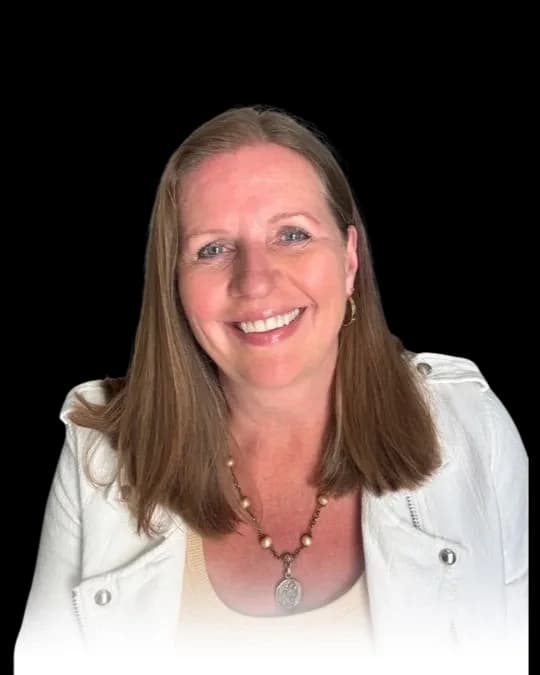
Pia Jansson. Portrait from piajansson.com.
The logic had to fit her method
Pia had already used GetFormly for another assessment that generated personalized PDF reports. She was happy with that functionality. The Power Zone Assessment asked more of the underlying logic: several dimensions of a person's experience needed to contribute to the same result.
In her experience, the previous platform couldn't accommodate what she needed for this assessment. Dashform's multiple personalized result sections were what drew her to try it.
One early requirement made the challenge concrete. Five questions contributed to “Your Natural Edge,” with five possible answers to each. Writing a complete result for every combination would mean accounting for 3,125 possible combinations. Pia wanted to write relevant interpretation pieces and combine them, with rules to merge overlapping ideas or leave out repetition.
Our team added support for that component-based approach. The five questions could contribute from 25 base pieces, with combination and suppression rules shaping the final passage. This kept Pia's methodology intact without requiring her to author thousands of complete reports.
Another section, “What to Look at Next,” used 20 variants. Pia supplied her approved wording and condition map so the team could check the implementation against what she had written. Testing meant checking that the right interpretation appeared for a particular set of answers, as well as checking the wording itself.
Getting it working took iteration
The AI editor helped Pia build the assessment, but it also struggled with parts of the complexity. There were troubleshooting exchanges about conditional results, edits to individual passages, mobile embeds, and adding optional contact fields without disturbing the result sections.
Pia credits Jake, who worked with her through those changes:
He has listened to my questions, understood what I was trying to accomplish, and addressed every single one of my requests. That builds loyalty in my books.
The support work was part of the build. Jake helped investigate problems, explain what the editor was doing, and make adjustments when the existing behavior didn't fit her requirements. Pia could test again and bring back specific feedback.
By the time of the interview, she said the updated quiz and MailerLite integration were working well. Passing each personalized result section into her MailerLite welcome email was still the final piece she was waiting for before promoting the assessment more widely.
Results are available whether people subscribe or not
Pia is testing the assessment as a lead magnet after years of experimenting with downloadable resources that hadn't worked well for her. She wanted people unfamiliar with her work to experience something useful before deciding whether to keep hearing from her.
Everyone receives their personalized results, whether or not they choose to subscribe.
The implemented flow asks the assessment questions first, then offers optional name and email fields before the results. People can skip those fields and still see their full result. Those who choose to subscribe can receive a short email series with more insights and ideas.
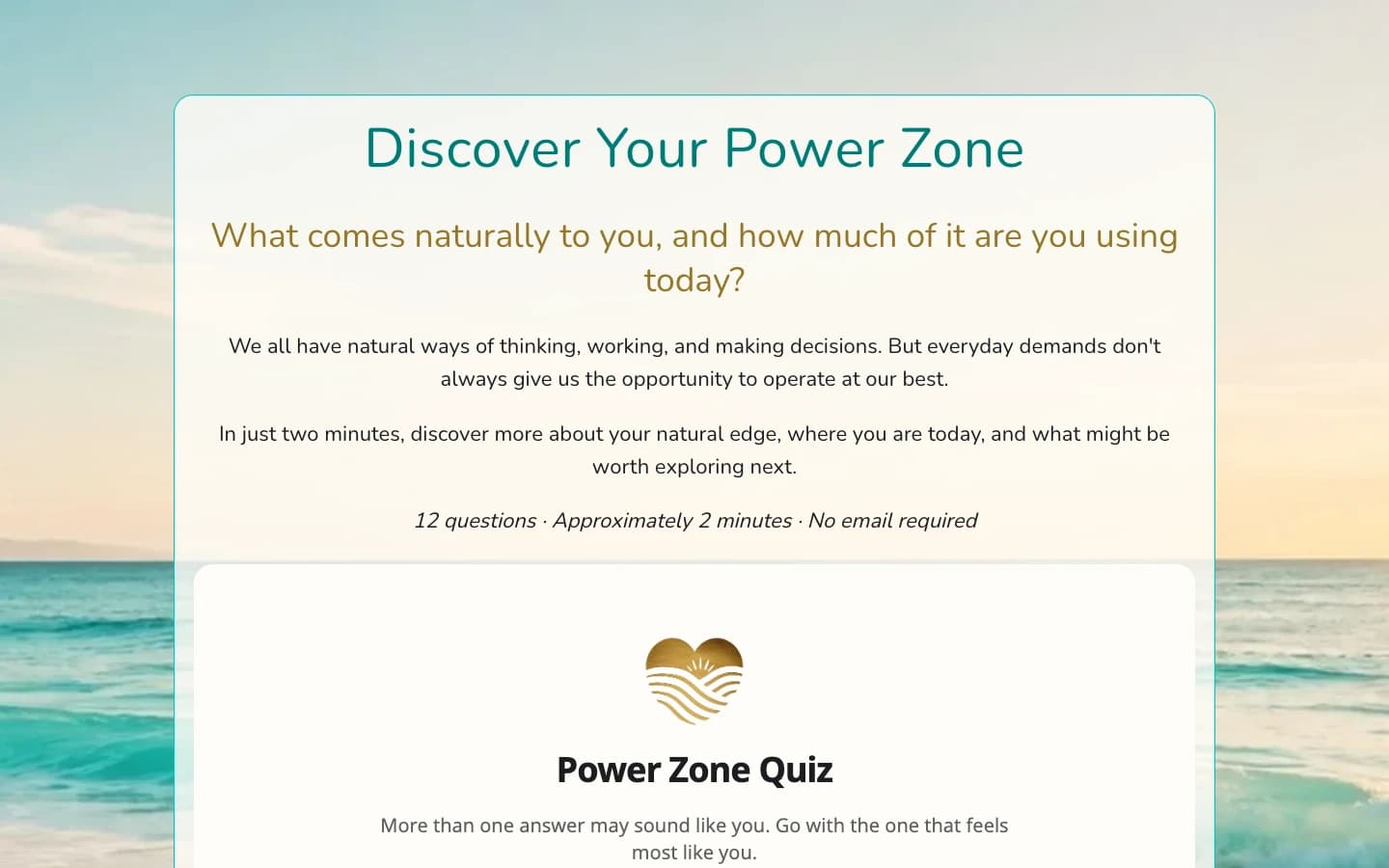
The Power Zone Assessment introduces the experience as 12 questions, approximately two minutes, with no email required.
She sees the assessment as a way to show how she works. Her coaching helps people recognize and make more of their existing strengths, and a personalized result gives someone a small experience of that approach before they book a conversation.
Pia also asked for a way to save or send results without subscribing, such as a PDF or a one-time email. That was a feature request at the time of the interview. It is separate from the optional MailerLite subscription and should not be read as an available part of this workflow.
What the first testers noticed
Only a handful of people had tested the assessment when Pia answered our questions. She described the initial feedback as encouraging, particularly when results connected people's natural strengths with challenges they were experiencing.
One tester, in feedback Pia shared, recognized that the assessment was reflecting their choices back to them and said it identified where they were struggling. Pia sees that connection as the point: the answers become more useful when someone can see how they fit together.
There are no conversion or revenue results to report yet. As she shares the assessment more widely, Pia plans to watch engagement, email signups, and whether it leads to meaningful conversations with potential clients.
For now, the outcome is a working assessment she is happy with, and one that preserves the distinctions she wanted to make about a person's strengths and circumstances.
That flexibility, combined with your responsiveness, is what makes Dashform stand out to me.
Explore Pia's Power Zone Assessment to see how she introduces it. If you're developing your own assessment, our coaching question guide can help you decide what to ask before you start building.