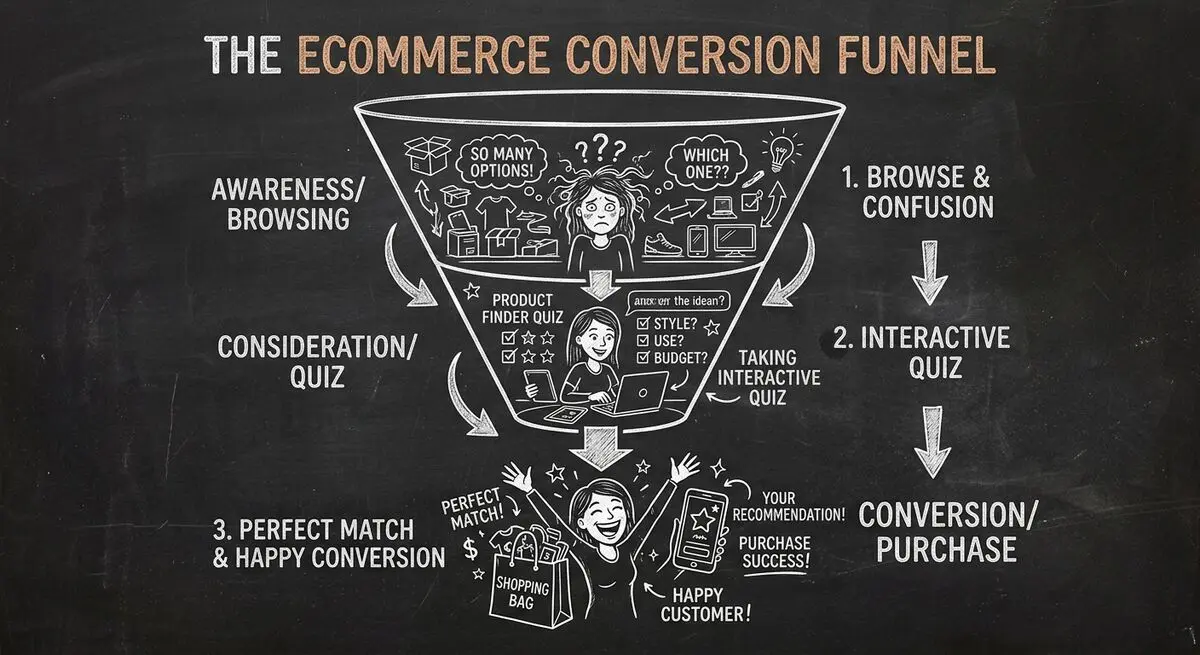
A product quiz can ask shoppers about their needs before showing a recommendation. Treat it as a workflow to test, not proof that visitors will buy or that product discovery caused previous abandonment.
Below: a proposed product-quiz workflow, the configuration it needs, and measures for evaluating it.
Product Quiz Impact on Ecommerce Metrics
| Metric | What a Product Quiz Can Change |
|---|---|
| Conversion Rate | Compare purchases after quiz use with a suitable baseline |
| Average Order Value | Recommendations can include a routine or bundle |
| Cart Abandonment | Track whether recommended products reach checkout |
| Return Rate | Compare return reasons and rates for quiz-linked orders |
| Email Capture Rate | Shoppers share an email to get their results |
| Time on Site | Shoppers engage with questions about themselves |
How the AI Product Recommendation Engine Works
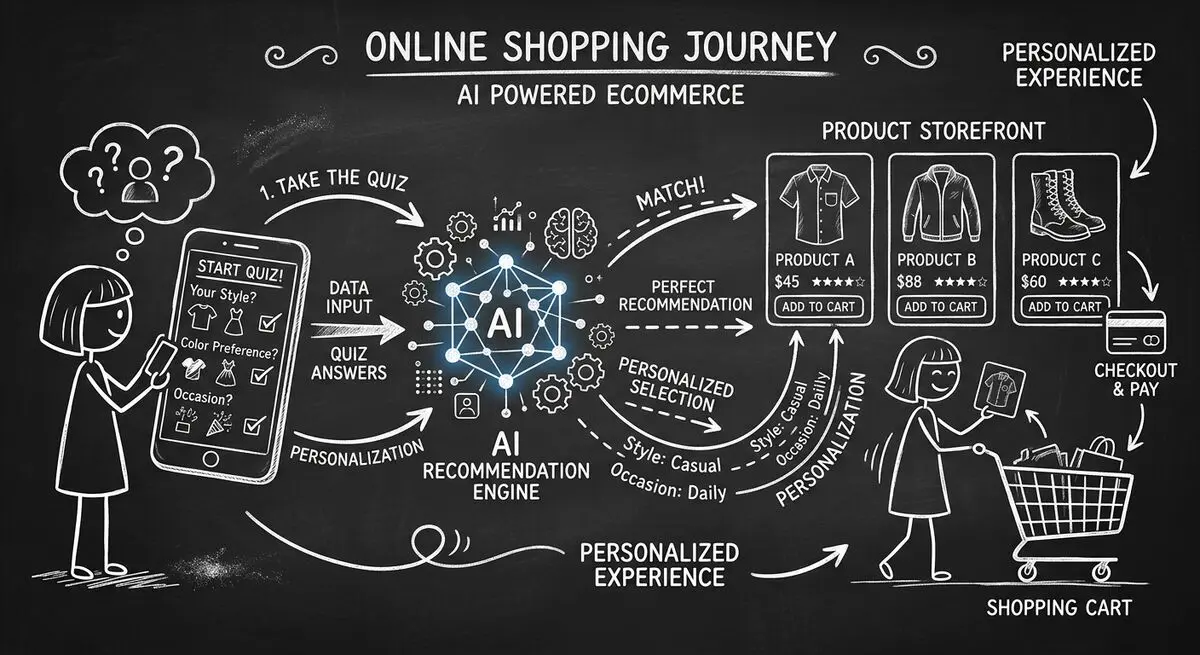
The AI Product Recommendation Engine uses guided selling principles. Instead of showing every product and hoping visitors find what they need, it asks a series of questions about preferences, needs, and constraints, can show products through authored branches and Endings. Review the matching rules; no validated percentage-match score is established here.
Here is what makes it different from basic product filters:
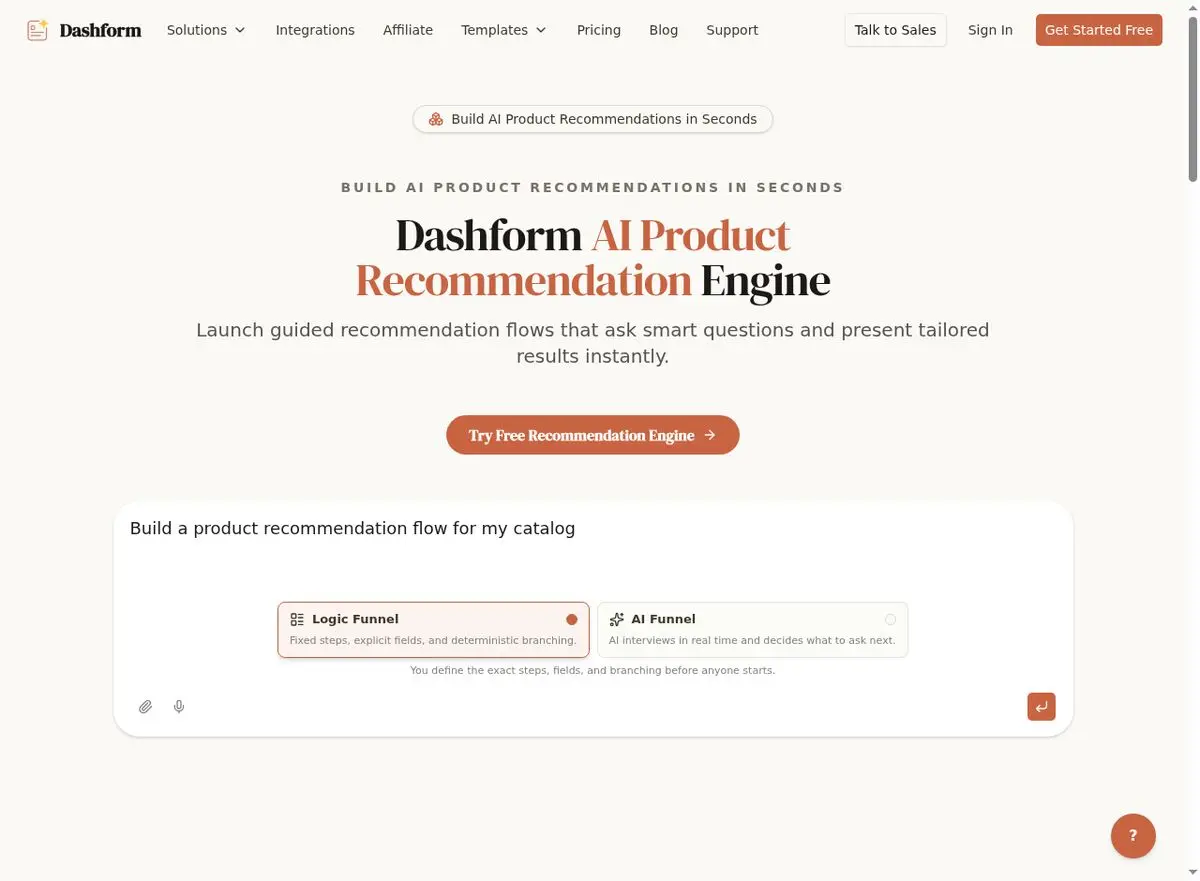
- AI generates the entire quiz from your product catalog description. Describe your product line and target audience, and AI creates relevant questions with branching logic.
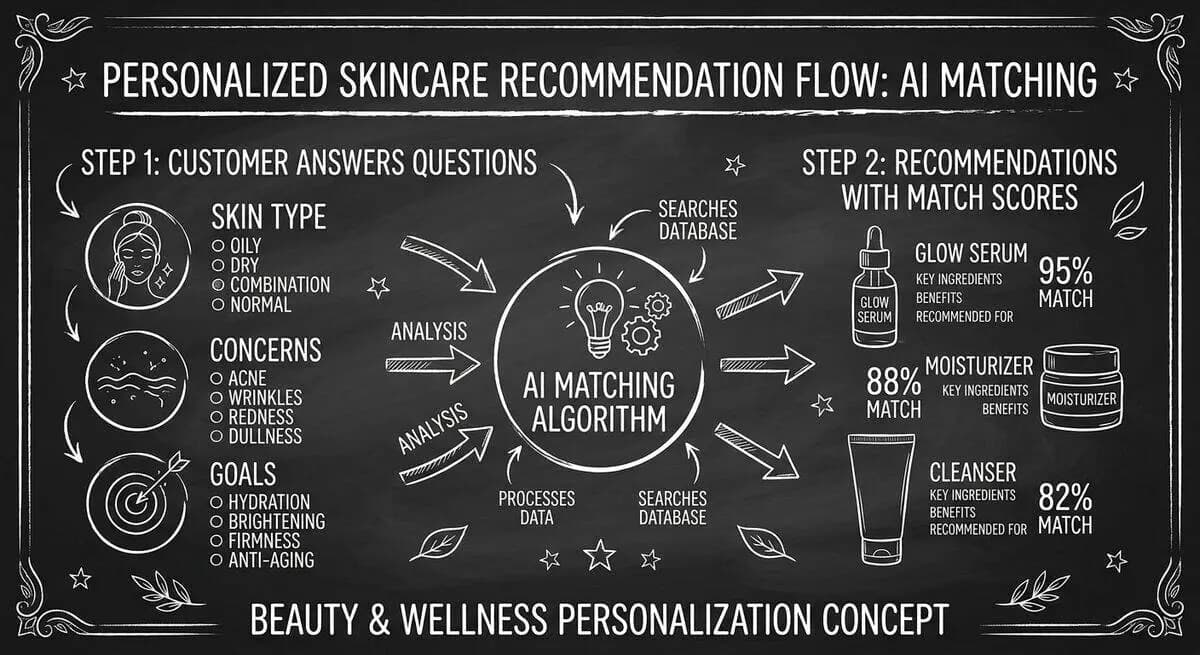
- Personalized results show specific product recommendations with explanations for why each product matches the customer's needs.
- Explain the authored matching criteria in the result. Dashform lead scoring separately assigns hot, warm, or cold verdicts to completed replies; it is not a product-match percentage.
- Email capture happens naturally. Customers provide their email to receive their personalized recommendations, building your list automatically.
- Embed on a website that permits custom embeds, then test layout and behavior on the actual platform.
5 Proposed Product Quiz Use Cases
1. Skincare and Beauty
Skin type, concerns, sensitivity levels, and ingredient preferences create dozens of possible combinations. A skincare quiz asks 5-7 questions and recommends a personalized routine from your product line.
2. Supplements and Wellness
Health goals, dietary restrictions, age, activity level, and existing supplements all factor into the right recommendation. A supplement quiz helps customers navigate complex product lines without requiring them to read dozens of product descriptions.
3. Fashion and Apparel
Style preferences, body type, occasion, and budget create a personalized shopping experience that mimics an in-store stylist. Use the answers to explain an authored recommendation, then monitor whether shoppers find it useful.
4. Home and Furniture
Room size, style preferences, budget, and functionality needs help customers navigate large catalogs. A furniture quiz can ask about dimensions, style, and intended use before linking to relevant products.
5. Pet Products
Breed, age, size, dietary needs, and activity level create personalized pet care recommendations. Have qualified staff review any health-related product guidance and avoid presenting a quiz as veterinary advice.
Building Your Product Quiz: Step by Step
Step 1: Map Your Product Catalog
Identify 3-5 key differentiators between your products. For skincare: skin type, primary concern, sensitivity, price range. For supplements: health goal, dietary restriction, form preference.
Step 2: Generate with AI
Open the AI Product Recommendation Engine and describe your product line and customer segments. AI generates a quiz with questions that naturally uncover purchase-ready preferences.
Step 3: Map Products to Outcomes
Connect quiz outcomes to specific products or product bundles. Each combination of answers should lead to a clear, confident recommendation. Include a primary recommendation and 1-2 alternatives.
Step 4: Add Email Capture
Place the email capture before the results page. Position it as: 'Enter your email to receive your personalized product recommendations.' Explain what will be emailed and request marketing consent separately where required. Configure the email workflow before promising delivery.
Step 5: Embed and Promote
Embed the quiz on your homepage, product category pages, and in email campaigns. Use Dashform's Survey Generator to create post-purchase feedback surveys that refine your recommendations over time.
Advanced: Combining Quizzes with Your Marketing Stack
Proposed Product Quiz Integration Points
Mailchimp and HubSpot have native Dashform Destinations. Klaviyo, Shopify, WooCommerce, advertising platforms, SMS services, and Salesforce require separately configured supported workflows or links; the table is not a list of native integrations.
| Integration | What It Does | Impact |
|---|---|---|
| Klaviyo / Mailchimp | Send quiz results + product links via email | Results emails people want to open |
| Shopify / WooCommerce | Direct add-to-cart from quiz results | Fewer steps from result to purchase |
| Meta / Google Ads | Retarget quiz takers with recommended products | Ads that show the product they matched |
| SMS (Postscript/Attentive) | Text quiz results for mobile-first shoppers | Results on the device they shop with |
| CRM (HubSpot/Salesforce) | Score and segment leads by quiz answers | Personalized lifecycle marketing |
Frequently Asked Questions
How many questions should a product quiz have?
Use only questions that distinguish relevant products. The right length depends on the catalog and audience; review and test the generated draft rather than assuming an optimal count.
Can this work with a small product catalog?
A small catalog can suit a quiz if products differ on needs or preferences shoppers can describe. Measure usefulness and purchases; a conversion lift is not guaranteed.
Does the product quiz work on mobile?
Dashform quizzes are mobile-optimized by default. Many ecommerce shoppers browse on their phones, so every quiz is designed for thumb-friendly interaction with large buttons and single-question layouts.
How does this compare to Octane AI or Quiz Kit?
Dashform supports AI-assisted quiz drafting and website embeds. Compare current Octane AI and Quiz Kit documentation for catalog support, AI authoring, recommendation rules, integrations, and plan limits using the same sample workflow.
What is the ROI timeline for a product recommendation quiz?
You can measure the effect as soon as the quiz is live: watch quiz completions, email signups, and orders from quiz takers against your usual product pages. Effects on order value and returns take longer to show.
Start Converting Browsers Into Buyers
Use Dashform's AI Product Recommendation Engine to draft a quiz, then review the questions, product claims, branches, and result links. Measure actual purchases and feedback before claiming an improvement.