


Reflect on disappointment, prolonged pressure, trust, self-talk, disrupted plans, and difficult conversations. The question "You're weeks into a high-pressure stretch with no clear end in sight. What does your self-care actually look like?" asks how self-care looks during an extended demanding period. Possible examples include "Steady Support Practices" and "Making Space for Recovery". The displayed example is random, independent of your answers, and does not measure resilience or diagnose distress. Use your own responses to identify situations and support needs you want to consider.
One of the listed results is selected at random. Your answers are not scored or used to choose the result.
Create engaging quizzes tailored to your brand. Our AI-powered quiz generator helps you build personalized assessments that capture attention and drive engagement.
Discover what your quiz results might reveal

This random example describes practices such as protecting rest, seeking trusted support, and identifying one manageable next step. These can be useful without making someone immune to distress or quicker to recover than others. Consider which supports are available to you and which are missing. The player has not concluded that your resilience is strong.

This random example explores trying coping approaches while still finding some situations difficult. A small repeatable action or a conversation with someone trustworthy can be worth testing. Progress need not be linear, and setbacks do not erase effort. This is a reflection scenario, not a stage assigned from your answers.

This random example considers periods when demands make familiar habits harder to maintain. Reviewing workload, expectations, and available help may be more useful than demanding greater willpower. If this resembles your experience, consider one pressure that can be shared or reduced. The example does not diagnose a condition or rate your capacity.

This random example explores needing more rest or support after sustained difficulty. It does not establish that your reserves are depleted, and taking time is not evidence of failure. If distress persists or interferes with daily life, qualified support may help you consider options. The title was randomly selected, not inferred from your emotional state.
Explore more quizzes in this category

Reflect on waiting for a text, choosing a restaurant, replaying feedback, and reviewing an email. Ten scenarios include "You're lying in bed trying to fall asleep. What is your mind actually doing?" about thoughts at bedtime. The possible Endings, such as "Moving On After a Decision" and "When Thinking Feels Hard to Leave", are displayed randomly and independently of your answers. They are examples of situations, not measured symptom bands, an anxiety diagnosis, or a personalized treatment recommendation.

Use nine questions to put words to sleep, concentration, patience, enjoyment and everyday routines. "Over the past month, how have your sleep, eating, and movement habits held up?" asks about recent sleep, eating and movement habits. Possible reflection samples include "Discussing Demands and Support". The sample is selected randomly and does not use your answers, diagnose burnout or indicate severity. Persistent exhaustion or loss of interest deserves attention regardless of the displayed title.

Reflect on eight experiences involving waking mood, new demands, physical tension, rest, sleep, relationships, concentration, and enjoyment. "Describe your sleep pattern over the past few weeks." asks about recent rest rather than a permanent trait. The displayed Ending is chosen randomly and is not determined by your answers. These informal labels do not establish a stress level, explain symptoms, or determine whether you need care; use them to notice experiences you may want to discuss. Even "Low Signs of Stress" is only a sample heading, not reassurance that symptoms can be ignored.

Use chakra symbolism to reflect on security, emotional expression, communication, and perspective. Ten prompts include "How do you feel about your physical safety and basic needs (housing, food, financial security)?" and questions about creativity and connection. One of four themes, such as "Root Chakra Reflection" or "Throat Chakra Reflection", appears randomly without using answers. This spiritual exercise cannot detect a blockage, assess all seven chakras, diagnose symptoms, or prescribe healing.

Nine everyday scenarios examine responses to criticism, a promotion, praise, mistakes, disagreement, and unfamiliar social situations. "Someone you respect pays you an unexpected compliment. What happens next?" contrasts accepting, doubting, deflecting, and discounting praise. The displayed Ending is chosen randomly and is not determined by your answers. The labels describe fictional examples, not measured ability, a diagnosis, or proof that hesitation is always a confidence problem. "Building Confidence" is one example for reflecting on small steps and practice, not evidence of a measured change in confidence.

Twelve bathroom dilemmas cover queues, travel, events, and being locked out. After completion, a theme such as "Ask for Assistance" is selected randomly; answers are not scored or used to choose it. The options focus on facilities, help, and changing plans, without testing bladder or bowel control.
Tips, guides, and insights on quizzes and lead generation
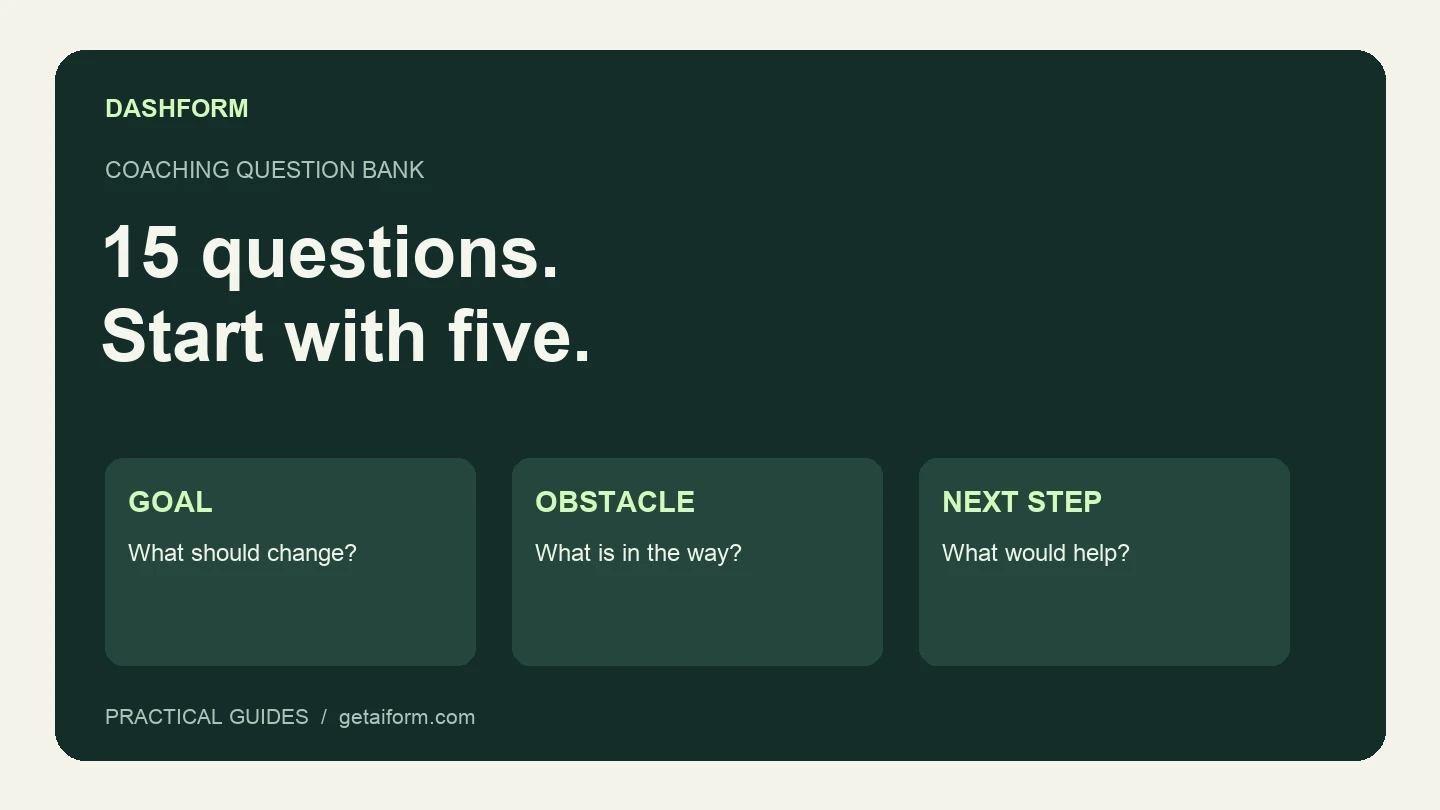
A practical coaching question bank with a five-question discovery form, example answers, follow-up guidance, and a copyable Dashform prompt.
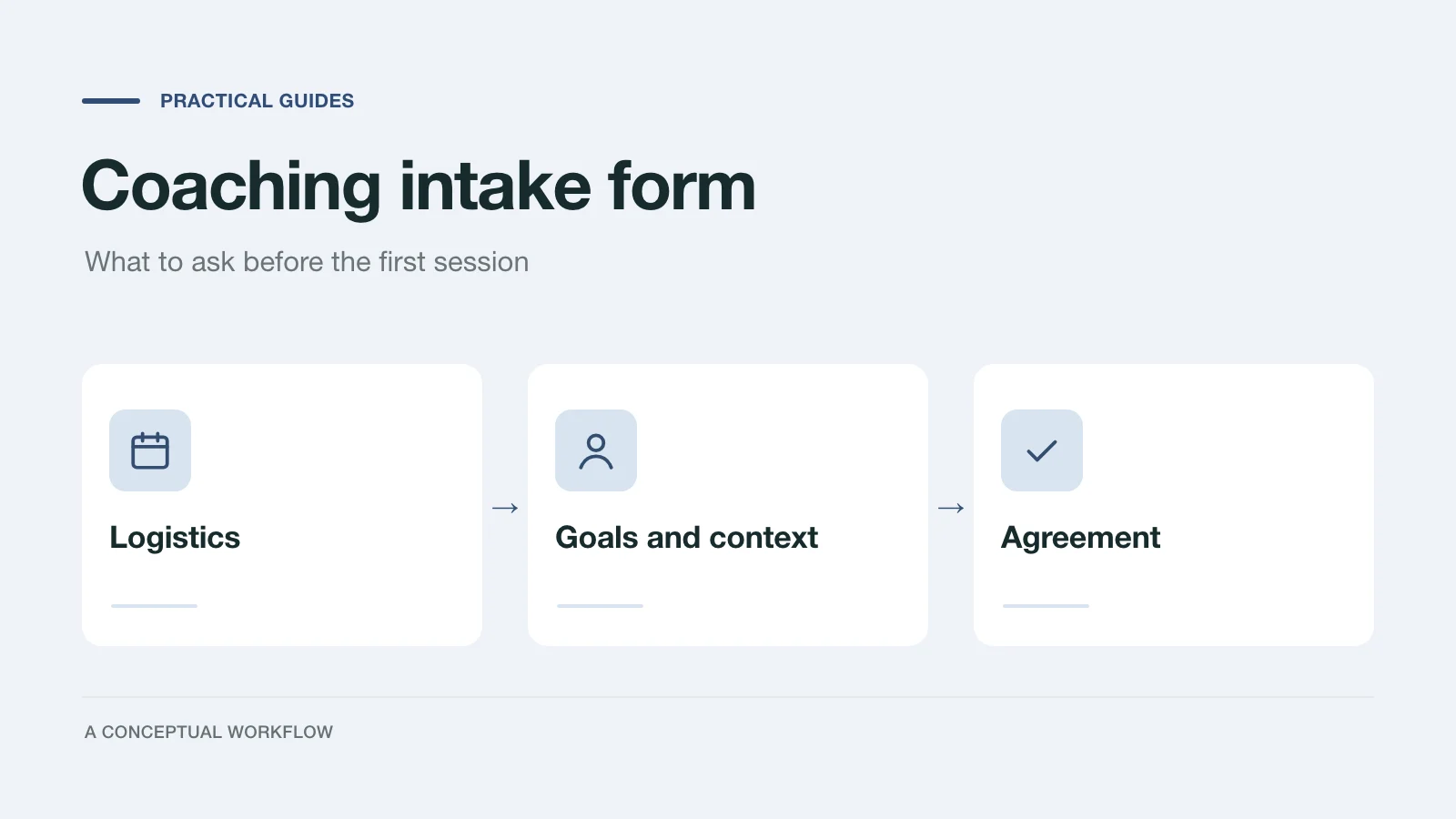
The questions to ask a new coaching client before the first session, grouped by purpose, with which to make optional, what to leave out, and a template to start from.
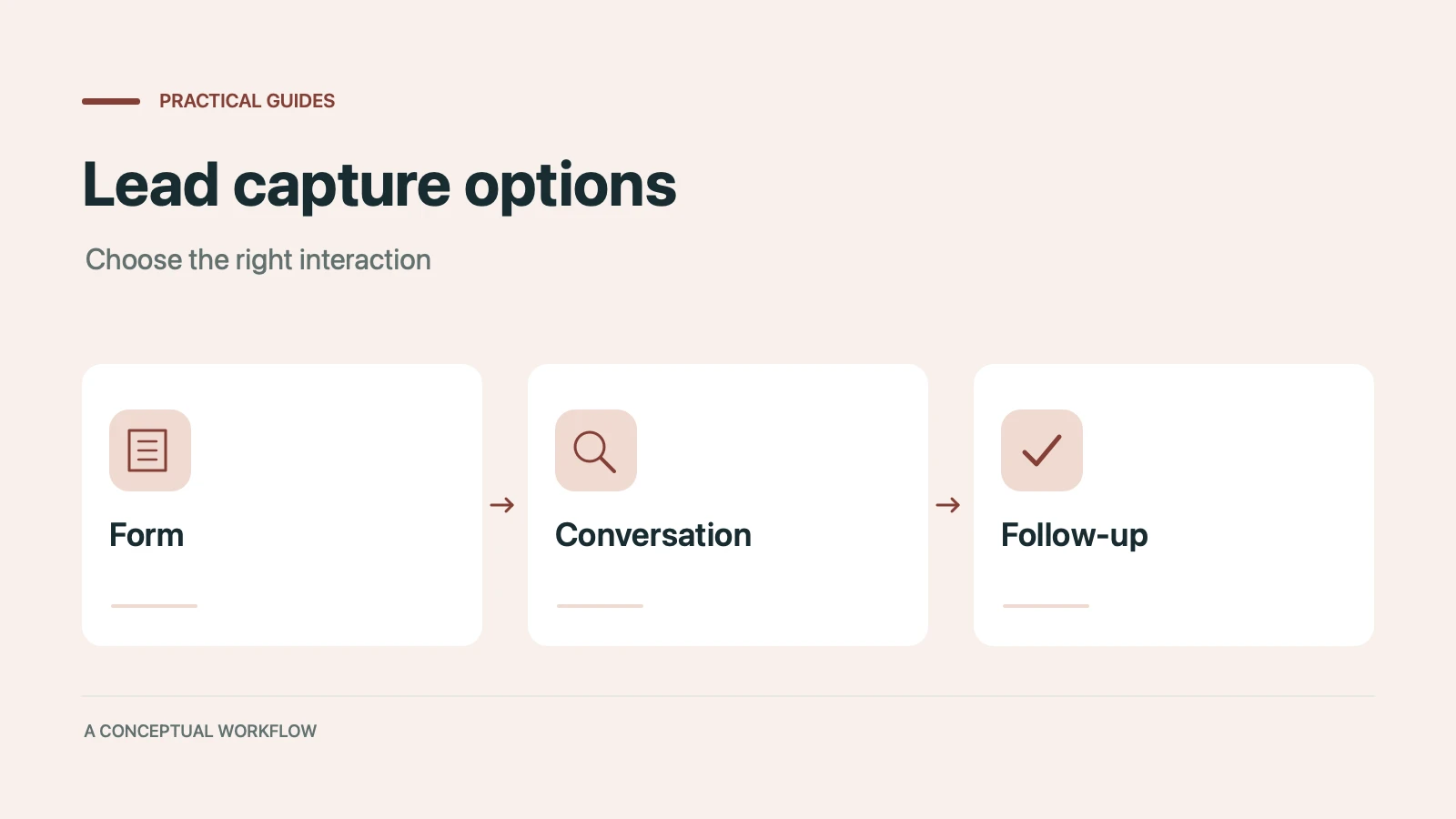
Static forms, AI chatbots, and conversational AI forms compared for lead capture: where each works, where each breaks, and the hybrid stack that combines them.
