IntegrationsAX AuditNewPricingBlogSupport
Dashform
DashformDashform

© 2026 Dashform

Forms your customers recognize and AI agents can book.

InstagramYouTubeX
Product
  • AI Tools
  • Templates
  • Pricing
  • Dashform CLI for Agents
  • What is Dashform
  • AI Info
  • AX Audit New
  • Affiliate
Solutions
  • Coaches & Consultants
  • Agencies
  • Wellness & Local Services
  • Trades & Home Services
  • Real Estate
  • Legal, Finance & Accounting
Use Cases
  • Assessment/Quiz
  • Waitlists
  • Survey
  • Webinars
  • Feedback/NPS
  • Appointment Booking
  • Client Onboarding
  • Lead Qualification
  • Product Recommendation
Compare
  • Typeform alternative
  • Tally alternative
  • Google Forms alternative
  • Jotform alternative
  • GoHighLevel alternative
  • involve.me alternative
  • LeadQuizzes alternative
Company
  • Blog
  • Docs
  • Privacy Policy
  • Terms of Service
Get Started Free
Categories/Personality

Bottom, Top Or Switch : Which One Are You? 2026

Bottom, Top Or Switch : Which One Are You?

Thirteen everyday situations invite reflection on leadership, support, and shared decisions. The question "How do you typically make decisions?" introduces topics such as projects, stress, and presentations. The Ending "Switch" offers a theme about moving between leading and supporting. These playful role names do not assess sexual preferences. One of the three is selected at random; your answers do not assign a role or measure personality.

Dashform team markPublished by Dashform Team, Product education·Last reviewed February 24, 2026
13 Questions
Take quiz

Ready? Let's Find Out.

One of the listed results is selected at random. Your answers are not scored or used to choose the result.

Guided QuestionsPossible Results~2 min

Make your own quiz with AI

Create engaging quizzes tailored to your brand. Our AI-powered quiz generator helps you build personalized assessments that capture attention and drive engagement.

Try Free AI Quiz Generator

Quiz transcript

How do you typically make decisions?
1

How do you typically make decisions?

I prefer someone else to make the decisions.
I like to make decisions myself.
I can go either way, depending on the situation.
I prefer to collaborate with others to reach a consensus.
How do you handle conflicts?
2

How do you handle conflicts?

I avoid conflicts and let others handle them.
I confront conflicts head-on and resolve them.
I try to mediate and find a balance.
I seek a third-party mediator to help resolve the issue.
What's your preferred role in a team project?
3

What's your preferred role in a team project?

I prefer to take on a supportive role.
I like to be the team leader.
I can switch between leading and supporting as needed.
I like to work independently on my own tasks.
How do you manage stress?
4

How do you manage stress?

I rely on someone else to help me through it.
I take charge and find a solution myself.
I adapt my approach based on the situation.
I take a step back and wait for the situation to calm down.
What's your approach to planning events?
5

What's your approach to planning events?

I let others handle the planning.
I take the lead in planning.
I can lead or follow, depending on the context.
I contribute ideas but prefer not to be the main organizer.
In social gatherings, you are usually:
6

In social gatherings, you are usually:

Following someone else's lead.
Taking the initiative to strike up conversations.
Both, depending on the group and setting.
Observing the room before engaging in conversation.
How do you approach new challenges?
7

How do you approach new challenges?

I wait for direction from others.
I tackle them head-on myself.
I assess the situation and decide whether to lead or follow.
I look for a partner to tackle the challenge together.
When faced with a decision, you:
8

When faced with a decision, you:

Usually look to others for guidance.
Prefer making the decision on your own.
Consider both leading and following options.
Research all possibilities extensively before acting.
Your leadership style is best described as:
9

Your leadership style is best described as:

I don't typically take the lead.
Decisive and assertive.
Flexible and situational.
Collaborative and democratic.
In a crisis, you usually:
10

In a crisis, you usually:

Seek help and let others take charge.
Take control and manage the situation.
Adjust my role based on what’s needed.
Focus on my specific tasks and wait for instructions.
How do you feel about public speaking or presenting?
11

How do you feel about public speaking or presenting?

I prefer to let someone else speak for the group.
I enjoy taking the lead in presentations.
I am comfortable speaking if I am the most prepared person.
I prefer to present as part of a shared team effort.
When a project fails, what is your first reaction?
12

When a project fails, what is your first reaction?

I look to the leader for the next steps.
I take charge to analyze and fix the situation immediately.
I reflect on the outcome and adapt for the next time.
I suggest a group meeting to discuss the failure collectively.
In a group discussion, how often do you speak up?
13

In a group discussion, how often do you speak up?

I usually wait to be asked for my opinion.
I am often the first to voice my thoughts and ideas.
I contribute when I feel I have a unique perspective to add.
I prefer to listen first and summarize what others have said.

Possible Results

Discover what your quiz results might reveal

Bottom

Bottom

A playful theme about supporting rather than directing a group. Consider when following another person's plan works for you. This random label does not measure personality or describe sexual preferences.

Top

Top

A playful theme about taking initiative and making decisions. Consider how leadership can include listening and sharing responsibility. This randomly chosen role is not a finding about your personality or sexuality.

Switch

Switch

A playful theme about moving between leadership and support. Think about how context changes your preferred role. The random result neither scores adaptability nor determines sexual preferences.

FAQ

Similar quizzes

Explore more quizzes in this category

Am I A Bad Person Test

Am I A Bad Person Test 2026

Reflect on honesty, helping, and accountability through "How do you respond when you realize you've made a mistake?". "Good Person" is one of four randomly selected reflection labels, not a verdict on your character. The scenarios cover returning a lost wallet, responding to bullying, and taking responsibility for mistakes. Use the choices to think about particular actions you could change or repair. Answers do not earn moral points or decide which Ending is selected, and one response cannot summarize a person's character.

Am I A Boy Or Girl? : Let’s Test IT Now

Am I A Boy Or Girl? : Let’s Test IT Now 2026

Clothes, hobbies, and self-description appear alongside "Which statement best describes you?". The four randomly chosen labels include "Boy"; neither the selection nor your tastes establish gender. You choose between clothing styles, favorite creatures, activities with friends, and ways of describing yourself. These preferences can be conversation starters, but there is no boy-versus-girl score. A result does not override your own words, and you can explore your identity without settling on a label.

Am I a Furry Quiz - Discover Your Identity

Am I a Furry Quiz - Discover Your Identity 2026

Explore fursonas, anthropomorphic art, and community interest through "Have you ever created or imagined an animal character that represents you?". "Furry-Curious Explorer" is one of four random fandom labels; identifying as a furry remains your choice. Choices explore animal characters, roleplay, conventions, and whether you already use the word furry. Interest in a character or artwork does not automatically imply community membership. You do not need a fursuit, a fursona, or an event ticket to explore the fandom, and answers do not determine the Ending.

Am I a Good Friend?

Am I a Good Friend? 2026

Consider late-night support, cancellations, confidentiality, and a friend’s success across eight scenarios. "Think about your closest friendship. When did you last reach out with no reason — just to say you were thinking of them?" explores contact without an occasion. A reflection such as "The Anchor Friend" is displayed randomly, independently of choices. These examples describe possible habits without assessing your character or revealing what a friend thinks.

Am I a Good Listener?

Am I a Good Listener? 2026

Notice what happens while a friend vents, someone gives directions, or a conversation turns emotional. Eight scenarios include "Someone shares a strong opinion you disagree with. While they're still mid-sentence, you:" and a colleague’s personal update. Possible Endings such as "Selective Listener" illustrate attention habits, but the player displays one randomly, independently of your answers. Use the questions themselves to reflect on interruptions, clarification, and follow-up; the sample result does not measure listening skill.

Am I A Loser?

Am I A Loser? 2026

Questions about goals, setbacks, and rest include "How do you handle failure?". "Work in Progress" is one of four randomly selected labels; productivity does not determine your worth. The choices contrast detailed plans, flexible goals, responses to criticism, and different ways of spending free time. Treat them as prompts to consider your circumstances and support needs. Rest is not failure, and achievements do not establish human value; the answers neither rank you nor predict future success.

See more quizzes→

Related articles

Tips, guides, and insights on quizzes and lead generation
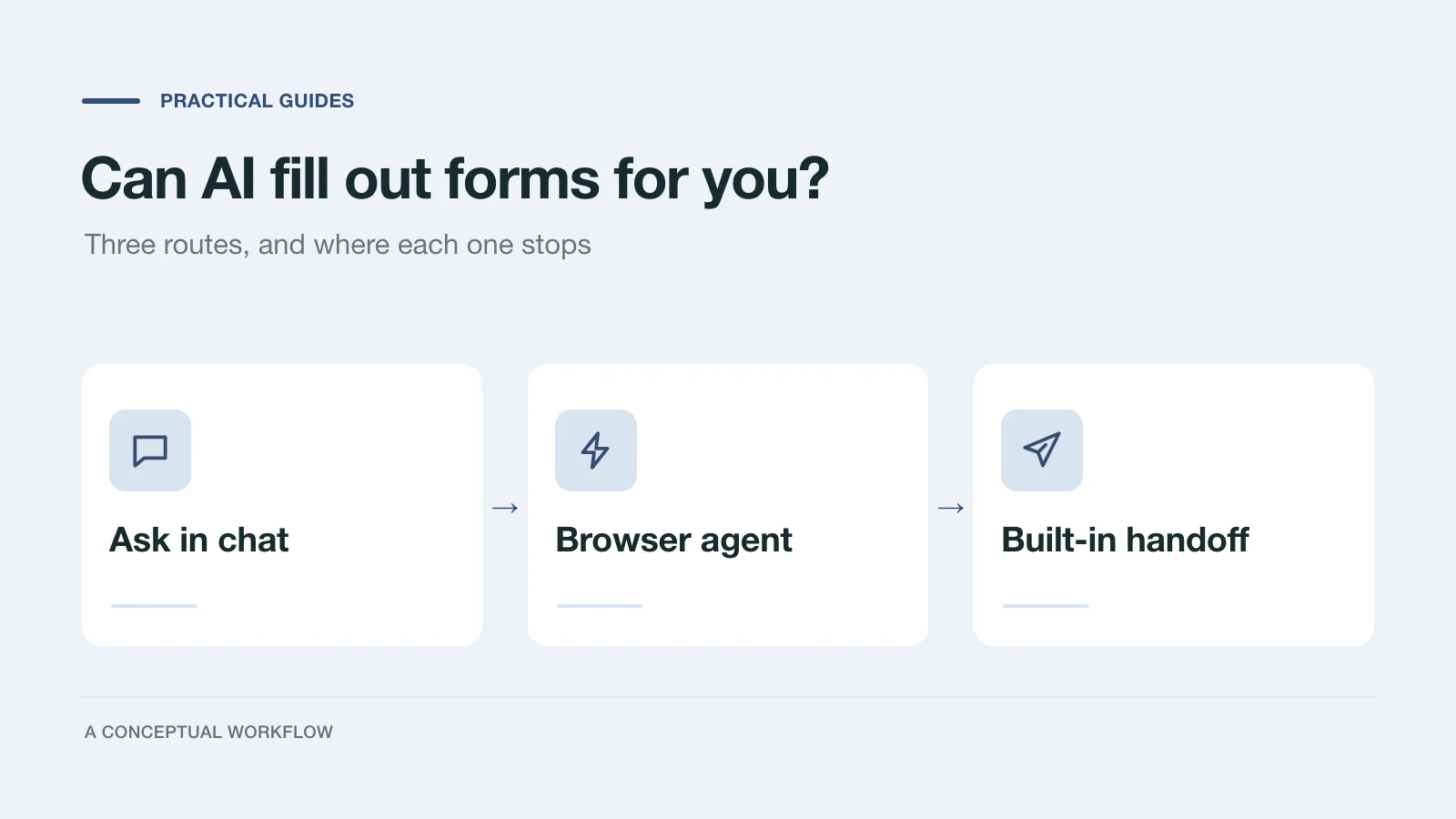
Three ways AI fills out a form: you paste the answers, a browser agent clicks through, or the form accepts an assistant directly
TutorialArticle

Can AI Fill Out Forms for You? ChatGPT and Claude

Yes, in three different ways: answers you paste in, a browser agent that clicks for you, or a form built for assistants. What each one handles and where it stops.
October 22, 2026
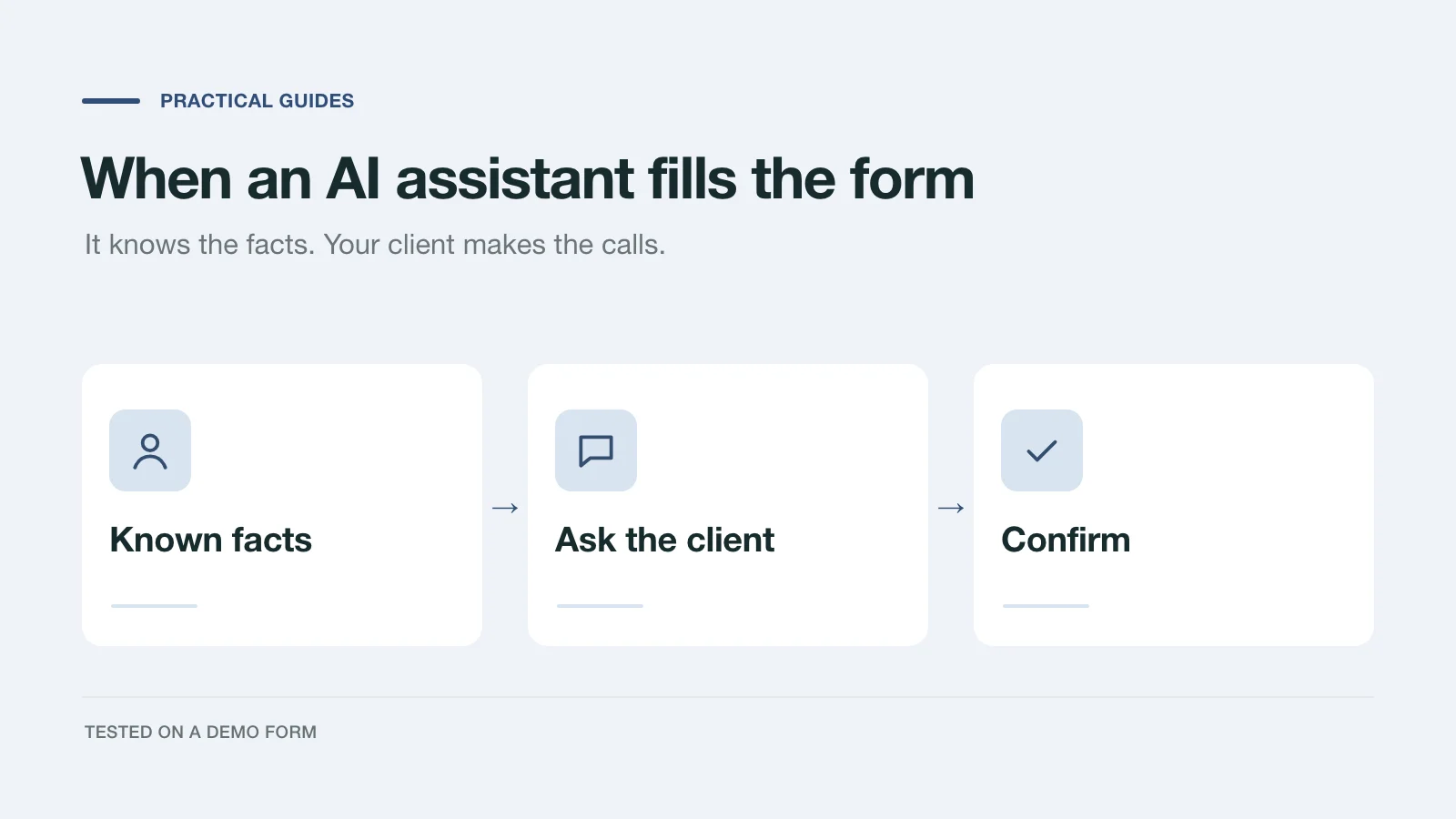
When an AI assistant fills the form: it uses known facts, asks the client the rest, then confirms before submitting
TutorialArticle

Can an AI Assistant Fill Out Your Intake Form?

We had an AI assistant complete a demo project inquiry two ways: by clicking through the page and through a handoff prompt. What it knew, what it asked, and what to change.
October 22, 2026
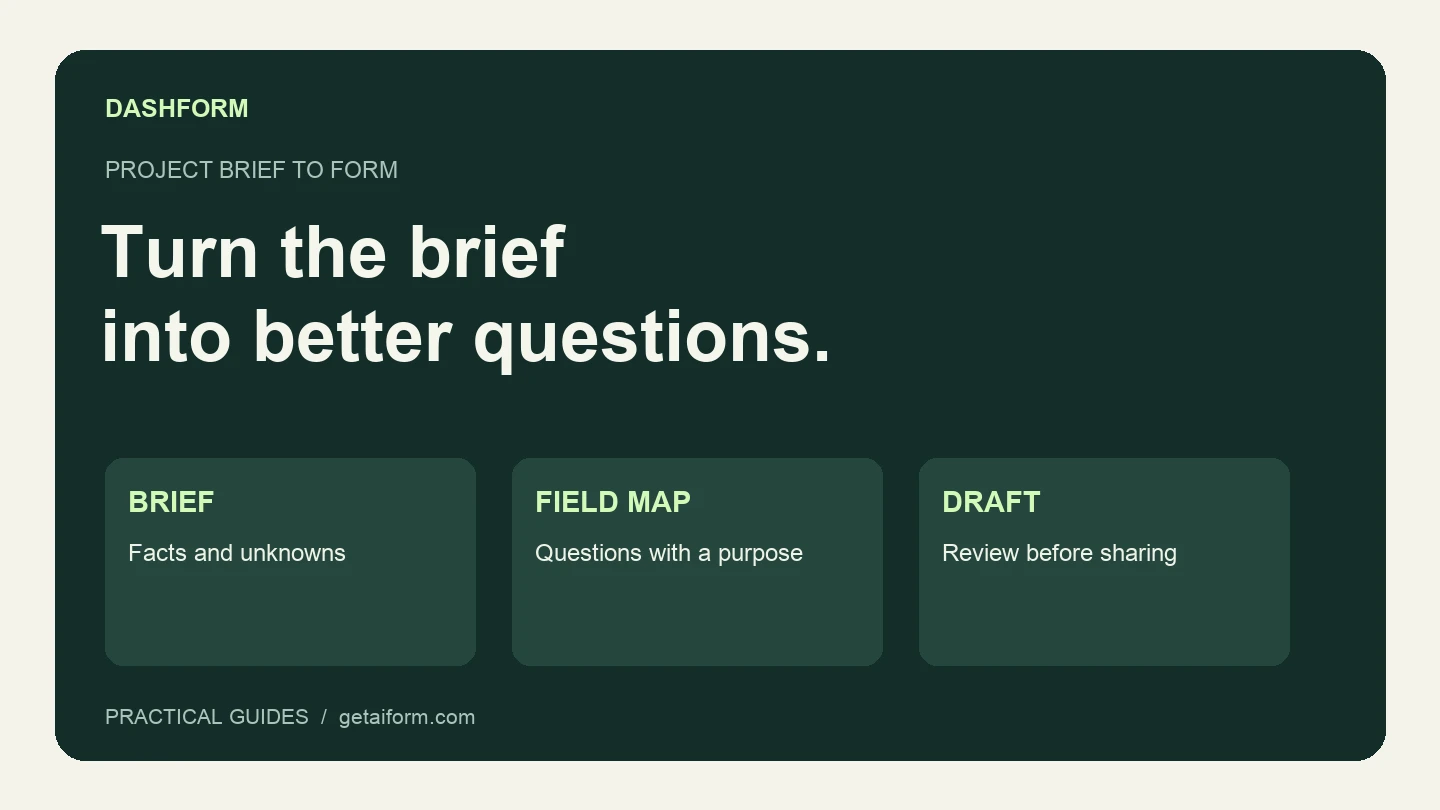
A project brief becomes a field map, a private form draft, and a verified inquiry workflow
Tutorial

Build a Client Intake Form from a Project Brief with Claude Code

Turn a fictional agency brief into a reviewed Dashform draft using Claude Code, with copyable prompts, a field map, and a publication checklist.

September 8, 2026
Read more articles →
Ready to create your own quiz?
Generate engaging, AI-powered quizzes tailored to your brand and audience.
Generate quiz with AIBrowse all quizzes