IntegrationsAX AuditNewPricingBlogSupport
Get Started Free
Dashform
DashformDashform

© 2026 Dashform

Forms your customers recognize and AI agents can book.

InstagramYouTubeX
Product
  • AI Tools
  • Templates
  • Pricing
  • Dashform CLI for Agents
  • What is Dashform
  • AI Info
  • AX Audit New
  • Agent-Ready Guide
  • Affiliate
Solutions
  • Coaches & Consultants
  • Agencies
  • Wellness & Local Services
  • Trades & Home Services
  • Real Estate
  • Legal, Finance & Accounting
Use Cases
  • Assessment/Quiz
  • Waitlists
  • Survey
  • Webinars
  • Feedback/NPS
  • Appointment Booking
  • Client Onboarding
  • Lead Qualification
  • Product Recommendation
Compare
  • Typeform alternative
  • Tally alternative
  • Google Forms alternative
  • Jotform alternative
  • GoHighLevel alternative
  • involve.me alternative
  • LeadQuizzes alternative
  • ScoreApp alternative
  • Outgrow alternative
  • Interact alternative
Company
  • Blog
  • Docs
  • Privacy Policy
  • Terms of Service
Categories/Personality

Am I a Good Listener? 2026

Am I a Good Listener?

Eight scenarios, from a friend venting to a heated opinion, look at how you listen. A habit like Selective Listener is shown at random, not a skill score.

Dashform team markPublished by Dashform Team, Product education·Last reviewed February 6, 2026
8 Questions
Take quiz

Ready? Let's Find Out.

One of the listed results is selected at random. Your answers are not scored or used to choose the result.

Guided QuestionsPossible Results~2 min

Make your own quiz with AI

Create engaging quizzes tailored to your brand. Our AI-powered quiz generator helps you build personalized assessments that capture attention and drive engagement.

Try Free AI Quiz GeneratorHow the AI quiz generator works

Quiz transcript

A friend is venting about a stressful situation at work. While they talk, you are most likely:
1

A friend is venting about a stressful situation at work. While they talk, you are most likely:

Following what they say and asking when I need clarification
Half-present, with occasional glances at my phone
Preparing a similar story from my own life
Preparing advice before they have finished
Someone gives you verbal directions to their house. When they finish, you:
2

Someone gives you verbal directions to their house. When they finish, you:

Can repeat the key steps back accurately without prompting
Have the general route but know you missed at least one detail
Nodded along confidently but feel genuinely unsure the moment they stop talking
Already decided to use GPS and weren't really tracking it
A family member starts crying mid-conversation. Your first instinct is to:
3

A family member starts crying mid-conversation. Your first instinct is to:

Go quiet and let them take their time — no need to fill the silence
Say something reassuring, even if it means talking over their last few words
Jump straight to solutions so they can start feeling better immediately
Feel the discomfort rising and try to redirect to something lighter
After an hour-long conversation with someone new, you walk away able to recall:
4

After an hour-long conversation with someone new, you walk away able to recall:

Most of it — their name, the specifics, the emotional texture of what they shared
The main topics, but the finer details are already fuzzy
A few highlights — mostly the parts that touched on your own life or interests
Very little — it blurs together like background noise
Someone shares a strong opinion you disagree with. While they're still mid-sentence, you:
5

Someone shares a strong opinion you disagree with. While they're still mid-sentence, you:

Keep listening fully — your turn comes when they've genuinely finished
Follow the first half closely, then mentally shift to assembling your counter-argument
Find a natural-ish opening and step in to push back
Stop tracking their reasoning — you've already decided they're wrong
You realize you completely misunderstood something someone told you. How often does that happen?
6

You realize you completely misunderstood something someone told you. How often does that happen?

Rarely — you usually confirm your understanding before the conversation closes
Occasionally, and you go back to clarify when you catch it
More often than you'd like, but you rarely bring it up
Frequently — people tell you 'that's not what I said' on a regular basis
Someone is telling a long story that's lost your interest two minutes in. You:
7

Someone is telling a long story that's lost your interest two minutes in. You:

Stay engaged — you assume there's something worth hearing at the end
Stay physically still but mentally drift somewhere more interesting
Watch for a natural break and redirect the conversation
Fully check out and just wait for them to stop talking
A colleague mentions something personal at the start of a meeting. Two days later:
8

A colleague mentions something personal at the start of a meeting. Two days later:

You bring it up unprompted — 'Hey, how did that go?'
You have a vague sense something was mentioned but can't place what
You only remember it because something else reminded you of it
It's completely gone — you have no memory of it at all

Possible Results

Discover what your quiz results might reveal

Genuinely Attentive Listener

Genuinely Attentive Listener

This randomly displayed example describes sustained attention, checking understanding, and leaving room for someone to finish. It does not establish that you have these habits. If the theme is useful, notice one detail to follow up on and ask whether the speaker wants advice or simply company. Attention need not look like constant eye contact, perfect recall, or silence at all costs. Choose communication methods that work for both people and ask for clarification when needed.

Caring but Drifting

Caring but Drifting

This sample, selected independently of answers, explores the gap between wanting to listen and having attention available. Notifications, fatigue, and a rehearsed response can compete with a conversation. If you recognize this situation, agree on a better time, reduce an avoidable distraction, or ask the speaker to repeat a missed point. Do not assume that a memory lapse proves lack of care. The example cannot tell you what another person noticed or promise that one technique will fix every conversation.

Selective Listener

Selective Listener

This random example considers attention that changes with the subject. A familiar topic may be easier to follow than a long account outside your interests. If that feels relevant, ask one question about what matters to the speaker before changing direction. You can also name a time limit or request a shorter explanation. Listening does not require unlimited attention, and this sample does not establish a fixed personality trait or describe the other person’s feelings.

Reactive Responder

Reactive Responder

This randomly chosen sample explores preparing an answer while another person is still speaking. The impulse to help, debate, or share a similar experience may make it harder to follow the rest of their point. If you recognize it, let the speaker finish and briefly check what you understood before offering advice. A pause is an option, not a prescribed number of seconds. This result neither reads your thought process nor establishes that you regularly interrupt.

Listener in Progress

Listener in Progress

This random sample offers a starting point for conversations that feel hard to follow. It is not a judgment about intelligence, hearing, memory, or care. If relevant, ask for the key point in writing, repeat your understanding, or choose a quieter setting that suits both people. You might try one follow-up question based on what was just said. Persistent difficulty may deserve context-specific support; a short quiz cannot identify its cause or measure improvement.

Related tool

Explore communication habits →

Consider other everyday patterns in conversations and relationships.

FAQ

Similar quizzes

Explore more quizzes in this category

Am I A Loser?

Am I A Loser? 2026

Questions on goals, setbacks, criticism and rest prompt you to look at your situation. A random label like Work in Progress closes it; it isn't your worth.

Am I a Morning Person or a Night Owl?

Am I a Morning Person or a Night Owl? 2026

Compare early alarms, free Saturdays, bedtimes and evening energy. Evening Preference or another result is shown at random, not a measured chronotype.

Am I a Perfectionist?

Am I a Perfectionist? 2026

Ten everyday choices about proofreading, deadlines, delegation and praise. A profile like The Relaxed Realist is random and doesn't score your standards.

Am I an Introvert or an Extrovert?

Am I an Introvert or an Extrovert? 2026

Eight situations, from an unplanned Friday to a party's aftermath, weigh quiet time against company. The Ambivert or another type shows at random.

Am I Attractive Quiz

Am I Attractive Quiz 2026

Reflect on confidence, style, grooming and how you take compliments. No photo is checked; a theme like Quietly Captivating is random, not a rating.

Am I Indian?

Am I Indian? 2026

A playful round on Indian foods, films, festivals, cricket and languages. Titles like Indian at Heart are drawn at random and say nothing about ancestry.

See more quizzes→

Related articles

Tips, guides, and insights on quizzes and lead generation
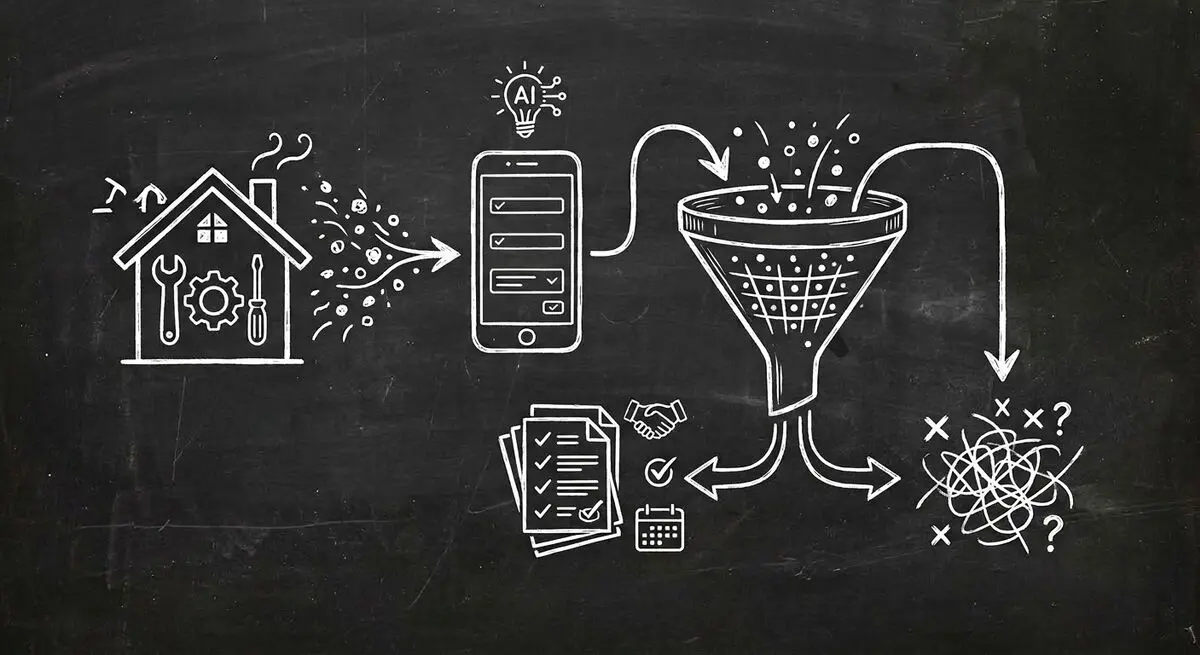
Chalkboard sketch illustration of home services lead qualification with AI forms showing house with tools connected to lead funnel
ArticleTipsGeneral

AI Lead Qualification for HVAC, Plumbing, and Electrical

How home service companies can use AI quiz funnels to pre-qualify HVAC, plumbing, and electrical jobs so dispatchers focus on real work. A setup playbook.

March 11, 2026
A person using a laptop and holding a smartphone, both screens displaying a grid of photos.
General

How Content Creators Use AI Quizzes to Grow and Engage

Dashform’s Free AI Quiz helps content creators turn engagement into insights. Create shareable quizzes in minutes to understand your audience and monetize.

December 22, 2025
Yellow neon sign saying "Go up and never stop" with an arrow pointing right.
Workshop

How Dashform Reinvents Onboarding with AI

Plan an onboarding questionnaire with AI-assisted drafting, relevant follow-ups, explicit next steps, and a tested handoff to your team.

December 4, 2025
Read more articles →
Ready to create your own quiz?
Generate engaging, AI-powered quizzes tailored to your brand and audience.
Generate quiz with AIBrowse all quizzes