


Reflect on attraction and social pressure with "How often do you experience sexual attraction toward others?". "Possibly on the Asexual Spectrum" introduces terms to explore; the Ending is random, not inferred from answers. Other questions separate romantic connection from sexual attraction and ask about emotional bonds and attitudes toward sex. These experiences can differ: behavior, libido, and attraction are not interchangeable. Read the result themes as vocabulary for reflection, without treating them as an orientation test or a requirement to adopt a label.
One of the listed results is selected at random. Your answers are not scored or used to choose the result.
Create engaging quizzes tailored to your brand. Our AI-powered quiz generator helps you build personalized assessments that capture attention and drive engagement.


Discover what your quiz results might reveal
Asexuality commonly describes experiencing little or no sexual attraction. Consider whether that describes you; enjoyment of sex, romance, or affection does not settle your orientation.
Gray-asexual and demisexual are terms you may wish to explore. Demisexual attraction occurs only after an emotional bond, though a bond does not guarantee attraction.
You may take time to distinguish sexual attraction, romantic attraction, and social expectations. No label or dating experience is required to explore your feelings.
This label cannot exclude an asexual identity. A person's attitudes toward sex or interest in labels do not by themselves establish how they experience attraction.
Explore more quizzes in this category

Consider attraction to women, friendship, and future relationships through "When you imagine your ideal romantic relationship, who do you see yourself with?". "You Might Be a Lesbian" is randomly selected and cannot identify your orientation. Questions distinguish attraction from admiration and invite you to consider dating, close friendships, dreams, and the future you imagine. None of these answers proves a sexual orientation or controls the Ending. You can take time with uncertainty, use the terms that help you, or leave your feelings unlabeled.

Explore attraction across genders with "Have you ever experienced romantic or sexual attraction to more than one gender?". "Bisexual Identity Likely" is a random label, not a probability or finding about bisexuality. Questions cover imagined partners, fictional characters, past dating, and whether romantic and sexual feelings align. Attraction need not be equal across genders, and dating experience is not required for bisexuality. The three Ending titles offer topics to consider, while your answers do not calculate a likelihood or assign an identity.
Reflect on affection, openness, and future hopes through "How do you imagine your future with this person?". Even "Definitely in Love" is a random Ending, not confirmation of love, compatibility, or the other person's feelings. Choices ask how often you think about the person, how openly you share feelings, and how you respond to distance or other romantic interests. Jealousy and intensity alone are not proof of love or a healthy relationship. Use the prompts to reflect on care, boundaries, and communication; the answers do not select a relationship verdict.

Reflect on how dating fits your life through cancelled plans, conflict, commitment and vulnerability. "What does your personal life look like right now, honestly?" asks about the room you have for a partner alongside current responsibilities. Five possible Endings include "Still Healing" and "Happily, Deliberately Unready", separating lingering feelings from a deliberate preference to stay single. The displayed Ending is a randomly selected sample, independent of your answers. It does not assess you.

Twelve questions cover early dates, messages, attachment pace, and conversations about the relationship. "What do you look for first in a potential partner?" invites reflection on what you value before interpreting a connection. The Ending "The Loyal Partner" is one of three randomly selected themes. Answers are not summed to define a personality, measure attachment, or predict compatibility.

Thirteen questions explore how you treat each other in class, with friends, and outside school. "Are you often in the same classes or activities?" reminds you that shared spaces provide context, not proof of attraction. The Ending "Interest Is Possible" is a randomly selected discussion theme. Answers do not measure how much he likes you; respect and what both of you say matter more than a profile.
Tips, guides, and insights on quizzes and lead generation
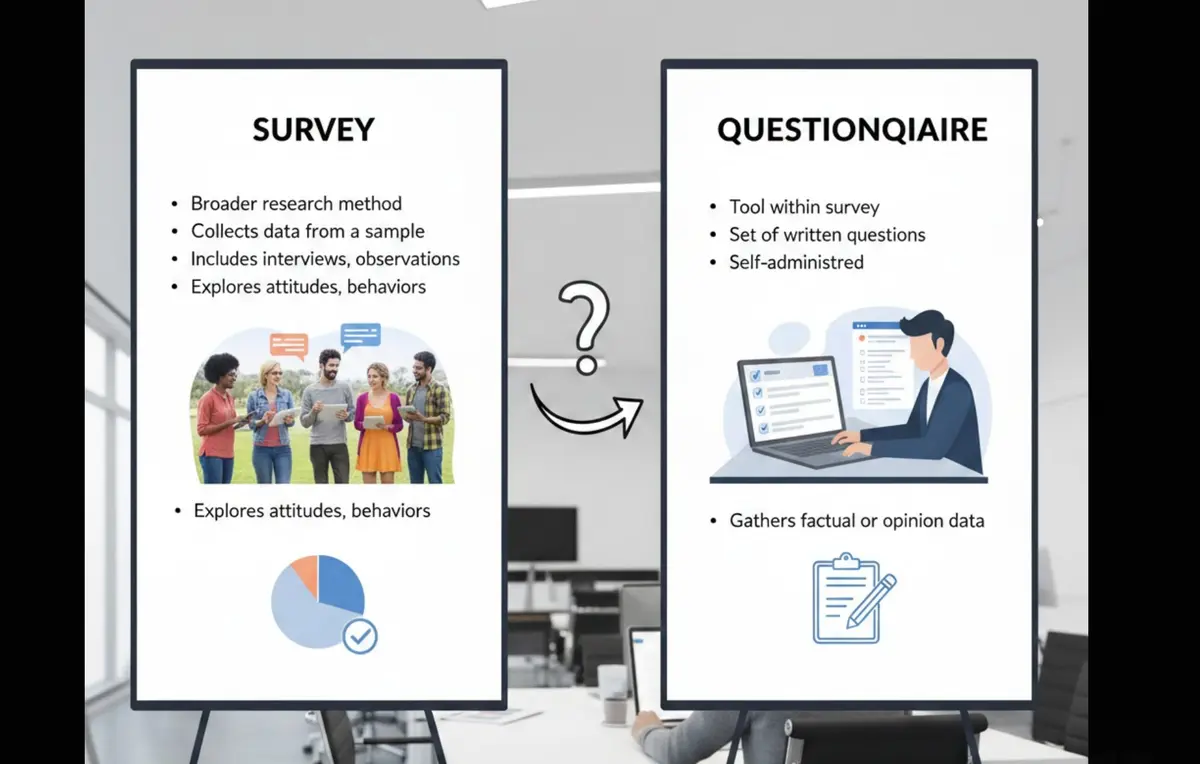
Survey vs questionnaire: understand the key differences, use cases, and decision framework to choose the right approach for research, customer feedback, or internal workflows.
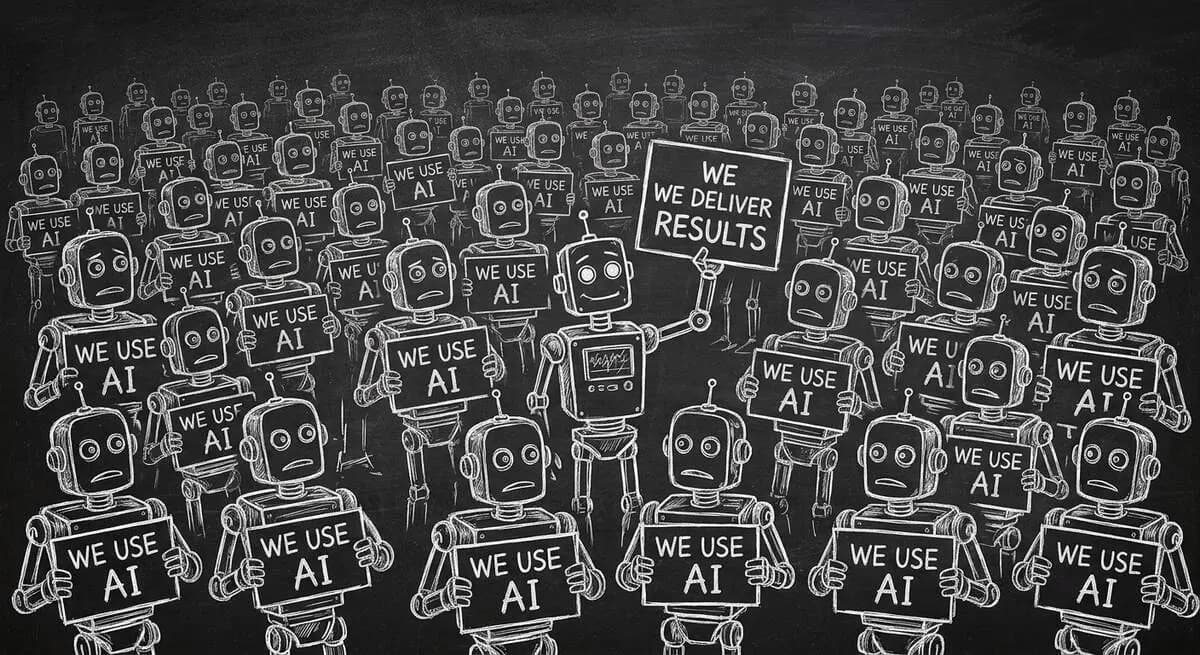
Five proposed agency services to evaluate beyond a generic AI pitch: technical readiness audits, intake forms, attribution, specialization, and supported agent workflows.
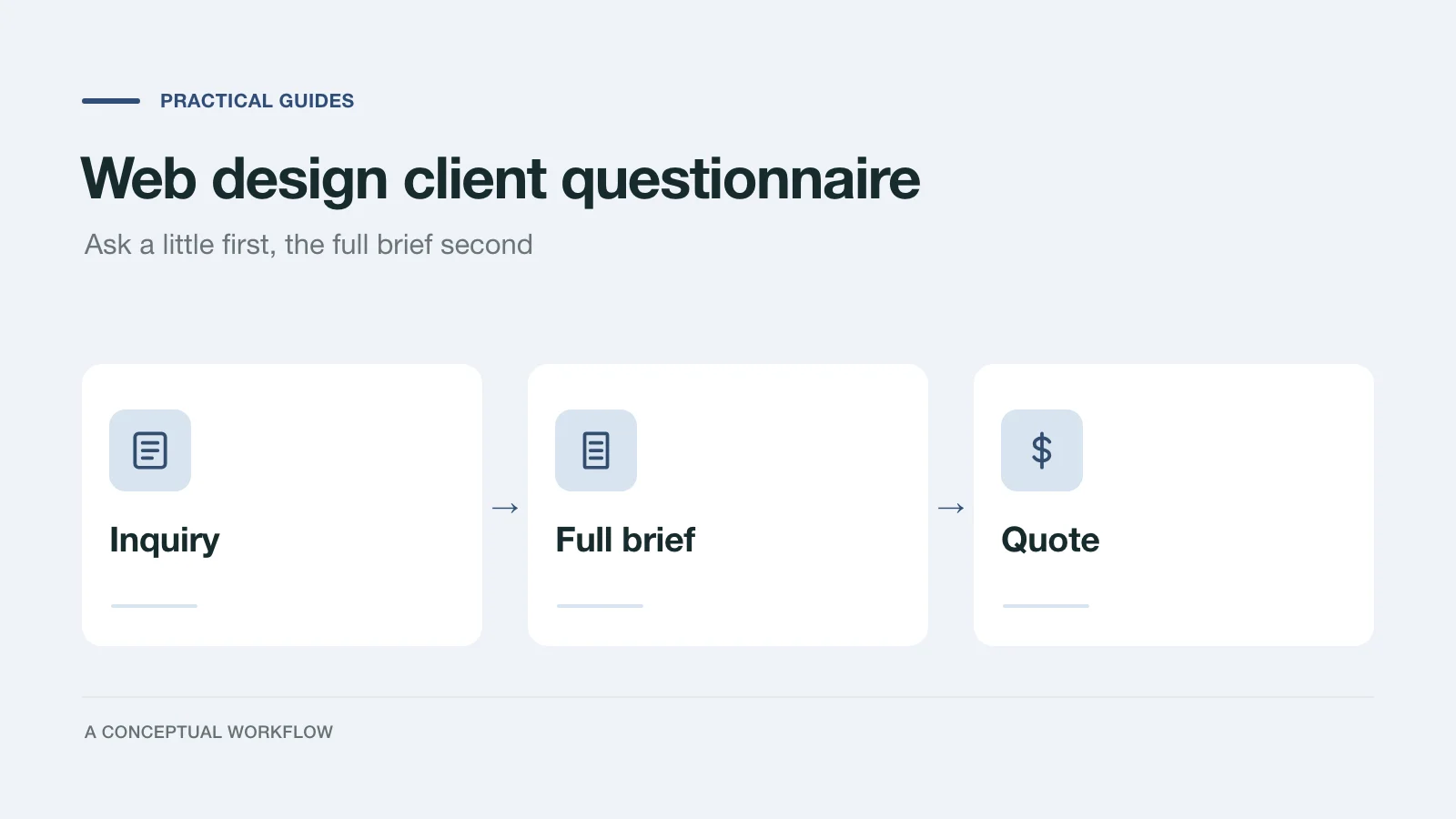
A web design client questionnaire in two stages: a short inquiry form to qualify the project, then the full brief that lets you quote it. Every question explained.
