


Think through celebrating a promotion, handling group-chat conflict, repeated cancellations, breakups, and distance. The question "A friend comes to you venting about a problem. What's your natural instinct?" compares listening, practical steps, honest validation, and sharing experience. Possible examples include "The Anchor" and "The Slow Burn". One friendship profile appears randomly, without using your answers. Compare the five approaches yourself rather than treating the displayed label as an assessment of your relationships.
One of the listed results is selected at random. Your answers are not scored or used to choose the result.
Create engaging quizzes tailored to your brand. Our AI-powered quiz generator helps you build personalized assessments that capture attention and drive engagement.
Discover what your quiz results might reveal

This randomly displayed friendship example emphasizes steady presence and listening without rushing to fix everything. Quiet company or a clear invitation to talk can matter. Reliability also needs limits: nobody must be available at every hour. Ask what support is welcome instead of assuming silence or advice is always best. The example was not inferred from your choices.

This random profile explores celebrating achievements, planning shared moments, and bringing energy to a group. Enthusiasm can be welcome, but a friend facing disappointment may prefer calm company over encouragement. Check the occasion and their wishes before organizing something. This example does not establish that you are always the outgoing friend.

This random example describes practical support: researching a resource, organizing a visit, or helping with a concrete task. Ask whether a friend wants ideas before moving into solutions. Listening can be useful even when no problem can be solved immediately. The profile is an approach to consider, not a finding about your answers.

This randomly selected example values direct, considerate feedback. Naming a concern once and respecting a friend's decision can combine honesty with care. Timing, consent, and tone matter; bluntness is not automatically helpful. Consider how to distinguish an observation from a judgment. The label does not evaluate your communication skill.

This random example imagines a friendship that develops gradually and remains meaningful through quieter stretches. Occasional deep conversations can matter, but distance does not remove the need to communicate expectations. If contact patterns differ, discuss them rather than assuming the other person understands. This is not a prediction of how long your friendships will last.
Explore more quizzes in this category

Reflect on honesty, helping, and accountability through "How do you respond when you realize you've made a mistake?". "Good Person" is one of four randomly selected reflection labels, not a verdict on your character. The scenarios cover returning a lost wallet, responding to bullying, and taking responsibility for mistakes. Use the choices to think about particular actions you could change or repair. Answers do not earn moral points or decide which Ending is selected, and one response cannot summarize a person's character.

Clothes, hobbies, and self-description appear alongside "Which statement best describes you?". The four randomly chosen labels include "Boy"; neither the selection nor your tastes establish gender. You choose between clothing styles, favorite creatures, activities with friends, and ways of describing yourself. These preferences can be conversation starters, but there is no boy-versus-girl score. A result does not override your own words, and you can explore your identity without settling on a label.

Explore fursonas, anthropomorphic art, and community interest through "Have you ever created or imagined an animal character that represents you?". "Furry-Curious Explorer" is one of four random fandom labels; identifying as a furry remains your choice. Choices explore animal characters, roleplay, conventions, and whether you already use the word furry. Interest in a character or artwork does not automatically imply community membership. You do not need a fursuit, a fursona, or an event ticket to explore the fandom, and answers do not determine the Ending.
Consider late-night support, cancellations, confidentiality, and a friend’s success across eight scenarios. "Think about your closest friendship. When did you last reach out with no reason — just to say you were thinking of them?" explores contact without an occasion. A reflection such as "The Anchor Friend" is displayed randomly, independently of choices. These examples describe possible habits without assessing your character or revealing what a friend thinks.

Notice what happens while a friend vents, someone gives directions, or a conversation turns emotional. Eight scenarios include "Someone shares a strong opinion you disagree with. While they're still mid-sentence, you:" and a colleague’s personal update. Possible Endings such as "Selective Listener" illustrate attention habits, but the player displays one randomly, independently of your answers. Use the questions themselves to reflect on interruptions, clarification, and follow-up; the sample result does not measure listening skill.

Questions about goals, setbacks, and rest include "How do you handle failure?". "Work in Progress" is one of four randomly selected labels; productivity does not determine your worth. The choices contrast detailed plans, flexible goals, responses to criticism, and different ways of spending free time. Treat them as prompts to consider your circumstances and support needs. Rest is not failure, and achievements do not establish human value; the answers neither rank you nor predict future success.
Tips, guides, and insights on quizzes and lead generation
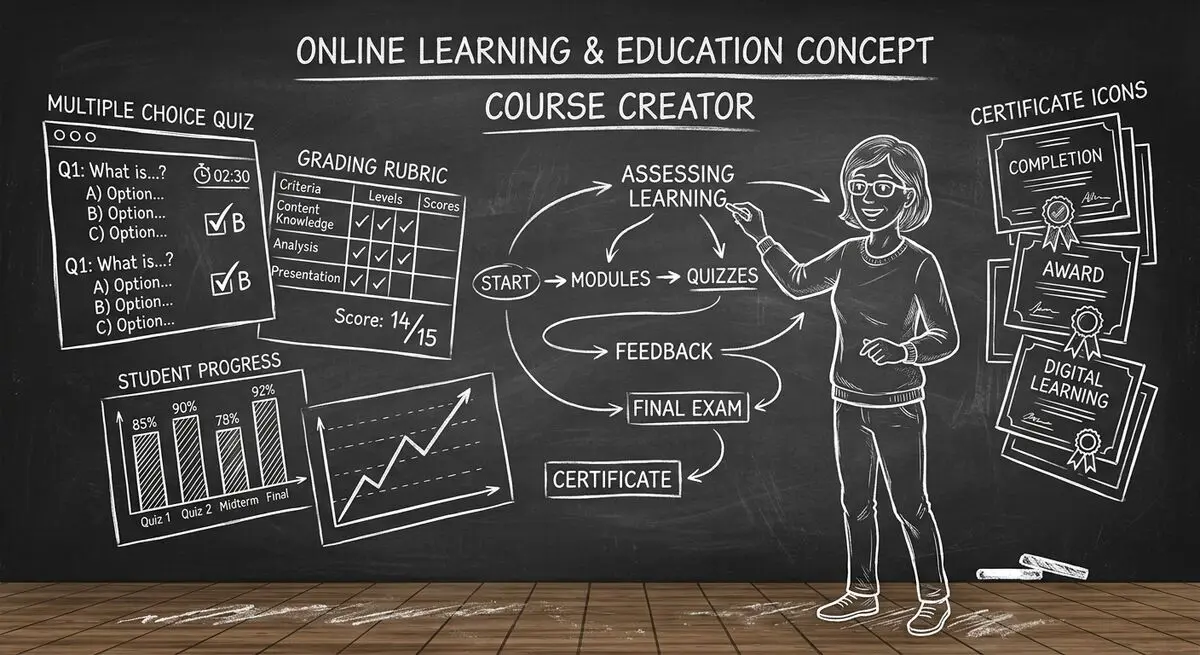
6 AI drafting tools for course creators, with suggestions for reviewing quiz questions, gathering feedback, and collecting enrollment information.

Six Dashform generator starting points for drafting applications, onboarding forms, leave requests, surveys, and feedback, with human review and integration setup.
Use six Dashform generator entry points to draft client quizzes, surveys, intake forms, and feedback forms, then review and test the workflow.
