


Try ten trivia questions spanning Australia's capital, planetary rings, Shakespeare, oceans, and chemical symbols. The question "What is the chemical symbol for gold?" tests recognition of an element symbol. The displayed Ending is a randomly selected sample; your answers do not determine it. "Exploring the Details" and "Connecting Topics" suggest ways to revisit unfamiliar facts, rather than levels earned by a score.
One of the listed results is selected at random. Your answers are not scored or used to choose the result.
Create engaging quizzes tailored to your brand. Our AI-powered quiz generator helps you build personalized assessments that capture attention and drive engagement.


Discover what your quiz results might reveal

Learning example: a curious reader might investigate why a capital differs from the largest city or why an element has an unexpected symbol. Explaining the reason adds more than memorizing a name. This card was drawn randomly; it does not mean you answered correctly or mastered the subjects.

Learning example: linking a planet, a scientific idea, and a historical event can make isolated facts easier to revisit. Choose one connection you find interesting and verify it in a reliable reference. This randomly displayed suggestion is not feedback on your choices or a measure of how informed you are.

Learning example: one unfamiliar fact can become a starting point, whether Australia’s capital, the South Pole, or a playwright. Read a short explanation and restate it in your own words. The random card does not say which questions you missed or whether you need more practice than someone else.
Explore more quizzes in this category

Compare the kind of coaching or consulting support you would seek through ten questions about goals, working style, implementation help, team training, and signs of progress. "What would make this session most valuable for you?" contrasts action steps, new perspectives, independent tools, and accountability. The displayed Ending is chosen randomly and is not determined by your answers. This is a preference exercise with no contact fields; it neither registers you for a webinar nor supplies a consulting engagement. "The Action-Oriented Achiever" emphasizes practical next steps, while "The Reflective Strategist" offers a contrasting focus on examining choices.
Ten short riddles focus on wording and assumptions. "How many months have 28 days?" invites you to separate what is stated from what you imagine. The Ending "Good Logical Thinker" is a practice message selected randomly after the questions, without counting correct answers. Simple calculations sit alongside a letter puzzle that keeps its English words in translations so the wordplay still works.

Explore what you would want from a community workshop: practical instruction, shared experimentation, new connections, or a chance to contribute. "How do you prefer to participate in group activities?" sits alongside questions about group size, materials, and follow-up interests. The displayed Ending is chosen randomly and is not determined by your answers. This public quiz is a workshop-fit reflection: it has no contact fields, does not reserve a place, and does not send workshop links. "The Dedicated Learner" focuses on building skills, while "The Thoughtful Contributor" considers contributing experience to the group.

Ten questions explore what you want to learn, how you participate, and what you could use after a session. "What device will you primarily use to attend the webinar?" adds device context, while "Are you interested in earning a certificate of completion?" asks about certificate interest. Examples include "Curious Explorer" and "Engaged Practitioner". The final learning profile is randomly selected and independent of answers. This preview does not register you, reserve a place, send materials, or issue a certificate.

Review ten parts of an email program, starting with "Select the approach that best describes your list building strategy" and continuing through cadence, personalization, automation, segmentation, testing, subject lines, nurturing, analytics, and deliverability. The questions can organize a discussion about current practices. An Ending such as "Email Novice" is drawn randomly, without inspecting campaign data or using your selections. The four examples offer planning ideas rather than a maturity rating, personalized audit, or promise of higher revenue.

Prepare for an expert talk by considering speaker interests, topic familiarity, useful formats and recording preferences. "Which material would help you prepare for the talk?" asks which preparation material would help, distinct from the desired takeaway. "The Engaged Participant" is one of four sample Endings. The sample is random and independent of answers. This quiz neither registers attendance nor collects a question for the speaker.
Tips, guides, and insights on quizzes and lead generation

8 law firm intake form templates: case evaluation, conflict check, retainer agreement, and more, as free AI-powered forms.
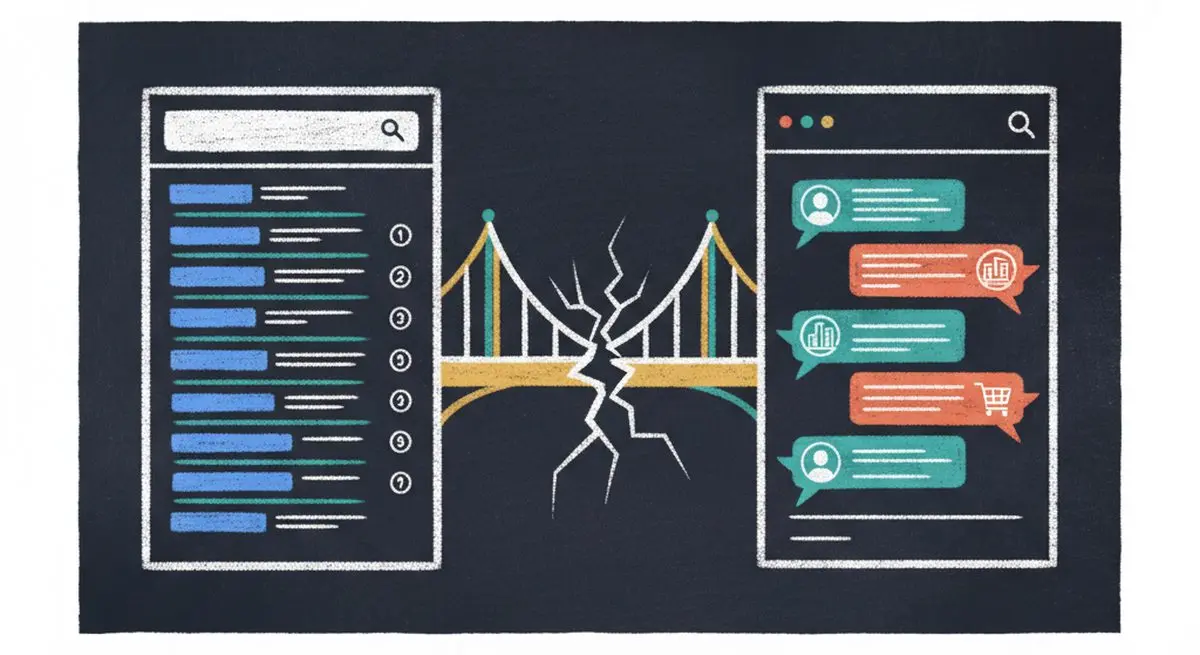
SEO alone isn't enough anymore. The difference between SEO, AEO (Answer Engine Optimization), and AXO, and how to appear in ChatGPT, Claude, and AI agent recommendations.
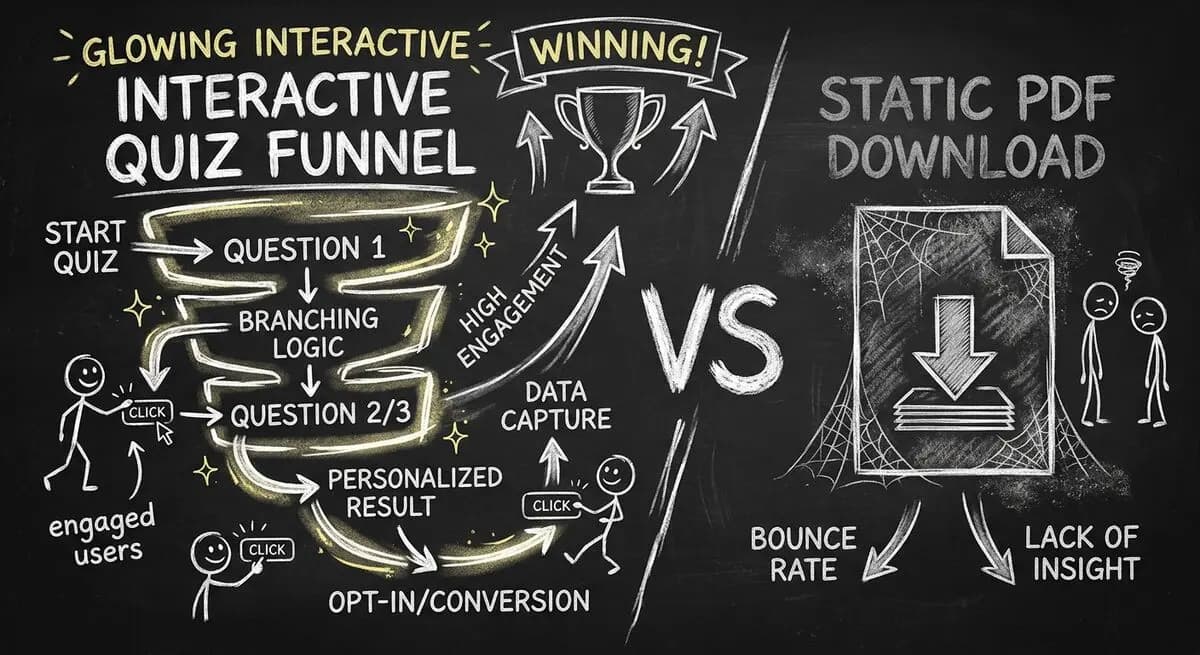
Gated PDFs collect an email and little else; quiz funnels qualify leads as they answer. The agency playbook for replacing static lead magnets with interactive qualification funnels, with 4 B2B templates.
