
Nine prompts on alarms, evening routines, distractions, and irregular bedtimes lead to a random profile like The Busy-Mind Example, not one from your data.
One of the listed results is selected at random. Your answers are not scored or used to choose the result.
Create engaging quizzes tailored to your brand. Our AI-powered quiz generator helps you build personalized assessments that capture attention and drive engagement.
Discover what your quiz results might reveal

A random example describes an early bedtime and a regular start to the day. If this resembles your routine, consider how it fits work, family, and rest needs. The label does not prove that sleep is sufficient or that early hours are healthier for everyone. Keep noticing how you actually feel rather than treating the profile as confirmation.

This randomly chosen pattern describes some variation in timing while usually finding sleep manageable. If it feels familiar, consider which changes are comfortable and which leave you tired. Flexibility is a preference description, not evidence of good sleep quality, and this result cannot evaluate symptoms or ongoing fatigue.

A sample selected by chance describes enjoying later evenings and taking longer to feel ready in the morning. If that resonates, compare preferred hours with obligations and actual opportunities to rest. The profile does not establish a circadian type or explain why getting up is difficult. It is not a recommendation to reduce sleep.

This random example concerns thoughts that remain active around bedtime or before a demanding event. If you recognize the situation, note what is on your mind and whether setting aside time to address it feels useful. The quiz cannot determine the cause of wakefulness or promise that a relaxation routine will resolve it.

This randomly displayed scenario describes changing bedtimes and stopping only when very tired. If parts fit, look at the practical constraints around evenings, including work, care, and available quiet. The profile does not blame you or diagnose a disorder. Persistent difficulties deserve attention beyond an entertainment label.
Explore more quizzes in this category

Nine pressure situations, from public criticism to competing deadlines, end with a random fight, flight, freeze, or fawn description, like Freeze Response.

Ten questions describe life areas like work, money, health, and relationships. A profile like Balanced Life appears at random; no numeric wheel is drawn.

Ten questions look at communication, trust, respect, conflict repair, and fun in your relationship. A focus area like Growth Needed then shows at random.

Scenarios like waiting for a text or replaying feedback help you notice overthinking. Moving On After a Decision is one random reflection, not a diagnosis.

Nine questions put words to your sleep, focus, patience and enjoyment. A sample such as Noticing Changes appears at random; it can't diagnose burnout.

Eight questions on waking mood, tension, rest, sleep and focus help you notice stress. Mild Signs of Stress or another ending is random, not a measurement.
Tips, guides, and insights on quizzes and lead generation
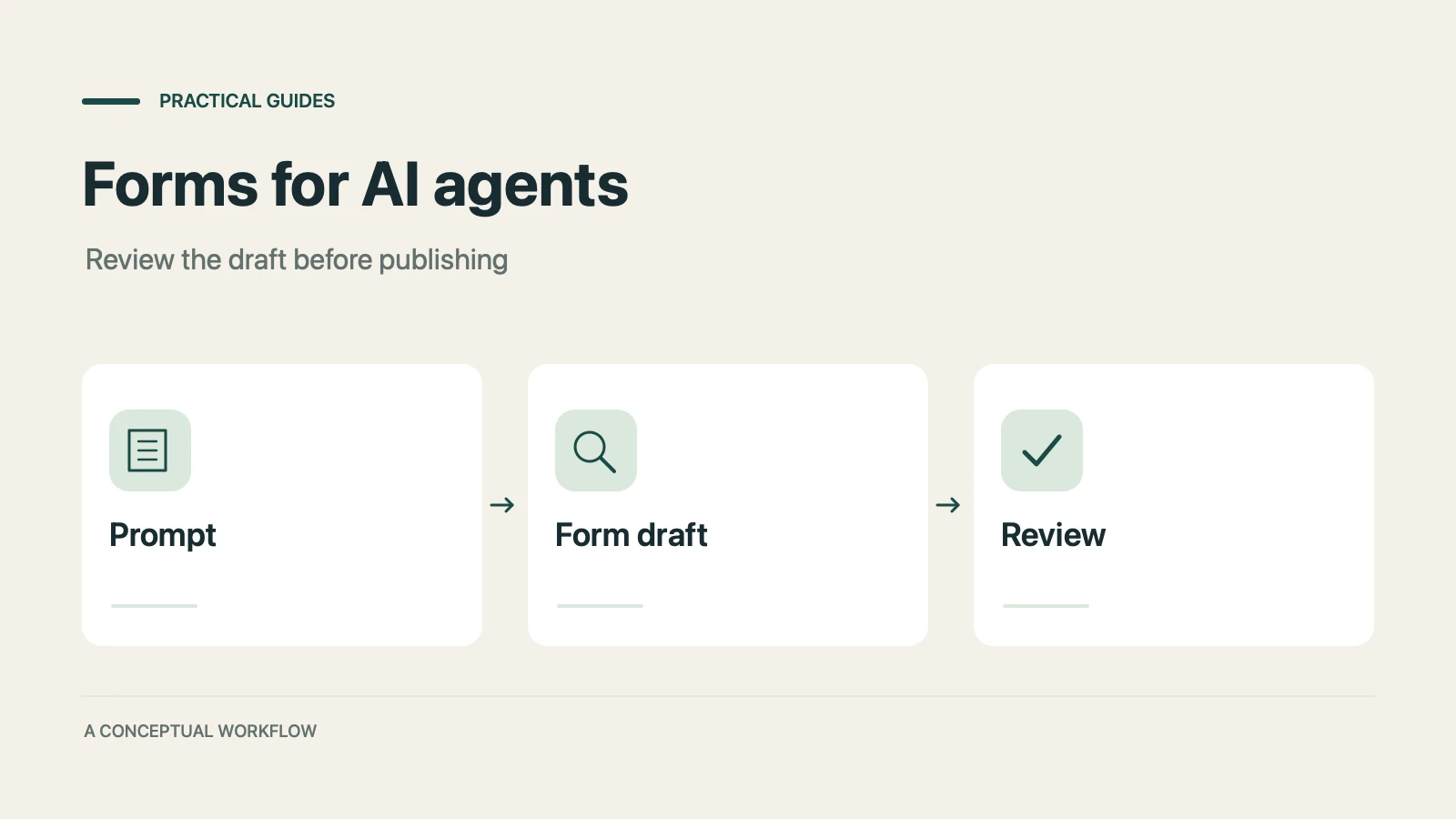
A practical guide to evaluating terminal-based Dashform workflows, checking current commands, reviewing drafts, and publishing with explicit authorization.

Use Dashform's MCP connection in a compatible AI client to draft and edit forms, review the saved result, and publish when ready.

Dashform supports MCP. Connect OpenClaw, Claude Code, LangChain, or any MCP agent to build forms, surveys, and quiz funnels through getaiform.com/api/mcp.


