

Are you the person who builds a spreadsheet before making a decision, or do you sketch a wild idea on a napkin and run with it? This quiz uses 8 concrete scenarios to reveal your dominant cognitive style — the mental gear you naturally shift into when facing problems, pressure, or a blank page. You might be a rigorous Analytical Thinker, a rule-breaking Creative, a people-reading Empathetic Thinker, or a horizon-chasing Visionary. Each result comes with a sharp profile of how your mind works and where it shines most.
One of the listed results is selected at random. Your answers are not scored or used to choose the result.
Create engaging quizzes tailored to your brand. Our AI-powered quiz generator helps you build personalized assessments that capture attention and drive engagement.
Discover what your quiz results might reveal

You are a natural diagnostician — when everyone else is reacting, you're isolating variables, checking assumptions, and building an argument that actually holds up. You find genuine satisfaction in understanding exactly why something works or breaks, and you're the person others call when the stakes are too high to guess. Your rigor isn't slowness; it's what separates a good decision from a lucky one.

You are wired to reframe — where others see a constraint, you see a prompt, and your best solutions tend to arrive sideways rather than head-on. You get restless following established playbooks and do your sharpest thinking when given permission to start somewhere unexpected. The ideas you generate aren't just novel; they have a strange internal logic that makes them stick.

You read rooms the way analysts read data — tracking tone, noticing who's gone quiet, sensing the gap between what someone says and what they mean. This isn't just emotional sensitivity; it's a cognitive edge that makes you an unusually effective collaborator, negotiator, and confidant. The solutions you reach tend to actually get adopted, because you understood the humans involved before you proposed anything.

You think in trajectories — a current problem is always a data point in a larger story you're already writing. You're less interested in optimizing what exists than in questioning whether it should exist at all, and you have a rare talent for making a distant, abstract goal feel urgent and real to the people around you. You do your best work at the beginning of things, when direction matters more than detail.
Explore more quizzes in this category

Reflect on honesty, helping, and accountability through "How do you respond when you realize you've made a mistake?". "Good Person" is one of four randomly selected reflection labels, not a verdict on your character. The scenarios cover returning a lost wallet, responding to bullying, and taking responsibility for mistakes. Use the choices to think about particular actions you could change or repair. Answers do not earn moral points or decide which Ending is selected, and one response cannot summarize a person's character.

Clothes, hobbies, and self-description appear alongside "Which statement best describes you?". The four randomly chosen labels include "Boy"; neither the selection nor your tastes establish gender. You choose between clothing styles, favorite creatures, activities with friends, and ways of describing yourself. These preferences can be conversation starters, but there is no boy-versus-girl score. A result does not override your own words, and you can explore your identity without settling on a label.

Explore fursonas, anthropomorphic art, and community interest through "Have you ever created or imagined an animal character that represents you?". "Furry-Curious Explorer" is one of four random fandom labels; identifying as a furry remains your choice. Choices explore animal characters, roleplay, conventions, and whether you already use the word furry. Interest in a character or artwork does not automatically imply community membership. You do not need a fursuit, a fursona, or an event ticket to explore the fandom, and answers do not determine the Ending.

Consider late-night support, cancellations, confidentiality, and a friend’s success across eight scenarios. "Think about your closest friendship. When did you last reach out with no reason — just to say you were thinking of them?" explores contact without an occasion. A reflection such as "The Anchor Friend" is displayed randomly, independently of choices. These examples describe possible habits without assessing your character or revealing what a friend thinks.

Notice what happens while a friend vents, someone gives directions, or a conversation turns emotional. Eight scenarios include "Someone shares a strong opinion you disagree with. While they're still mid-sentence, you:" and a colleague’s personal update. Possible Endings such as "Selective Listener" illustrate attention habits, but the player displays one randomly, independently of your answers. Use the questions themselves to reflect on interruptions, clarification, and follow-up; the sample result does not measure listening skill.

Questions about goals, setbacks, and rest include "How do you handle failure?". "Work in Progress" is one of four randomly selected labels; productivity does not determine your worth. The choices contrast detailed plans, flexible goals, responses to criticism, and different ways of spending free time. Treat them as prompts to consider your circumstances and support needs. Rest is not failure, and achievements do not establish human value; the answers neither rank you nor predict future success.
Tips, guides, and insights on quizzes and lead generation
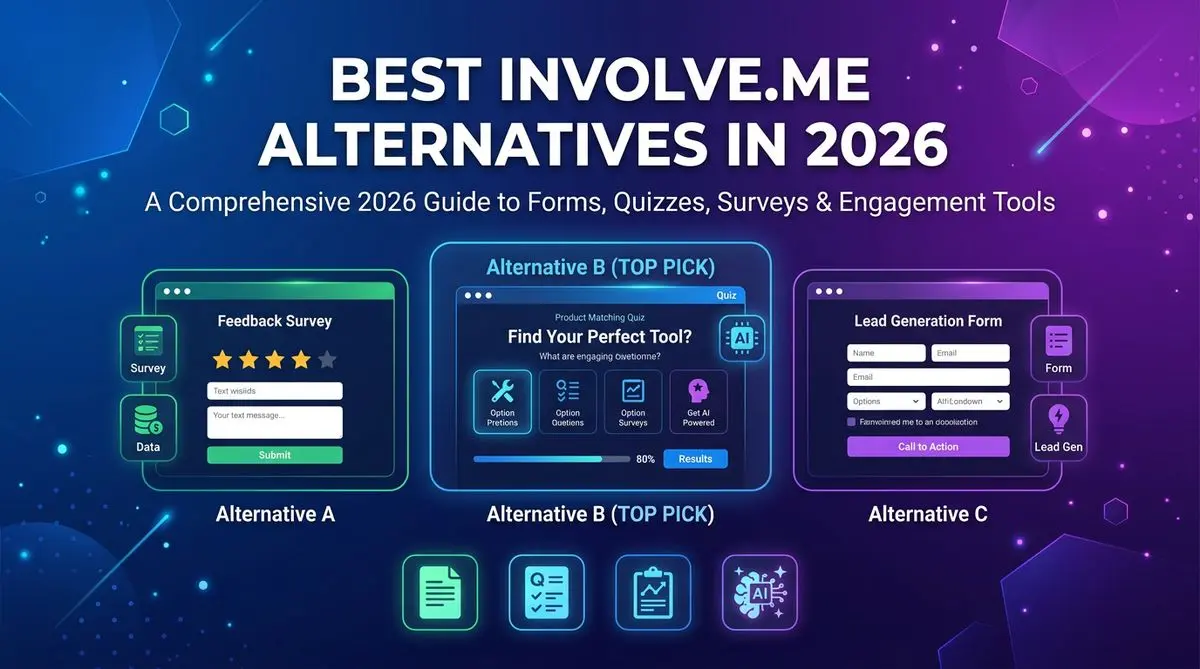
7 involve.me alternatives compared on AI quiz generation, lead scoring, pricing, and templates. Includes Outgrow, LeadQuizzes, Dashform, and 4 others — head-to-head ranking.
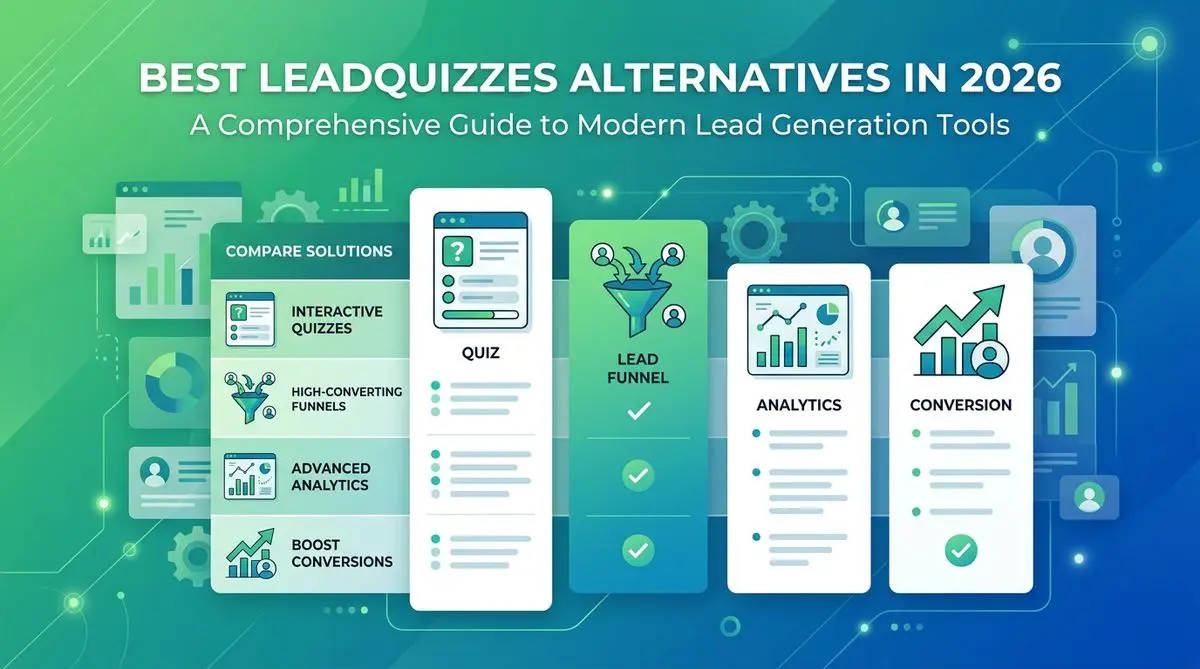
LeadQuizzes' interface is dated and its plans cap responses. 7 alternatives with AI quiz generation, automatic lead scoring, and modern UX, compared.

Med spa website examples with clear service pages, strong calls to action, mobile-friendly layouts, and lead capture that works.
