


Coaches rely on assessments to qualify clients, save time, and focus on people who are ready to commit. For many, ScoreApp is the first tool they encounter for client scoring and readiness assessments.
But as coaching businesses grow, many coaches start asking the same question:
Is scoring alone enough?
This is where the search for ScoreApp alternatives begins.
In this article, we’ll explore why coaches look beyond ScoreApp, what modern qualification workflows require, and which types of tools make sense as an upgrade.
Best ScoreApp Alternatives for Coaches (2026)
| Platform | Best For | Starting Price | AI Features | Coach Tools |
|---|---|---|---|---|
| Dashform | AI quiz funnels | Free tier | Full AI + scoring | Client intake, assessments |
| ScoreApp | Score-based quizzes | $39/month | No AI builder | Scorecard system |
| TryInteract | Quiz marketing | $27/month | No AI | Personality quizzes |
| Paperform | Beautiful forms | $24/month | No AI | Booking forms |
| Typeform | Conversational forms | $25/month | Limited AI | Basic surveys |
Learn how AI is transforming client intake: read our guide to AI quiz funnels for lead qualification and see the best tools for coaches.
Quick Summary
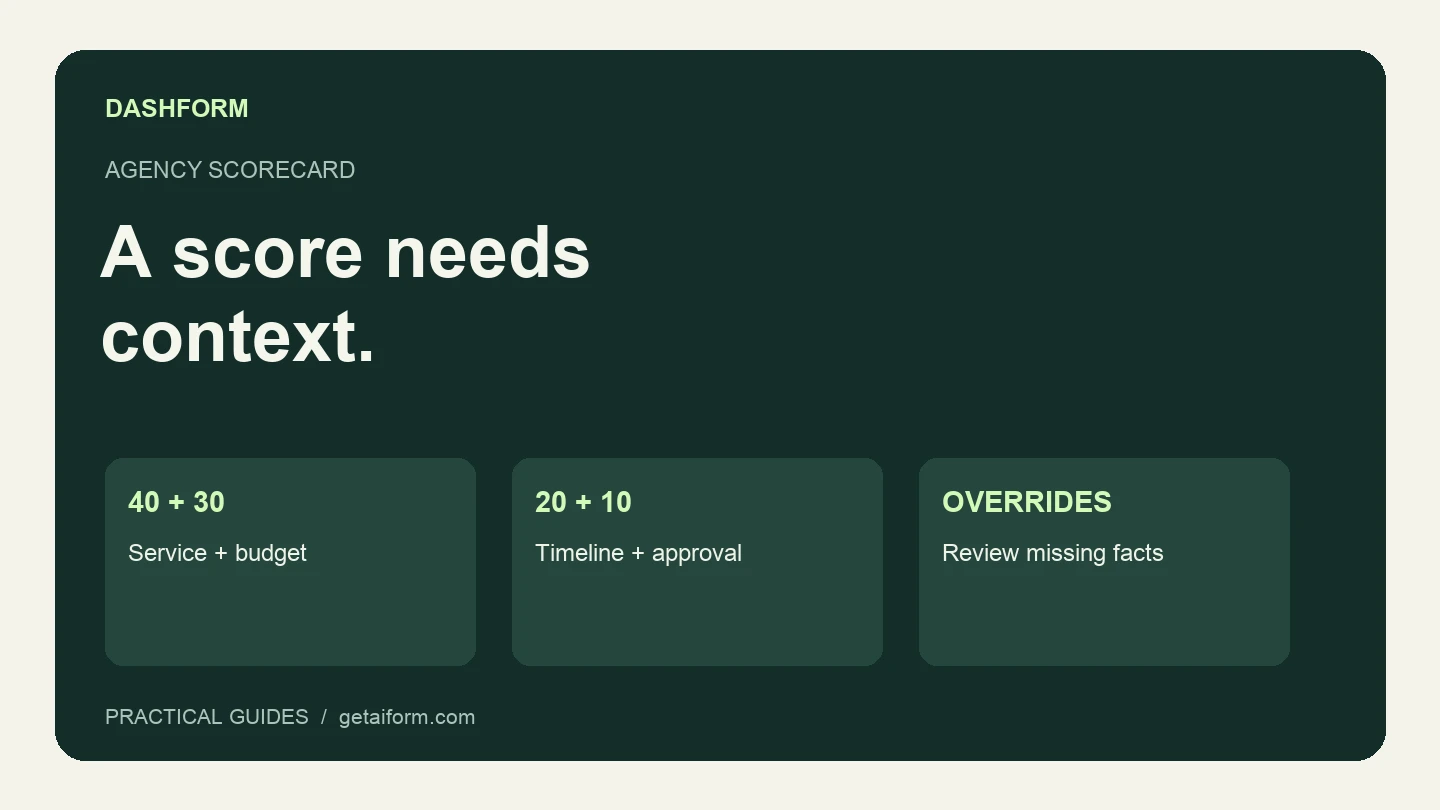
ScoreApp helps coaches score clients — but growing coaching businesses often need more than scoring alone.
- ScoreApp is effective for readiness assessments and simple qualification workflows
- As lead volume increases, manual review and limited automation become bottlenecks
- Scoring alone doesn’t handle routing, segmentation, or personalized follow-up
- Modern coaching businesses require intake, assessment, segmentation, and automation working together
- AI-native qualification platforms turn assessments into complete workflows
For early-stage coaches, scoring may be enough. For scaling businesses, the real upgrade isn’t better scores — it’s a better qualification system.
Why Coaches Start Looking for ScoreApp Alternatives
ScoreApp solves a real problem: it helps coaches score clients before discovery calls.
For early-stage coaching businesses, this alone can be a huge improvement over generic contact forms or unstructured calls.
However, as coaches scale, new challenges appear:
- Too many leads to review manually
- Different types of clients requiring different follow-ups
- Discovery calls still booked with low-fit prospects
- Growing admin work between assessment and conversion
At this stage, many coaches realize they don’t just need scores — they need systems.
What ScoreApp Does Well
Before comparing alternatives, it’s important to acknowledge what ScoreApp is good at.
ScoreApp excels at:
- Structured client assessments
- Clear scoring logic
- Communicating readiness or fit to prospects
- Helping coaches frame discovery calls more effectively
For coaches whose workflow stops at “score → call”, ScoreApp can be sufficient.
The limitation appears when scoring becomes only one step in a much larger process.
Where Scoring-Only Tools Fall Short

Modern coaching workflows involve more than a single score.
Common gaps coaches experience include:
- No automated routing based on responses
- Manual follow-ups after assessments
- Difficulty segmenting different client types
- Limited flexibility in assessment logic
- Heavy reliance on additional tools for automation
At scale, this leads to tool sprawl: one tool for scoring, another for forms, another for email automation, and another for lead management.
This is usually the point where coaches begin exploring alternatives.
What Modern Coaches Need Instead

As coaching businesses mature, qualification becomes a process, not a moment.
A modern qualification workflow typically includes:
- Structured intake forms
- Assessments with scoring and tagging
- Automatic segmentation based on responses
- Personalized follow-up paths
- Clear next steps for qualified and unqualified leads
If you’ve experienced discovery calls that go nowhere, this shift matters.
This problem is explored in more depth in Why Coaching Discovery Calls Fail.
Scoring remains useful — but it works best when it’s embedded in a broader system.
Types of ScoreApp Alternatives Coaches Consider
When coaches look for alternatives, they usually fall into three categories.
1. Form-First Tools
These tools focus on collecting information, often with strong design and logic.
Pros
- Flexible question design
- Good user experience
Cons
- No built-in scoring or automation
- Manual review required
These tools improve data collection but don’t solve qualification end-to-end.
2. Assessment and Funnel Builders
These platforms combine assessments with basic automation.
Pros
- Some segmentation and routing
- Better than scoring alone
Cons
- Often rigid
- Limited customization as workflows grow
They work well for mid-stage coaches but can become restrictive over time.
3. AI-Native Qualification Platforms
This is where newer alternatives differentiate themselves.
AI-native tools allow coaches to:
- Build intelligent assessments
- Score and segment automatically
- Trigger personalized follow-ups
- Reduce manual review entirely
Rather than stopping at a score, these systems turn assessments into action.
Why Some Coaches Choose Dashform AI
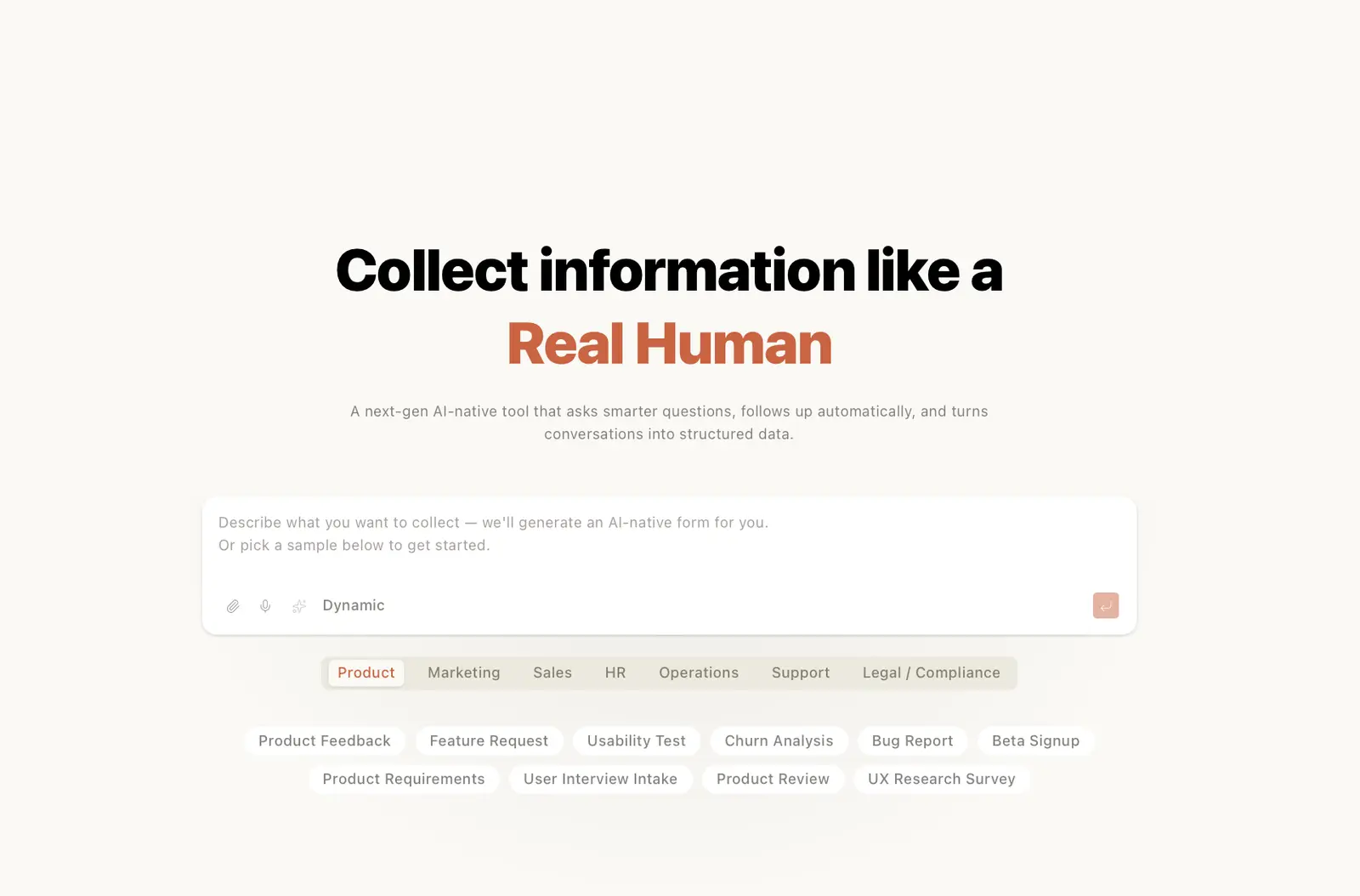
Dashform AI is designed for coaches who want more than assessment outputs.
Instead of focusing only on scoring, it supports the entire qualification journey — from intake to follow-up.
With Dashform AI, coaches can:
- Build flexible intake forms and assessments
- Score and segment leads automatically
- Route prospects into different follow-up paths
- Reduce admin work as lead volume grows
This makes it especially suitable for coaches moving beyond one-on-one discovery calls toward scalable workflows.
For a broader comparison of coaching tools, see 10 Best Tools for Coaches to Assess, Score, and Convert Clients.
Choosing the Right Alternative for Your Coaching Business
Not every coach needs to replace ScoreApp.
- If you’re early-stage and only need readiness scoring, ScoreApp may still work well.
- If your coaching business is growing and manual steps are slowing you down, a more flexible system can unlock the next stage of scale.
The key question to ask is simple:
Do you need better scores — or better systems?
The International Coaching Federation (ICF) reports that the coaching industry reached $4.564 billion in 2023. For client management best practices, see Harvard Business Review's coaching research.
Final Thoughts
ScoreApp helped popularize assessment-based qualification for coaches. But scoring alone is rarely the end goal.
As coaching businesses evolve, qualification becomes about routing, automation, and conversion — not just numbers.
If you’re evaluating ScoreApp alternatives, look beyond scoring features and consider how well a tool supports your entire client journey.