


Have you ever felt frustrated filling out long, boring forms? AI forms change this experience. They use LLM to make data collection faster and more enjoyable. You find that these forms feel more like a friendly chat than a chore. Studies show that users feel happier and more engaged with AI forms. AI Form Introduction helps you collect better data with less effort.
Quick Summary
AI forms use large language models and automation to make data collection smarter and more conversational.
- AI forms adapt to user input in real time
- They reduce errors through automated validation
- Natural language processing improves clarity and engagement
- Integration with business tools streamlines workflows
- Compared to traditional forms, AI forms improve completion rates and data accuracy
AI forms transform static data entry into an intelligent, user-friendly experience.
AI Form Capabilities: What Makes It Different
| Capability | Traditional Form | AI Form (Dashform) |
|---|---|---|
| Creation | Manual drag-and-drop | Describe in natural language |
| Questions | Pre-written | AI-generated and optimized |
| Logic | Manual if/then rules | AI-driven dynamic branching |
| Scoring | Manual point assignment | AI automatic lead scoring |
| Results | Raw data export | AI-analyzed insights |
| Optimization | Manual A/B testing | AI suggests improvements |
| Integration | Zapier/webhooks | AI agents + MCP + CLI |
Key Takeaways
- AI forms make filling out forms feel like a friendly chat, improving user engagement and satisfaction.
- These forms use smart technology to reduce errors by up to 60% and increase completed submissions by 35%.
- You can create AI forms without coding skills, using simple drag-and-drop tools to design and share them quickly.
- AI forms learn from your input, making the process faster and more accurate over time.
- Integrating AI forms with business tools streamlines workflows and enhances productivity across various departments.
AIForm Introduction: What Is It?

Core Concept
You might wonder what makes an AI form different from the forms you have used before. AIForm Introduction brings a new way to collect and process information. Instead of just asking you to fill in blanks, these forms use artificial intelligence to understand your answers and help you along the way.
Industry reports show that the main purpose of AI forms is to give you high-quality information for better decision-making. These forms also follow formal standards and help you see the risks and opportunities that come with using AI. Companies use them to share important details about privacy, fairness, and how AI affects people.
AI forms use machine learning to make sense of your input. Here is how the process works:
- Programmers choose a machine learning model and give it training data.
- The model learns from this data and finds patterns.
- Programmers adjust the model to make it more accurate.
- The model checks its own work and tries to reduce mistakes.
- Over time, the model gets better at understanding what you type.
AIForm Introduction uses these smart tools to make forms that feel more like a conversation. You get a smoother experience, and the form learns to help you better each time.
You can get more information from here different types of AI.
Key Differences from Traditional Forms
AIForm Introduction stands out because it uses advanced technology to make your experience easier and more accurate. Traditional forms often rely on manual checks and simple rules. AI forms, on the other hand, use automation and machine learning to check your answers and guide you.
Here are some of the main differences:
| Core Component | Description |
|---|---|
| AI-generated forms | Forms created using AI, often from natural language inputs or documents, expediting form creation. |
| Triggering LLM operations on submissions | Using form data to initiate AI processing, such as populating prompts or automating tasks. |
| Forms within AI-powered workflows | Autonomous systems generating forms for structured inputs, integrating with existing workflows. |
When you use a traditional form, you might have to double-check your answers or wait for someone to review them. AI forms do this work for you. They use automated checks and smart rules to catch mistakes right away. This makes the process faster and more reliable.
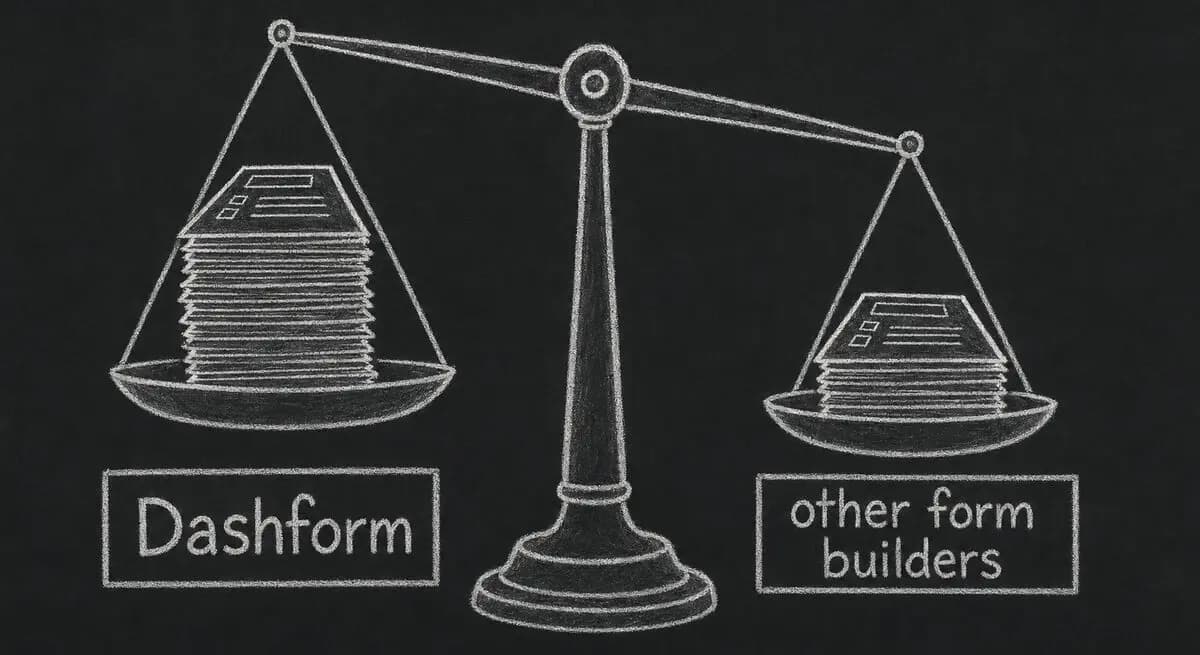
You also get better results with AI forms. Studies show that AI form builders can reduce error rates by up to 60%. They also increase the number of completed submissions by 35%. Traditional forms only reduce errors by up to 30%.
- AI forms process large amounts of data quickly.
- They adapt to new types of answers and learn from your input.
- You spend less time fixing mistakes.
Note: AIForm Introduction helps you collect accurate data with less effort, making your work easier and more effective.
How AI Forms Operate

Automation and Natural Language
You interact with AI forms in a way that feels natural and easy. These forms use automation to understand what you type, even if you use everyday language. When you fill out an AI form, the system works behind the scenes to process your words and extract important details. For example, AI can pull data from emails, documents, or chat messages. This means you do not have to copy and paste information or worry about missing details.
AI forms use several smart techniques to understand your input:
- Text preprocessing
- Tokenization
- Named Entity Recognition (NER)
- Sentiment analysis
- Part-of-speech tagging
- Intent recognition
- Machine translation
- Text summarization
These tools help the form understand what you mean, not just what you type. This makes it easier for you to get accurate results. Natural language processing also helps the form organize and analyze large amounts of information. You save time, and the form gives you better answers.
AIForm Introduction uses these methods to make your experience smooth and efficient. You can see how automation improves tasks like data extraction, customer service, and content creation.
Integration with Business Tools
AI forms work well with many business tools. You can connect them to systems that help you manage data, automate tasks, and improve your workflow. For example, you might use AI forms with tools that handle invoices, customer feedback, or employee requests.
| Tool Name | Description |
|---|---|
| AI Assistance | Activates tools like AI Agent, Summarize Agent, and Copilot to automate repetitive tasks. |
| AI Copilot | Helps you scale automation using generative AI for designing and automating workflows. |
| AI-powered form automation | Captures, validates, and fills in data in real-time, recognizing patterns and suggesting inputs. |
| UiPath’s AI-driven bots | Automates tasks like data entry and invoice processing, boosting productivity. |
The AI Form Designer lets you customize forms using simple language. You do not need to know how to code. You can change forms quickly and make them fit your needs. The AI Form Assistant helps you refine your forms and makes sure they work well in your daily tasks. With these tools, you can streamline your workflow and focus on what matters most.
Features and Benefits
User-Friendly Design
You will notice that AI forms focus on making your experience as smooth as possible. These forms use a user-first design, which means you stay in control and can personalize your form journey. AI forms introduce features step by step, so you never feel overwhelmed. You can see how the design works in the following ways:
- User-first design gives you control and lets you personalize your experience.
- Clear AI decision-making uses visual tools, like confidence meters, to help you understand how the AI works.
- Layered information display organizes content into simple steps, so you only see what you need.
- Built-in safety features protect your privacy and keep your data safe.
- Multiple input methods let you use voice, text, touch, or gestures, making forms easy for everyone.
- User response tracking collects feedback and helps the system improve over time.
- Consistent AI behavior means you get the same helpful experience on any device.
AI forms also use adaptive interfaces. The system learns from your actions and adjusts the layout to fit your needs. If you are new, the form keeps things simple. As you become more comfortable, it introduces advanced features. This approach helps you build confidence and makes the process feel natural.
Tip: Personalization in AI forms reduces confusion and helps you finish tasks faster.
Efficiency and Accuracy
AI forms help you work faster and make fewer mistakes. Smart validation features predict what you want to enter and offer helpful suggestions. The system checks your answers in real time and gives feedback if something looks wrong. You do not have to worry about missing details or making errors.
- AI forms use natural language processing to understand your answers.
- They auto-complete fields based on your past behavior.
Explore more: 50 AI Form Prompts | Dashform CLI for AI Agents | AI Quiz Generator Guide.
- The system adapts to your preferences and gets better over time.
Smart validation ensures your data follows the right rules, which improves accuracy and reduces human error. You save time because the form checks everything as you go.